

Vintage-style Christmas ornaments work because 1840s German glassmaking and modern mass production meet in one place, which means you can get nostalgic farmhouse charm without hunting for museum-grade antiques. The best trees don't look perfectly matched, they look curated, personal, and comfortably lived-in.
Vintage style sounds like a matching set until you decorate one tree. The moment you mix a hand-blown bauble, a thrifted figurine, and a personalized keepsake, the tree starts to feel less like a showroom and more like a family story.
Table of Contents
- Why Authentic Vintage Style Is Not About Matching Sets
- How Vintage Christmas Ornaments Became a Holiday Tradition
- Understanding the Three Main Vintage Ornament Materials
- Building a Coherent Vintage-Inspired Christmas Tree
- Personalized Ornaments as Meaningful Holiday Gifts
- Proper Storage and Care for Fragile Vintage Ornaments
- Creating a Christmas Tree That Tells Your Story
Why Authentic Vintage Style Is Not About Matching Sets
A lot of people still decorate as if vintage style means hunting down identical red balls and hoping the tree looks “period correct.” That approach usually backfires. Real vintage-looking trees feel collected, not coordinated to death.
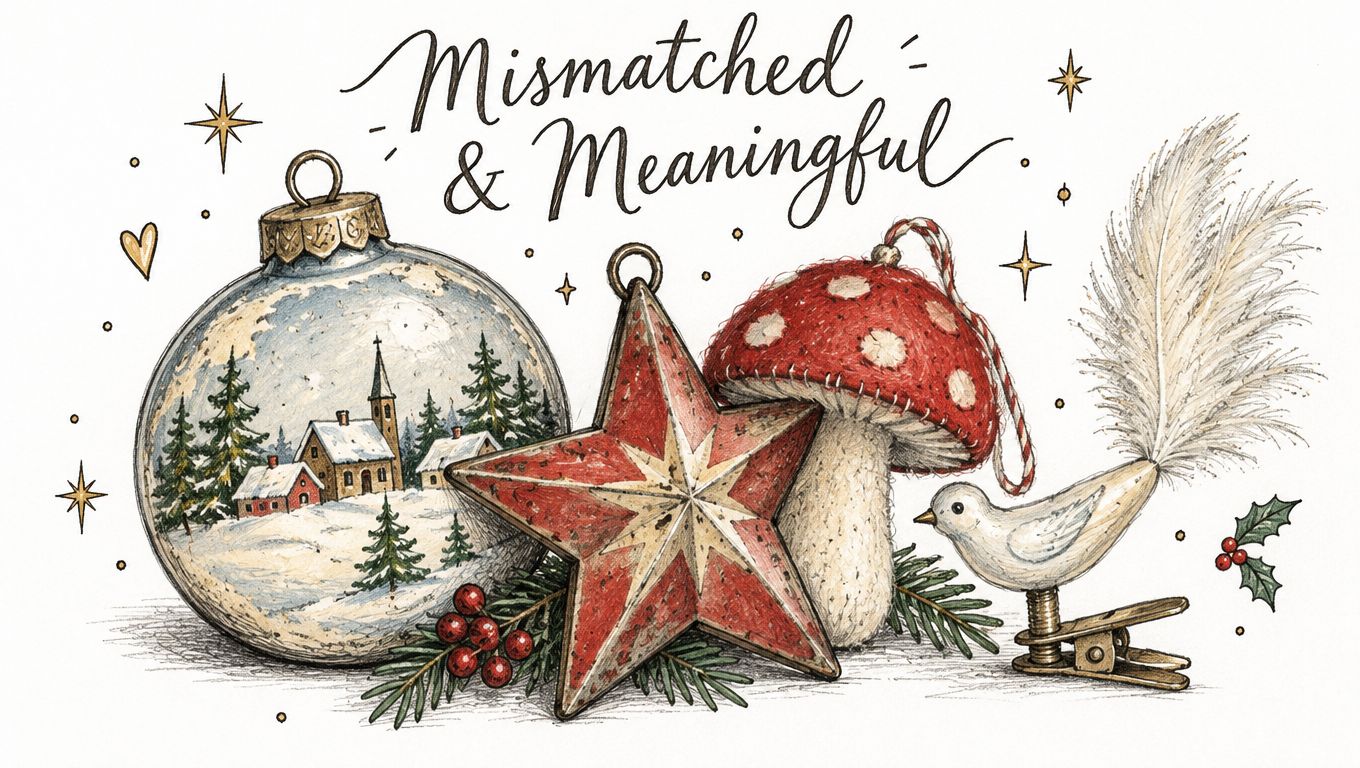
The stronger look comes from curated hybridity, where sentimental pieces, thrifted finds, and a few new reproductions share the same branches without fighting each other. That tracks with what shoppers want now, since 55% of ornament shoppers want pieces reflecting their individual interests and 54% seek keepsake or memento items (Gifts & Decorative Accessories). The point is not historical purity, it's emotional coherence.
What coherence actually looks like
A farmhouse tree with vintage ornaments can blend eras if the color story stays disciplined. Mid-century green can sit beside Victorian red if both colors appear in repeated spots rather than random bursts. The same is true for scale, if one large ornament appears near a cluster of smaller pieces, the tree reads intentional.
Practical rule: repeat three things, color, material, and emotional theme. If one ornament is a family heirloom, another is thrifted glass, and a third is a new personalized piece, the set still feels unified when the palette and finish speak the same language.
A useful way to judge an ornament is to ask whether it adds contrast or clutter. Contrast sharpens the tree, clutter just fills it. That's why a blend of old and new often looks more authentic than a strict replica set ever does.
How Vintage Christmas Ornaments Became a Holiday Tradition
The vintage Christmas look began with practical craft, trade, and novelty, not a matched decorating system. Its strongest historical roots reach Lauscha, a glassmaking town in Thuringia, Germany (Manchester Journal). Glass reflector ornaments appeared commercially during the 1840s, while the first written record of glass Christmas balls dates to 1848. Home workshops made these early pieces by hand and silvered their interiors to produce a bright, reflective finish.
Early ornament shapes drew from familiar objects, including pine cones, apples, and nuts. Later designs added fruits, stars, bells, and figurines. That progression explains the style's lasting organic, playful character. Vintage-inspired decorating works best when those varied forms are curated by color, scale, material, and meaning, rather than forced into a historically matched set.
Why the style spread so widely
Molds helped ornament makers produce consistent designs in greater quantities, making the craft more widely available. Images of Queen Victoria and Prince Albert's Christmas tree also helped popularize the style in Britain during the 1840s. By the late nineteenth century, German manufacturers were exporting ornaments across Europe.
That history still shapes retro collections. Delicate glass, traditional red-and-green palettes, natural motifs, and visible handcrafted variation remain recognizable choices. Use them as anchors, then add a newer piece or personal keepsake where it supports the tree's color and story. The result can suit a farmhouse entryway, a compact apartment tree, or a formal living room without looking like a showroom replica.
Understanding the Three Main Vintage Ornament Materials
A convincing vintage-style tree depends as much on material as on shape. Glass catches and scatters light, wood adds matte warmth, and metal supplies structure. Combining those qualities creates curated hybridity, so the collection feels related without relying on a historically matched set.
Glass and mercury glass style finishes
Traditional vintage-style glass ornaments are generally made by blowing or pressing molten glass into a form, silvering the interior for reflectivity, then painting or embellishing the exterior with enamel, metallic leaf, glitter, or molded detail (Home to Sight). These steps produce the softly mottled depth associated with older holiday décor. Small irregularities can add character, while a flawless, chrome-like surface may look more contemporary than vintage.
The term mercury glass can be misleading. The interior coating is typically a silver-nitrate-based solution, rather than elemental mercury. Look for hazy reflection and gentle variation when choosing pieces. That finish works especially well beside painted ornaments because it adds light without making every surface equally shiny.
Handle glass with care and give it a deliberate role. A detailed bauble can carry attention on its own, while smaller glass pieces are useful for repeating glints through the collection.
Wood, metal, and the farmhouse layer
Wood steadies reflective ornaments with a warm, matte texture. Metal adds sharper contrast and recalls older tinsels, hooks, and caps, though thin or distressed surfaces can bend or scratch with rough handling. Together, these materials help a tree feel connected to a farmhouse room rather than placed there for a season.
Farmhouse World's Christmas house ornament suits this mix when a farmhouse-specific shape will add more character than another glossy bauble. A house ornament can reinforce the room's sense of place and carry emotional meaning without matching the glass pieces exactly.
| Material | Visual effect | Best use |
|---|---|---|
| Blown glass | Soft reflectivity, depth, slight irregularity | Statement ornaments and focal branches |
| Mercury glass style | Mottled shine, vintage shimmer | Layered accents and mixed collections |
| Wood and metal | Matte warmth, rustic structure | Lower branches, grounding elements |
Older finishes need material-specific care. Glass needs cushioning, wood needs dryness, and metallic surfaces need gentle handling.
Building a Coherent Vintage-Inspired Christmas Tree
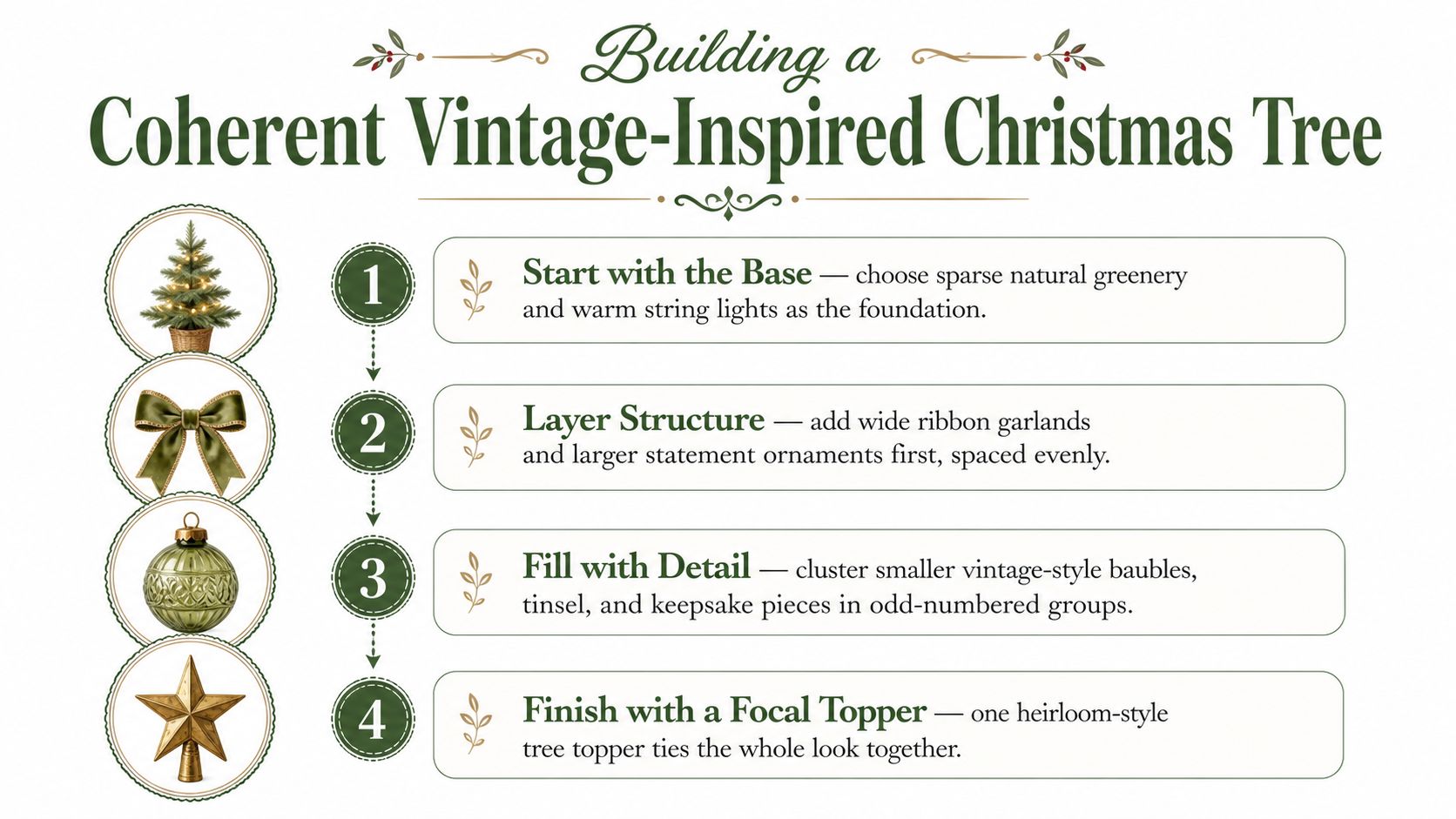
A good vintage-inspired tree starts with restraint, not excess. The easiest way to avoid a cluttered look is to think in layers. Place the largest statement pieces first, then fill the spaces around them with smaller ornaments that support the color story.
A simple ratio that works in real rooms
Start with about 20% statement ornaments, such as a large glass bauble or a detailed figurine. Then add 50% medium-scale pieces that bridge the gaps, and finish with 30% smaller accents, like pine cones, berries, or miniature signs. You don't need a rigid formula, but you do need enough variation that the eye can move across the tree without getting stuck.
Heavier wood, metal, or ceramic pieces belong lower down where accidental impact is less likely. Delicate glass works better toward the inner branches, where it gets protection and still catches the light. That one decision prevents a lot of breakage.
How to make mixed eras feel intentional
The trick is to repeat one visual cue across the whole tree. A Victorian red ornament can sit beside a mid-century green one if both have a similar scale or surface finish. A thrifted glass finial can share space with a new personalized piece if the ribbon or hook color ties them together.
Keep the loudest ornament count low. One or two focal pieces make a tree feel curated, while too many compete and flatten the whole composition.
The section above gives the framework, but the true payoff comes in the room. A farmhouse tree doesn't need perfect symmetry. It needs balance, a few clear focal points, and enough quiet space between ornaments for the vintage pieces to breathe.
A short visual walkthrough helps with this kind of placement.
For a broader decorating reference, farmhouse Christmas decorating ideas can help you see how vintage ornaments fit into a larger rustic room rather than floating as isolated holiday pieces.
Personalized Ornaments as Meaningful Holiday Gifts
Personalized ornaments solve a problem most holiday gifts struggle with. They're small, displayable, and useful every year, but they still feel specific to the person receiving them. That makes them easy to give and hard to forget.
A custom ornament works especially well when the base material already suits the room. A wooden sign with visible grain, a name-decorated bauble, or a monogrammed piece can slide into a vintage-inspired tree without breaking the style. The personalization becomes part of the design instead of sitting on top of it.
Where custom pieces work best
For a neighbor gift or housewarming present, an ornament with a name, date, or location detail carries more meaning than another generic holiday trinket. If the goal is a keepsake, the best piece is one that can come out again next year without feeling dated. That's why simple designs age better than overly trendy ones.
A useful resource for shoppers comparing styles is personalised acrylic Christmas baubles from Get Spliced, especially if you want to see how customization changes the feel of a simple ornament form. For a farmhouse-specific perspective, personalized Christmas ornaments shows how these pieces can sit alongside rustic decor instead of competing with it.
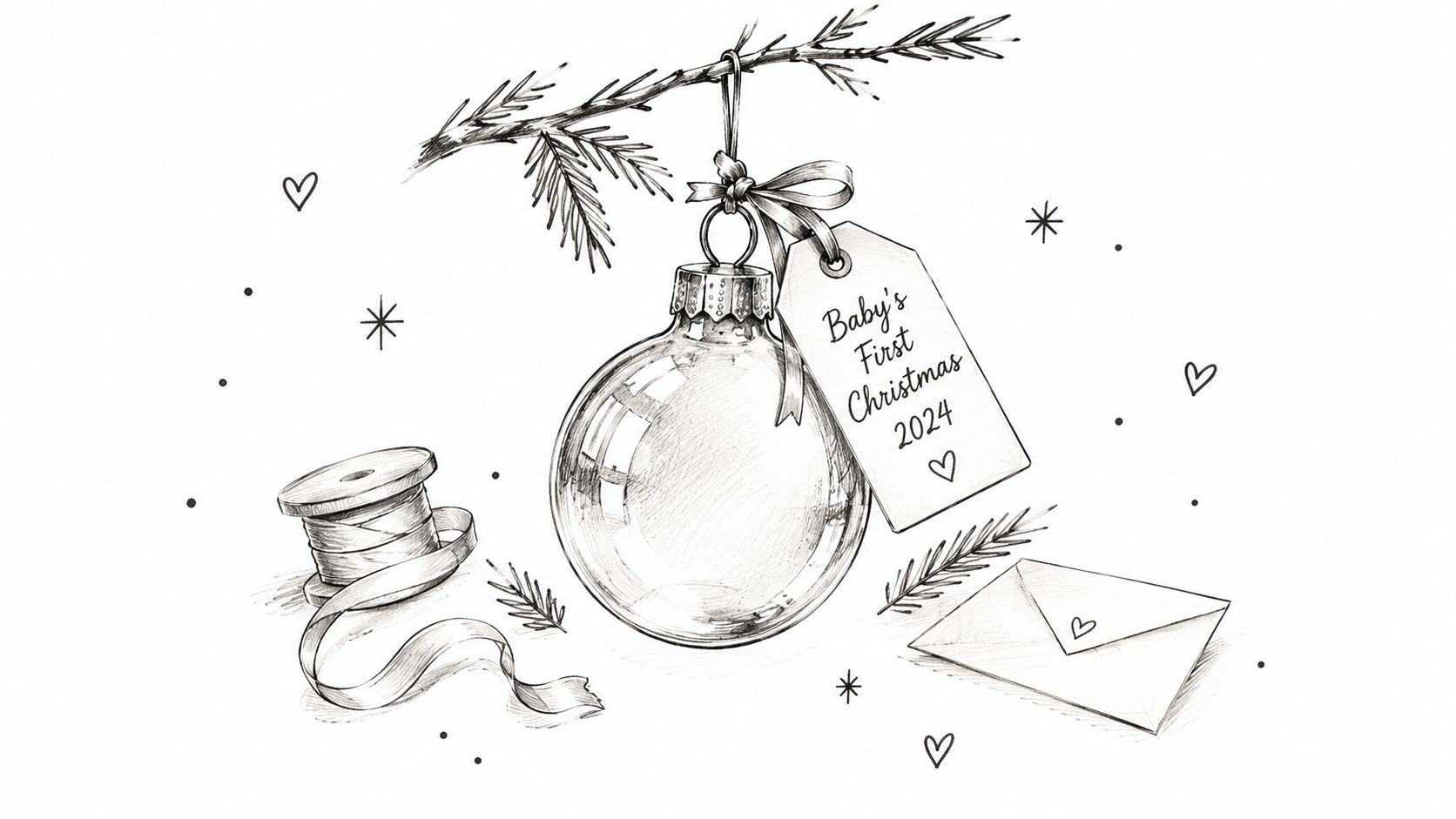
The strongest gift ornament is the one that records a relationship. A family name, a pet, a first home, or a shared joke turns an object into a story people keep.
Proper Storage and Care for Fragile Vintage Ornaments
Vintage-style ornaments need protection from impact, moisture, heat, and light. Their finishes can deteriorate before the glass cracks, so storage should protect both the surface and the shape.
Storage that protects the finish
Wrap every ornament separately in unbuffered, acid-free tissue, then place rigid dividers between pieces so they cannot strike one another (GrailHuntR). Keep the container indoors, away from attics, garages, and damp basements, where temperature and moisture changes can affect coatings, paper, and metal caps. For collectible glass, aim for 18–21°C and 40–45% relative humidity. A lidded box with compartments is easier to handle than a deep container that forces you to dig through layers.
Label the box by room or ornament type, and place heavier pieces below lighter ones. That makes unpacking quicker and reduces the chance of dropping a fragile bauble while searching.
Display habits that reduce damage
Direct sunlight can fade lacquer and painted details. Position delicate ornaments away from windows, branch tips, finials, and points where neighboring pieces rub together. In a busy room, hang the most fragile designs deeper inside the canopy, where passing hands and pets are less likely to reach them.
For anyone rotating seasonal decor, storing seasonal decorations reinforces a simple rule: careful packing is part of responsible decorating. Handle each piece by its cap or sturdier body, never by a loose hanger.
If an ornament feels precious, store it like an heirloom, not disposable decor. That habit prevents more damage than hurried repairs.
Creating a Christmas Tree That Tells Your Story
The best christmas ornaments vintage style trees don't look assembled, they look remembered. A thrifted glass bauble, a family name ornament, and a reproduction with a soft silvered finish can sit together if they share color, scale, and emotional weight. That combination gives the tree a sense of history without pretending every piece came from the same decade.
The same approach works in a farmhouse living room, a narrow apartment corner, or an entryway tree that has to share space with everyday furniture. You don't need to strip away your existing style to make vintage ornaments work. You just need enough repetition to keep the look grounded and enough contrast to keep it interesting.
A good final test is simple. If each ornament has a reason to be there, the tree reads as personal instead of random. If it also reflects the room around it, the whole space feels more lived-in and more welcoming.
If you want more farmhouse-friendly holiday ideas, personalized accents, and rustic decor that fits real homes, visit Farmhouse World and browse pieces that work with the way you already decorate. You'll find ornament-friendly gifts, custom metal signs, and seasonal accents that help a tree feel coordinated without losing its character.


