

Saturday arrivals rarely look like a decorating photograph. Wet boots collect at the door, the dog shakes beside the bench, and someone carries dinner toward a fire that's already going. You want the ranch to feel like a hunting lodge, but you don't want guests wondering where they're allowed to sit.
Good hunting lodge decor makes that arrival easier. The room should recover after muddy paws and a group meal, and it should welcome the relative who came for the scenery rather than the hunt.
Table of Contents
- Materials and Colors for Each Lodge Room
- What Old Lodges Still Teach a New Room
- Furniture Scale and Layered Lodge Lighting
- Textiles That Quiet Timber and Stone
- Decor That Recovers After Mud and Dogs
- Art Signs and Gifts Without a Trophy Wall
- Stage One Room Before You Buy More
Materials and Colors for Each Lodge Room
A guest arrives with wet boots, a child looks for a comfortable seat, and dinner is set down before anyone has time to tidy. Choose lodge materials by how readily each room can handle that routine, then use color and one clear accent to give it character. Wood, stone, leather, wool, and iron create a western-ranch hospitality feel; wildlife art can supply a story, but no room needs it.
Hunting lodge materials and colors by room
| Room | Materials | Color trio | Signature accent |
|---|---|---|---|
| Mudroom and entry | Sealed wood or tile, iron hooks, washable runner | Charcoal, bark brown, cream | Metal zone or family sign |
| Great room | Timber, stone fireplace, leather, wool | Saddle brown, moss, bone | Antler, branch, or iron chandelier |
| Dining | Heavy wood table, linen or leather runner | Oxblood, oak, amber | Wildlife print or carved panel |
| Bedroom | Pine, wool blankets, lined drapery | Pine, cream, muted green | Low-mounted trail map or pasture photograph |
| Kitchen and gear counter | Hard counters, black iron, minimal fabric | Black, warm oak, white | Task lamp and labeled cabinet |
Match the surface to the job
At the entrance, sealed oak adds warmth, while textured stone-look tile suits a doorway that often admits grit and water. Pair either surface with a bench that has a wipeable seat and clear space below. That open area is easier to use for boots than a basket that catches every heel.
Let timber and the fireplace give the great room its visual weight. Saddle-brown leather sits comfortably beside cream cushions and moss-colored wool, even when the chairs do not match. An antler or branch chandelier needs suitable ceiling height, a secure attachment point, and enough surrounding space.
Material samples help explain why a finish that works in one room may look different in another. Stahl Home Center's guide to natural textures for rustic rooms offers context for comparing grain, weave, and surface texture. Set samples beside the wood and upholstery already in the room before choosing; stone next to oak can read differently from stone beside dark leather.
In the dining room, a heavy table should feel ready for serving dishes, not like a display surface. Keep the bedroom's palette quieter, using pine, cream, and muted green to support a restful feel. These material and color choices set the room's foundation; fabric details can build on them without crowding the surfaces.
Keep the palette disciplined
Use a three-color rule: choose a deep ground such as bark, charcoal, or oxblood, a natural midtone such as oak, leather, or stone, and a light relief such as cream, bone, or unbleached linen. These are color roles, not exact paint matches.
- Ground: Place the deepest color on a deliberate, limited surface, such as cabinetry or an accent wall.
- Midtone: Let the main wood and upholstery carry most of the room.
- Relief: Bring lighter fabric near faces and seating, where it helps balance the darker materials.
An all-dark lodge may feel atmospheric by day, then swallow faces and artwork after sunset. Light relief keeps the wood, stone, and upholstery visible without making the room feel like a white farmhouse.
What Old Lodges Still Teach a New Room
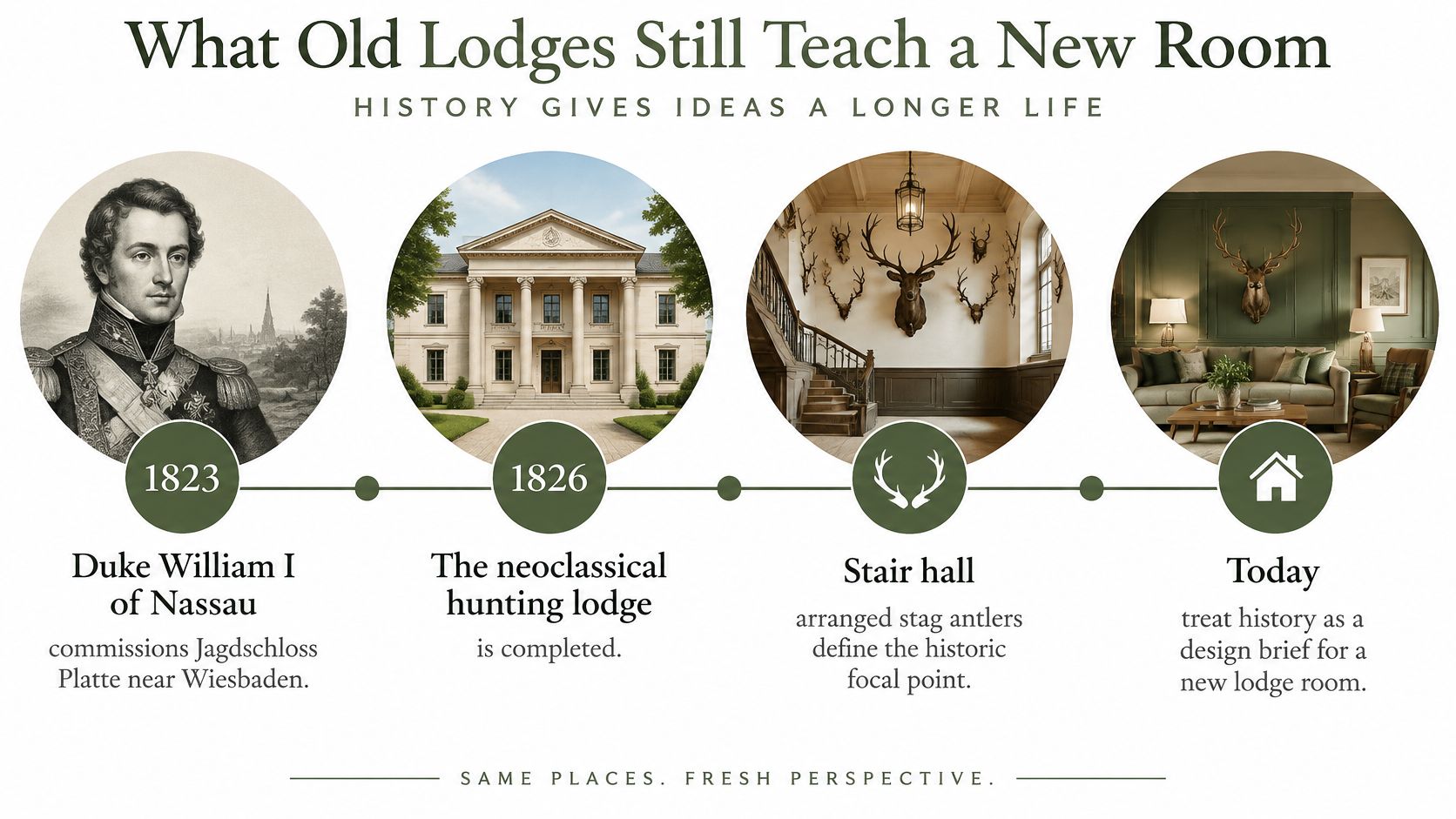
At Jagdschloss Platte near Wiesbaden, Germany, Duke William I of Nassau commissioned a neoclassical hunting lodge between 1823 and 1826, according to the TU Dresden hunting-lodges document. Its central stair hall displayed stag antlers arranged in graduated sizes, while the reception room reportedly contained furniture made entirely from antlers.
The important lesson isn't to copy that furniture. It's that the duke's decorators organized a motif around the architecture instead of scattering unrelated hunting accessories across the room.
Translate the heritage rather than copying it
- Materials first: Establish wood, stone, and substantial upholstery before adding themed objects.
- Restraint with animal forms: Choose a carved panel or branch-shaped fixture rather than repeating antlers everywhere.
- Organized display: Give related pieces a defined wall and consistent spacing.
- Outdoor connection: Use the view, regional scenery, and objects connected to the property.
A modern chair can sit comfortably beside an old timber chest. This guide to mixing vintage and modern decor helps distinguish a collected room from a period reconstruction.
Sleeping arrangements deserve the same practical judgment. If you're accommodating extended family, Florida Bunk Beds' guide to compare bunks for cabin rentals is relevant to layout decisions, not just appearance.
Keep the connection to the land. Drop novelty antlers on every surface and furnishings chosen only to signal a man cave.
Furniture Scale and Layered Lodge Lighting
Choose furniture for what happens after sunset: people settle in, unfold maps, read, and talk across the coffee table. A sofa that looks impressive but leaves the nearest chair stranded across the room doesn't support that evening.
Group a leather sofa with deep chairs around a shared table. Keep the arrangement close enough for easy conversation, but outside the fireplace's required safety clearances. Test the seats yourself; a very deep chair may need a cushion for shorter guests, while older relatives may prefer a firmer seat with arms.
Fit the gathering before choosing the chandelier
Put the front legs of the seating on the area rug so the group feels connected. Leave the route from the door free of ottomans, projecting table corners, and lamp cords. A rounded wood coffee table is forgiving where children pass; a rectangular table works when its corners stay out of that route.
This layout keeps the gathering space distinct from the walking path.
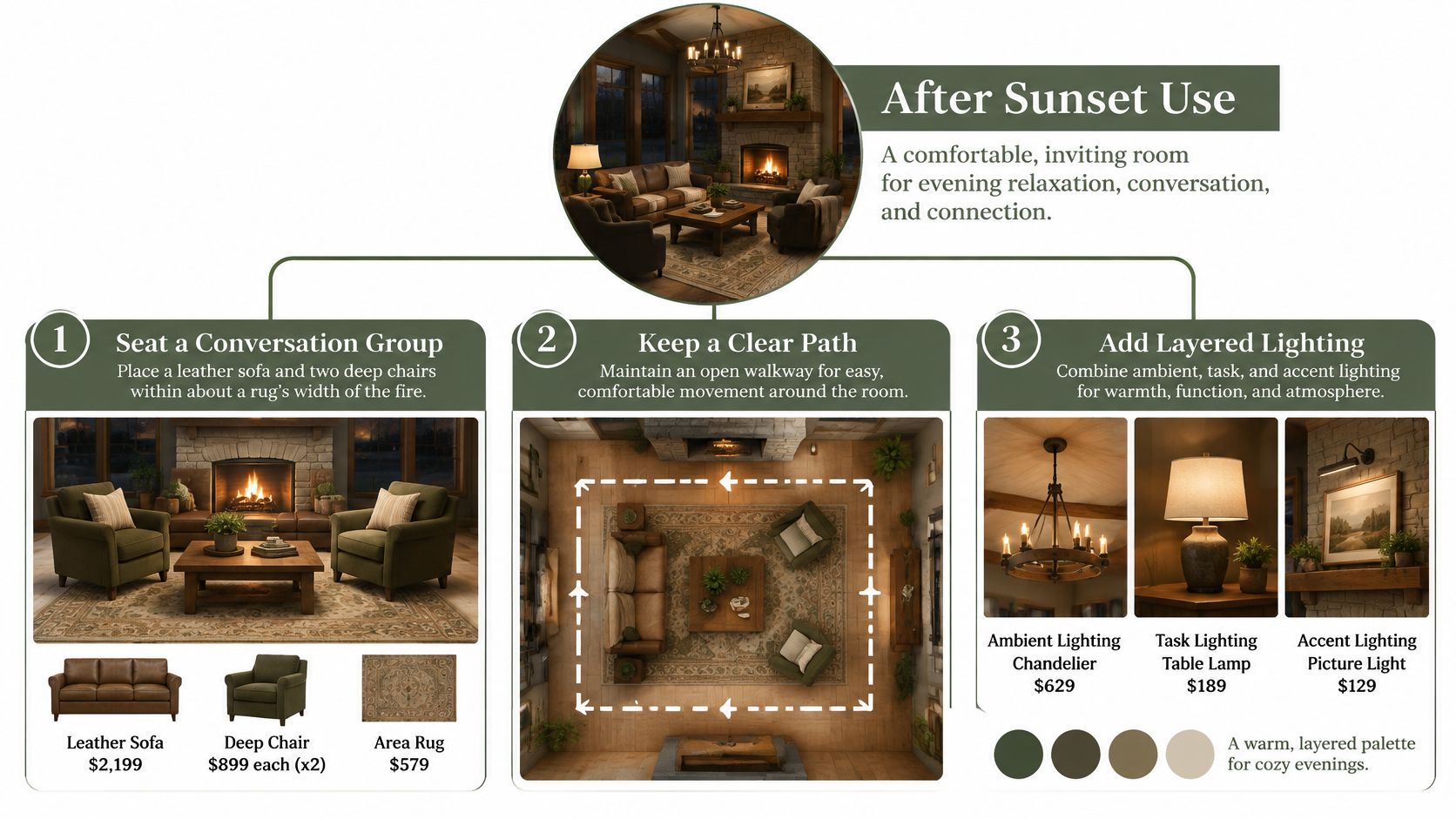
Choose a table finish that tolerates routine wiping, and provide coasters within reach. Pair leather seats with wool throws rather than adding more leather accessories to every surface.
For a small metal accent, Angel Wings Candle Holders for Table - Painted Metal to Give Distressed Rustic Decorative Look have painted, distressed all-metal construction, a light greenwash, and felt bottoms. Their weathered finish varies by piece; an LED pillar suits a family coffee table without introducing an open flame.
Specify light where people use it
Lux measures the illumination reaching a surface; it isn't the same as a bulb's brightness rating. Color temperature describes whether the light looks warm or cool. A warm bulb can still provide useful reading light when its fixture directs enough illumination onto the page.
Use the practical hospitality benchmarks described in Homestyler's hospitality lighting guidance as starting targets for the numeric entries below, then check them in the furnished room.
Lodge lighting levels by zone
| Zone | Target light | Color temperature | Fixtures |
|---|---|---|---|
| Lounge and bedroom ambient | 150–300 lux | 2700–3000 K warm white, dimmable | Shaded lamps, sconces, one statement chandelier |
| Reading chair | 400–500 lux on the page | Warm white with a shaded head | Swing-arm or table lamp |
| Kitchen and gear counter | 400–500 lux, glare-controlled | Brighter working light than lounge; avoid bare bulbs | Under-cabinet or focused task light |
| Dining table | Warm ambient plus a pool on the table | Warm white | Pendant or chandelier plus LED candles |
| Art and metal sign wall | Low ambient, no hot spot | Test at night | Indirect light, not a spotlight on glass |
Put ambient and task fixtures on separate controls. You should be able to brighten the gear counter without flooding the seating group.
Use a lux meter at the work surface, and walk through the room after dark. Check for a bare bulb reflected in glass, a bright patch on polished metal, or a reading lamp shining into another guest's eyes. Move or shade the fixture before deciding the whole room needs brighter bulbs.
Textiles That Quiet Timber and Stone
A room with timber floors, stone walls, and metal details can look welcoming while making conversation tiring. Sound reflects off those hard surfaces, so textiles should soften the places where guests gather without getting in the way of circulation or cleanup.
A 2025 indoor-environment study published in Frontiers in Built Environment reported standardized effects on guest satisfaction of approximately B = 0.26 for acoustic/noise conditions, compared with B = 0.16 for indoor air quality, B = 0.12 for thermal comfort, and B = 0.11 for lighting. These coefficients show relative relationships in that study, not expected results in your house. The practical takeaway is to consider sound alongside comfort and light when choosing textiles.
Put absorption around the people
Keep hard-wearing paths clear, then place porous materials near the spots where guests talk or rest. Use this table as a placement guide, not a reason to cover every surface.
| Location | Textile choice | Placement detail |
|---|---|---|
| Conversation group | Wool or high-pile area rug | Under the seating arrangement, away from the exterior door |
| Large windows | Lined drapery | Broad fabric coverage, without covering heaters or vents |
| Broad bare wall | Fabric panel or acoustic artwork | Securely mounted, clear of fireplace heat |
Leather adds comfort but does not absorb sound like wool or fabric. If smooth leather dominates the seating, a wool rug, lined drapery, or fabric-backed acoustic panel can add softer surfaces nearby. Let curtains move freely and open for daylight; a narrow strip of fabric beside a broad window won't cover as much area as curtains sized to close across it.
For bedroom and dining textile choices, use the room-specific guidance in the materials section rather than repeating the same selections here. The useful distinction is placement: sound-softening fabric belongs near conversation and rest, while circulation routes should remain easy to clean.
Test before adding more
Clap once in the unfurnished great room and listen for a lingering ring. Repeat after the main rug and other soft furnishings are in place. This is a rough listening check, not an acoustic measurement.
Then listen during a meal. If guests can hear across the table without competing with reflected chatter, the room may not need another textile layer.
Placement matters: A sound-softening rug belongs where people linger, not where wet boots first land.
Decorative accent rugs serve a different purpose. Round Rooster Rugs are made from handwoven natural jute and feature a hand-stenciled rooster design inspired by early American folk art. Use a rug like this as a visual accent, not as the large rug that softens a seating area or the washable runner for a wet entrance.
In pet households, choose removable cushion covers and curtains that can be cleaned according to their care instructions. Vacuum porous surfaces regularly, including beneath movable chairs, so hair and dust don't collect in the materials that help soften conversation.
Decor That Recovers After Mud and Dogs
Rugged-looking isn't the same as durable. An unfinished bench may photograph beautifully while absorbing dirty water, and a thick entry rug may hide mud until the room starts to smell.
The Hunting Streets cabin and lodge decor guide connects lodge interiors with wet boots, muddy dogs, and gear storage. Treat those uses as design requirements rather than interruptions to the look.
Use the failure table before shopping
When rustic materials fail in a working lodge
| Material choice | Failure in real use | Durable swap |
|---|---|---|
| Untreated wood bench at the door | Absorbs mud and odor | Sealed wood or metal bench with a boot tray |
| Thick rug in the splash zone | Stays wet and smells | Removable washable runner; wool rug only in the dry seating zone |
| Open gear pile in the great room | Mud reaches leather seating | Labeled, ventilated mudroom cabinet |
| Porous novelty antlers near a dryer vent | Dust and moisture traps | One statement light, smooth carved wood elsewhere |
Begin at the bench. Remove loose dirt, clean the surface, let it dry, and apply a furniture-compatible protective finish suited to its existing coating. If the wood is already sealed, inspect joints and worn edges rather than coating blindly over contamination.
Next, lift the entrance runner. Check the floor beneath it for trapped moisture, grit, and backing residue; a clean-looking top surface doesn't tell you whether the floor is dry. For choosing compatible rug pads and checking backing materials, use this guide to area rugs for wood floors.
Build a drying station, not a gear exhibit
Give wet coats room to hang apart on corrosion-resistant hooks or an open rack. Ventilated cabinetry is useful for storage, but wet garments shouldn't be packed tightly into a closed compartment. Keep the drying area away from upholstery and provide a washable wall finish where sleeves and dog leads brush against it.
A boot tray should be removable for emptying and scrubbing. Put a dog towel within reach of the entrance, and leave enough standing space for someone to wipe paws without blocking arriving guests.
Use a legible zone sign to identify the mudroom or gear cabinet. Black, copper, or white can coordinate with surrounding hardware, but confirm the sign's coating is suitable for the intended location. A decorative label doesn't replace secure firearm storage, and guests shouldn't need to handle hunting equipment to find ordinary household supplies.
Keep dryer exhaust unobstructed and vented outdoors. Don't use the space around a vent as a display ledge.
A durable room is one the host can clean without dismantling the decoration.
Short-term-rental hosts should choose wipeable surfaces and replaceable textiles over finishes that only look convincing in listing photos. Leave cleaning supplies where the host can reach them, but secure products that shouldn't be accessible to children.
Make the reset routine visible
- After a wet arrival: Empty the boot tray, hang dog towels, and lift damp textiles off the floor.
- After dinner: Remove runners and wipe the table, including edges where spills collect.
- During the weekly reset: Shake or wash the entry runner, wipe hardware, vacuum cabinet corners, and air the boot storage.
If a damp textile is still on the floor at bedtime, move it to a suitable drying rack. Decoration should never make routine cleanup harder than the mess itself.
Art Signs and Gifts Without a Trophy Wall
A muddy arrival, a shared meal, and children moving between seats all test whether a lodge feels welcoming. Art can tell guests where they are without making hunting the only story. A local scene, trail map, or photograph of a creek ties a room to its property and gives nonhunters something familiar to notice.
This console arrangement uses nature art and maps to set that tone.
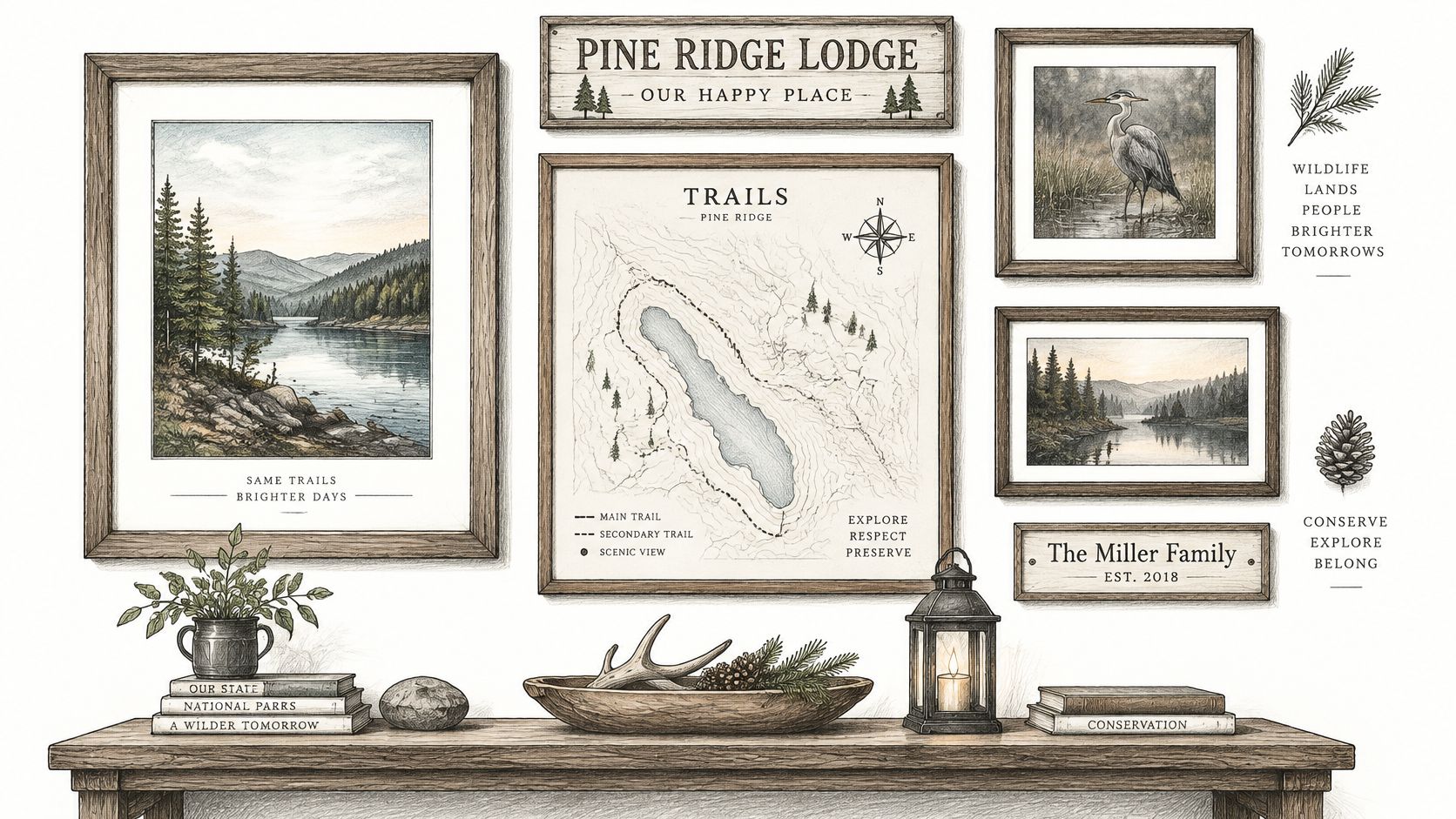
Make the room readable to everyone
The trophy-centered approach in George's Designs' hunting decor ideas is one option among several. Start with a subject guests can ask about, such as the family's pasture, a conservation project, an old property map, or a natural setting nearby. These details connect the room to the place without requiring every guest to share the same hobby.
Hang intimate artwork where seated guests can enjoy it. Secure frames, keep handles within reach, and avoid projecting objects beside routes used by children or people with mobility limitations. A display should add character without narrowing the path through the room.
For composition and subject ideas, rustic western wall art can help you choose a focal piece instead of collecting unrelated ranch symbols. If the household wants mounted trophies, give them a deliberate display area rather than extending the collection into every guest room.
Watch how the sign is hung in relation to the seating and surrounding wall art.
Personalize without guessing
A family name, property name, monogram, or address can make a metal sign personal without hunting-specific language. Match its finish to nearby hardware, and choose lettering guests can read from the seat or approach where they will see it.
Shared seating also needs to handle everyday use. Woodstock Furniture & Mattress Outlet's guide to choosing sofa fabric for easier cleanup can help when selecting furniture for family use.
- For a known property: A named sign or custom ornament connects the gift to a real place.
- For a playful household: A small wood sign can suit a reading nook when its message fits the hosts.
- For uncertain taste: A digital gift card leaves the recipient free to choose permanent wall art.
A gift works best when it reflects the household. Choose a trophy alternative only when it suits the people who live there, not just because they own a lodge.
Stage One Room Before You Buy More
The first room guests reach is the one to fix. Before shopping, try the furniture you already own in a different arrangement. A chair shifted out of the doorway or a crowded console removed may make arrivals easier without adding another object.
Use this checklist for the first decorating session.
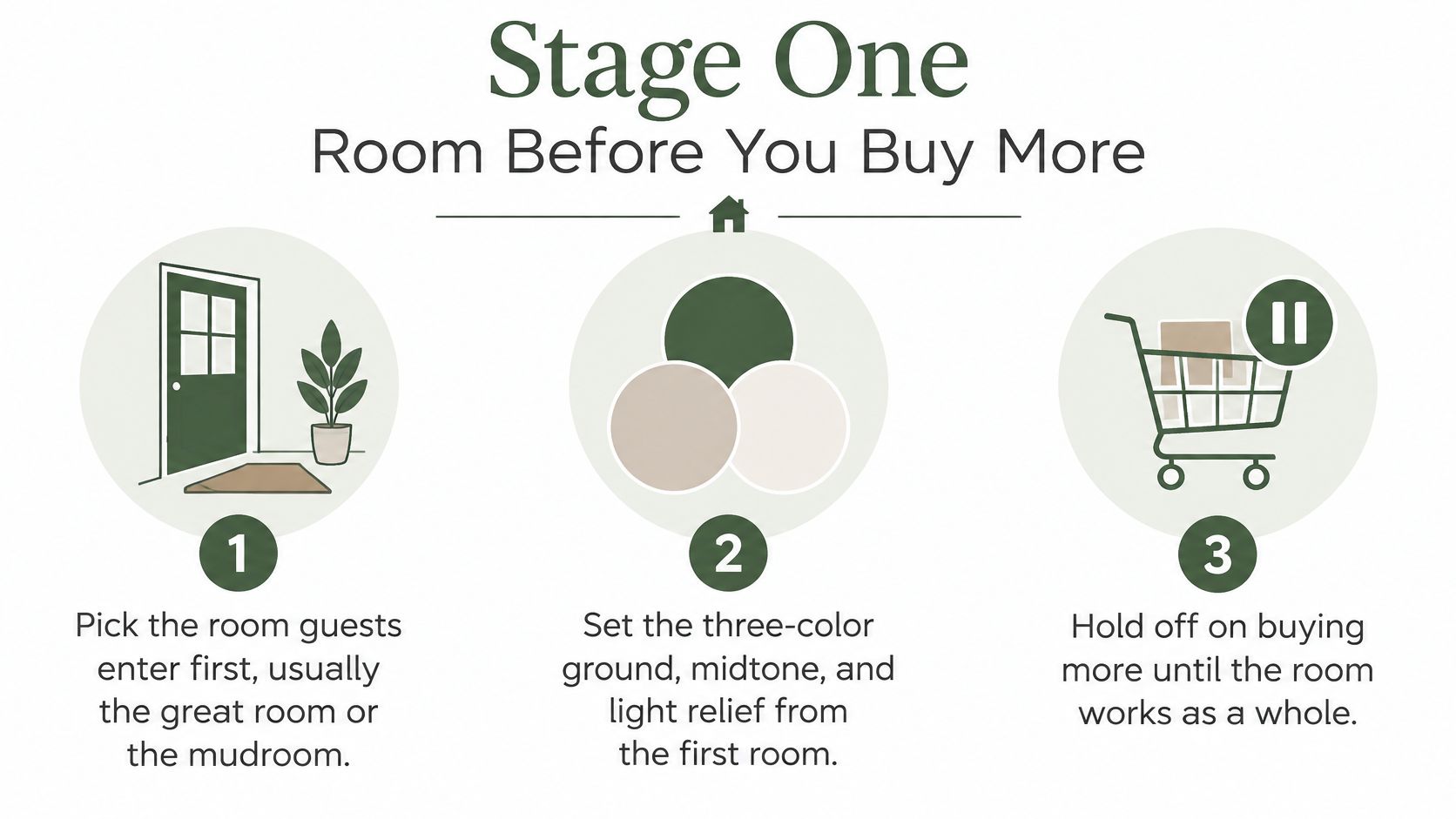
Work through a weekend sequence
- Choose the arrival room. Stand at its entrance with a bag in hand and a coat on. Notice where you naturally want to set them before moving any furniture. That first pause often reveals what the room needs to handle.
- Edit the color. Remove one accessory that competes with the room's dominant color, then compare the space with and without it. Keep the piece only if it adds something the room would otherwise lack.
- Rehearse an arrival. Open the door fully, use the bench, and walk toward the seats. Move anything that blocks the route or makes wet-boot storage awkward.
- Check the evening arrangement. Turn on the lamps and sit in each chair. Read a page, look toward the artwork, and adjust any fixture or glossy frame that creates uncomfortable glare.
- Add the personal mark last. Decide where guests will look and sit before hanging a property-related picture or named sign. Farmhouse World offers custom metal signs alongside locally framed maps, photographs, and commissioned artwork.
- Finish the table and stop. Choose a contained accent, leaving room for drinks and a serving tray. An open surface is useful space, not an invitation to keep adding decor.
Judge the result during use
Let the household spend an ordinary evening in the room before ordering anything else. Notice whether people move chairs, search for a place to set a mug, or avoid a seat because it is awkward to reach. Those small habits show whether the layout works for real use.
The room is ready when boots have a place, dinner cleanup is straightforward, and guests can settle in without instructions. The room is measured by how easily it works, not by how many hunting motifs it holds.
Farmhouse World offers custom metal signs, rustic wall art, and accents such as candle holders and rugs for lived-in ranch rooms. Visit Farmhouse World when the room works well and you're ready to choose a personal finishing piece.


