

You've hung the lights, fluffed the garland, and found the perfect place for one small seasonal detail. Then you notice the gap. A round bauble would fill it, but a Christmas house ornament would say something more personal, whether it represents your current home, a first address, or a little village you've built over time.
Choosing well takes more than liking the shape. Material affects breakage and storage, size determines whether the piece disappears or overwhelms, and the finish needs to work with both your existing décor and the richer, more theatrical entryways emerging for 2026. Personalization adds another decision, especially when you're buying a meaningful gift rather than decorating your own tree.
Table of Contents
- What a Christmas House Ornament Really Is
- Materials That Shape Look and Longevity
- Personalization as a Gifting Upgrade
- Sizing and Finish Choices That Fit Your Space
- Styling a House Ornament for 2026 Entryways
- Gifting Scenarios That Land Well
- Care, Storage, and Shipping Without Stress
- Bringing It All Together
What a Christmas House Ornament Really Is
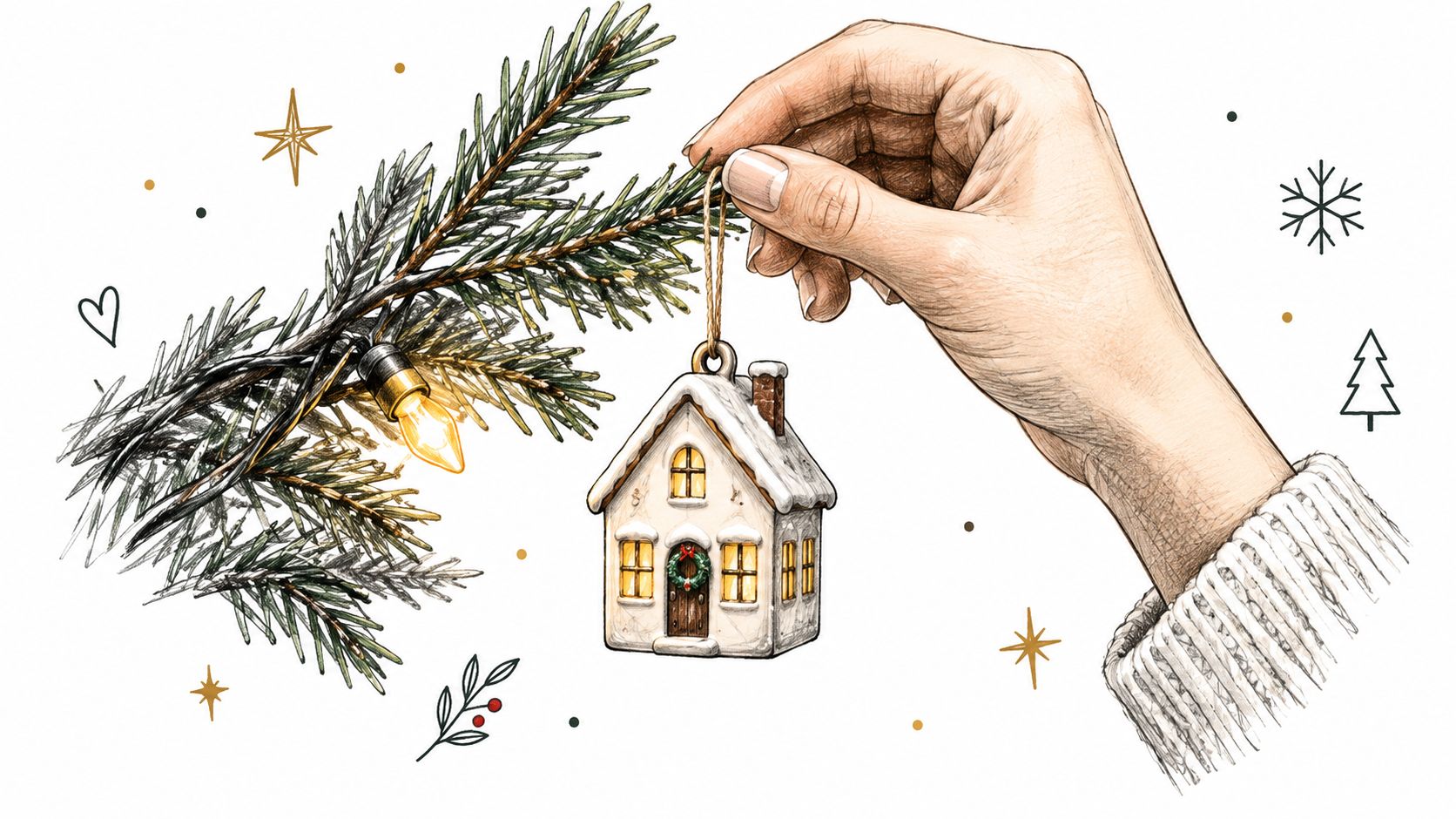
A house-shaped ornament often begins with a simple moment. You're standing beside a freshly lit tree, holding a tiny cottage with a peaked roof, painted windows, and a loop of ribbon. Or you're arranging a wreath beside the front door and realize that a miniature home tucked into the greenery feels more welcoming than another generic sphere.
A Christmas house ornament is a small, three-dimensional or architectural representation of a home made for seasonal display. It might look like a modest cottage, a Victorian townhouse, a farmhouse, a gingerbread dwelling, or a simplified silhouette with only a roofline and doorway. The defining feature is recognition. You can see walls, a roof, windows, and an entrance, even when the design is highly stylized.
That structure separates it from a round bauble or a figurative ornament. A bauble contributes color and shine. A character ornament contributes personality through a person, animal, or object. A house ornament does both while carrying a stronger sense of place. It may recall a real home, a childhood dwelling, a first property, or the home someone hopes to create.
The formats you'll see while shopping
The most familiar format hangs from a tree branch, but the category is broader than that.
- Hanging tree ornaments are usually light enough for branches and often include ribbon, twine, or a metal loop.
- Shelf sitters have a flat base or a weighted body and function more like miniature sculpture.
- Door hangers use a larger silhouette, stronger hanging hardware, and finishes designed to stand out from a wreath or porch arrangement.
- Centerpiece pieces may form part of a small village, candle display, or dining table scene.
A house ornament therefore sits between holiday ornament and small sculpture. That distinction matters because a piece intended for a tree has different requirements from one designed to greet guests at the door. Before you fall for the paintwork, decide whether the house will hang, stand, or anchor a larger arrangement.
Materials That Shape Look and Longevity
Material determines how an ornament looks in the hand, how it behaves during storage, and where it can safely live. Metal and wood are generally the more durable choices, while glass and ceramic suit protected indoor displays because they need gentler handling and more climate-aware storage, as outlined in this Christmas ornament material guide.
Four useful material families
Metal, including tin, brass, pewter, and thin steel, gives a house ornament a vintage, farmhouse, or industrial character. It holds painted windows, cutout doors, and raised roof details well, and it's a sensible choice when the ornament may be knocked from a branch. If you're displaying metal near a damp entryway, follow practical advice for protecting metal from rust.
Wood feels warmer and more handmade. It's light on delicate branches, takes engraved names cleanly, and works naturally with farmhouse, Scandinavian, and traditional décor. It still needs sensible storage, especially away from humid conditions.
Glass produces the deepest sparkle and strongest color variation. It's ideal for a traditional tree or a protected shelf where light can pass through the windows and roofline. The trade-off is clear. Glass needs careful handling, padded storage, and a display location away from busy pathways.
Ceramic resembles a small porcelain figurine and captures hand-painted details beautifully. It's especially effective as a shelf sitter or part of a tabletop village, but it's among the more fragile options.
| Material | Look and Feel | Durability | Best For |
|---|---|---|---|
| Metal | Vintage, rustic, farmhouse | Strong for regular handling and some outdoor use | Family spaces, entryways, durable displays |
| Wood | Warm, crafted, natural | Durable with dry, careful storage | Engraved gifts, trees, mantels |
| Glass | Sparkling, colorful, traditional | Fragile and storage-sensitive | Heirloom trees and protected shelves |
| Ceramic | Figurine-like, detailed, refined | Fragile and best kept indoors | Shelf sitters and display villages |
Practical rule: Choose the material for the ornament's location first, then choose the finish. A beautiful ceramic house won't feel like a good purchase if it's destined for a crowded doorway.
Independent guidance describes metal as capable of tolerating outdoor conditions for decades with minimal care, while properly cared-for wooden ornaments are often estimated to last 15 to 20 years. Those figures come from the same material guidance, and they illustrate why material is the main driver of lifespan, breakage risk, and maintenance.
Personalization as a Gifting Upgrade
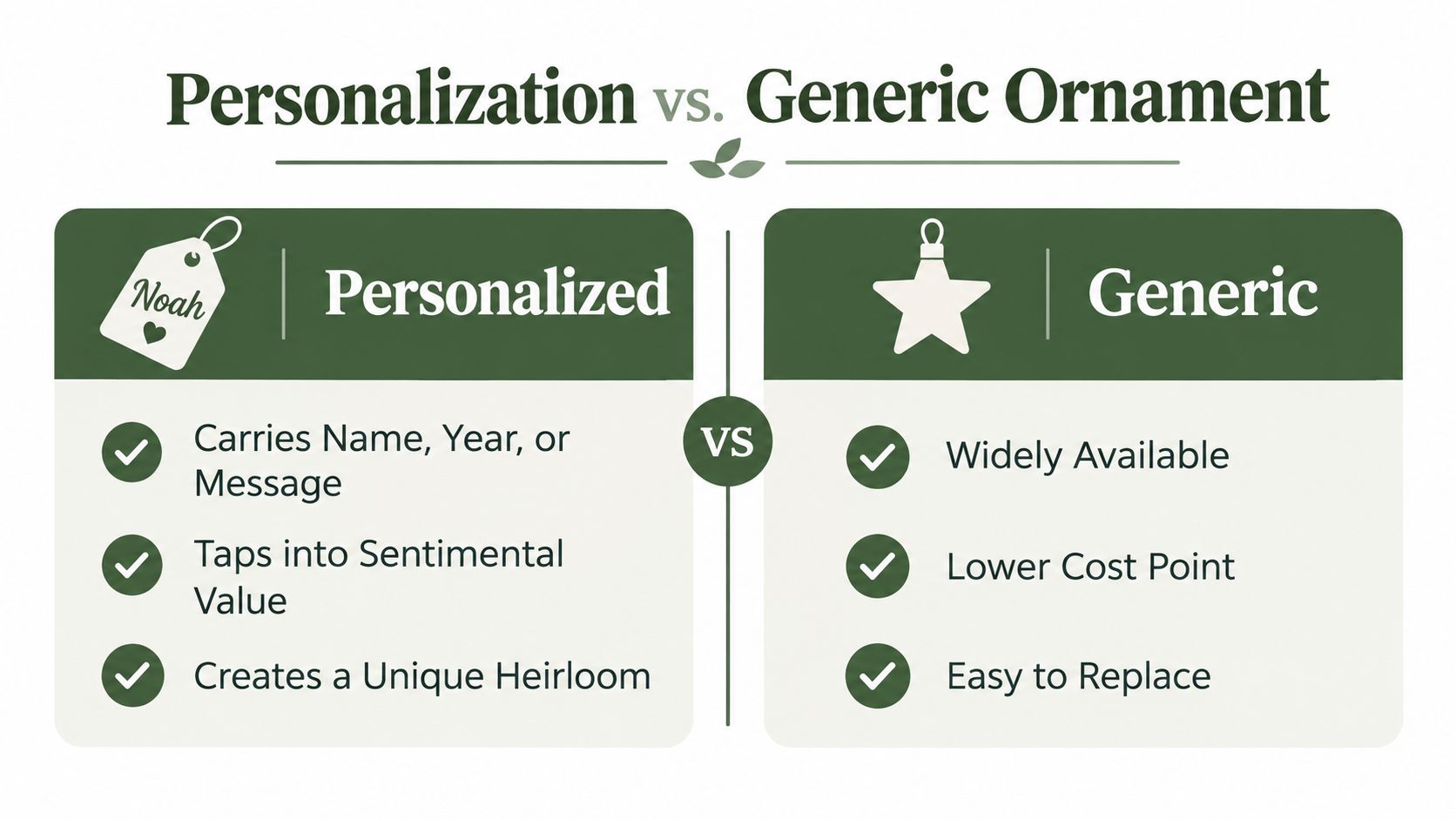
A generic house ornament is flexible. A personalized one is specific, and that difference is the heart of the decision. You might add a family name, address, year, or short message, but customization can also affect production timing, price, storage, and whether the recipient will still want the piece years from now.
The personalized-and-seasonal ornament category reflects strong consumer interest. One independent market estimate places online sales in the category at $37 million in 2025 and projects 20% to 50% growth in 2026, so the demand is real, but demand alone doesn't make personalization the right choice for every buyer. Consider the practical trade-offs before ordering.
- Lead time: A custom piece usually needs more preparation than an in-stock ornament. Ask the maker for a production window rather than assuming it will ship immediately.
- Cost: Names, dates, engraving, and design proofing can raise the price. Compare the finished result, not just the blank ornament.
- Sentiment: Personalization has its strongest emotional effect when the recipient or milestone is fixed, such as a first home, new baby, wedding, or family address.
- Storage: A dated or addressed piece becomes part of a personal record. Keep it with other keepsakes and label the storage box so the story doesn't get lost.
When generic makes more sense
Generic ornaments ship faster, cost less, and can move between rooms or recipients. A plain wooden house can decorate your own tree this year, join a wreath next year, and become a host gift later. Keeping one or two unpersonalized pieces available also helps with last-minute gifts for neighbors, teachers, or friends.
For broader gift-planning ideas, Blushing Ivy Home Fragrance's guide to Australian gifting offers useful context on choosing presents around occasion, presentation, and personal meaning. For ornament-specific ideas, this guide to personalized Christmas ornaments can help you compare what to place on the ornament and what to leave off.
Choose personalization when the story belongs to one person, one household, or one milestone. Choose generic when you want decorating freedom, quicker availability, or a piece that can be reassigned without feeling outdated.
Sizing and Finish Choices That Fit Your Space
The right size depends on visual distance, surrounding decoration, and the strength of the place where the ornament will hang. A house that looks charming in your hand may vanish among tree branches, while the same shape can dominate a small wreath if it's too large.
For crowded tree branches, look at pieces under 3 inches when weight matters. A 3 to 4 inch ornament usually has enough presence for a mantel grouping or wreath without becoming the only thing you see. For a door, shelf, or standalone display, 5 inches and up gives the roofline enough scale to carry the arrangement. These sizing ranges come from the design brief's placement guidance, so treat them as starting points rather than rigid rules.
Match the profile to the setting
A thick, three-dimensional house reads like a miniature building. It works well on a shelf, in a village display, or at the center of a substantial wreath. A flat cutout layers more easily behind ribbon, garland, or a bow, and it puts less strain on a tree branch.
Finish changes the mood just as strongly as size. Brushed brass, nickel, and matte black support modern or farmhouse entryways. Painted ceramic and stained wood with a warm glaze feel more traditional. Glossy lacquer catches tree lights, while satin and matte surfaces are more forgiving on a door hanger that people may touch while opening or closing the door.
| Placement | Recommended Size | Suggested Finish | Why It Works |
|---|---|---|---|
| Christmas tree | Under 3 inches | Glossy paint, light wood, or slim metal | Keeps branch weight manageable and catches light |
| Mantel grouping | 3 to 4 inches | Stained wood or painted ceramic | Adds height and architectural detail |
| Wreath | 3 to 4 inches | Satin metal or flat wood | Layers neatly with ribbon and greenery |
| Front door | 5 inches and up | Matte metal or satin finish | Holds its shape and stays visible from a distance |
| Shelf display | 5 inches and up | Ceramic, glass, or thick wood | Lets the house function as a small sculpture |
Echo nearby hardware whenever possible. A brass door knocker or warm wood console gives a brass or stained-wood ornament an intentional connection, while black lighting fixtures can support a matte-black finish without requiring the whole entryway to match.
Styling a House Ornament for 2026 Entryways
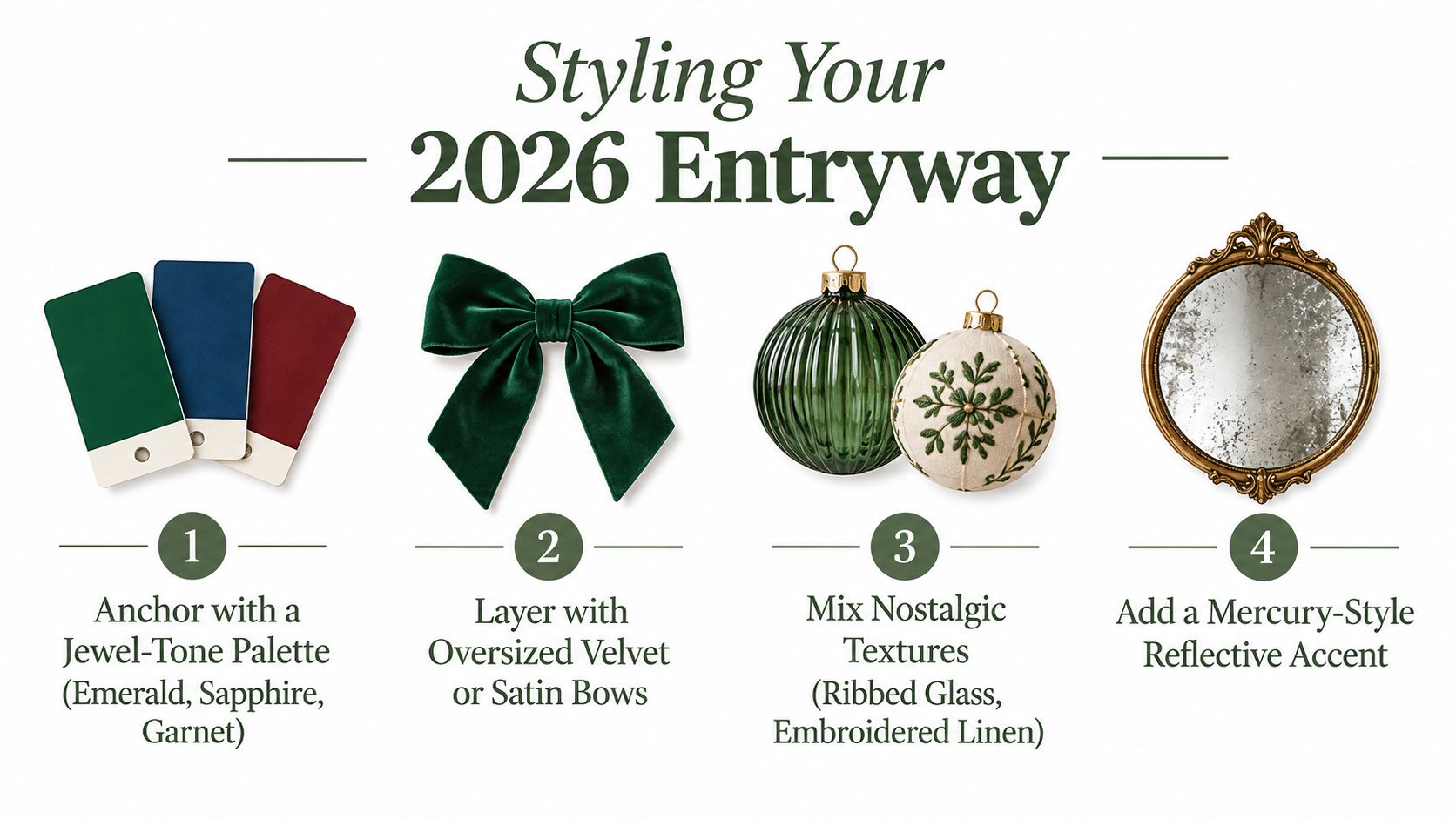
The 2026 holiday entryway trend favors richer jewel tones, oversized bows, nostalgic textures, and larger statement decorations, according to House Beautiful's 2026 Christmas decorating trends. That direction changes the job of a house ornament. It no longer has to carry the entire seasonal story. Instead, it should borrow one visual note from the doorway and reinforce it.
An emerald ceramic house beside a garnet velvet bow creates tonal depth without relying on a standard red-and-green formula. A brushed brass house ornament can warm a wreath wrapped in cool jewel tones, while a ribbed-glass house can echo the nostalgic texture of nearby ornaments or lanterns. The strongest arrangements connect finish, bow scale, and texture rather than matching every color exactly.
Two ways to make the trend work
For a maximalist doorway, use the house as a defined architectural accent. Place it slightly off-center on a wreath, pair it with an oversized satin bow, and let surrounding garland introduce texture through embroidered linen, ribbed glass, or mercury-style metallic details. The ornament doesn't need to compete with the bow. It needs enough contrast to remain readable.
For a quieter traditional home, keep the house in classic red, cream, pine green, or natural wood. Let the garland provide the seasonal movement and use the ornament as a calm focal point. This approach works especially well when the exterior already has strong brick, stone, or painted trim that you don't want to obscure.
You can also choose contrast instead of exterior matching. A cream house against deep green foliage is easy to read, while a jewel-toned house on a similarly colored door may disappear. The question is not whether the ornament matches the home's palette perfectly. It's whether the roofline remains visible and the surrounding elements feel related.
For more ways to build a welcoming doorway, explore these entrance decorating ideas.
A short visual demonstration can help when you're judging scale, layering, and placement. Watch the example below before committing to a crowded arrangement.
Gifting Scenarios That Land Well
A house-shaped gift works because it gives a person a place to recognize. The shape carries more narrative weight than a generic round bauble, especially when the recipient has recently changed homes or marked a family milestone.
Consider a first-time homeowner opening a small ceramic or wooden house engraved with an address. The gift acknowledges the new place without adding a large object that must remain on display year-round. A compact ornament can return to the tree each December, becoming part of the household's seasonal record.
Gifts with a clear story
For a real estate closing gift, a personalized house ornament with the closing year turns a transaction into a recurring memory. The client may not display every branded item they receive, but a piece tied to their home has a natural place in the holiday routine. Keep the wording short so the roofline, windows, and overall design remain attractive.
Grandparents often respond to a small house carrying grandchildren's names, especially when it arrives with a dated photo card. The ornament becomes a visual reminder of the family rather than a disposable seasonal accessory.
Other strong occasions include:
- A first Christmas in a new city: Choose a house that represents the new neighborhood or the feeling of settling in.
- A wedding's first holiday: Add the couple's names or shared surname if they've chosen one.
- A remembrance gift: Use a familiar house silhouette to honor a family home that has been sold or passed down.
- A host gift: Leave personalization off when you're unsure how the recipient decorates or when the gift needs to travel quickly.
A house ornament can also sit alongside a larger sentimental present. For example, custom photo blankets for Christmas offer a way to preserve family images at a larger scale, while the ornament creates a smaller annual ritual. Pairing the two works best when the colors and emotional theme are compatible, not when both items carry every available name and date.
Care, Storage, and Shipping Without Stress
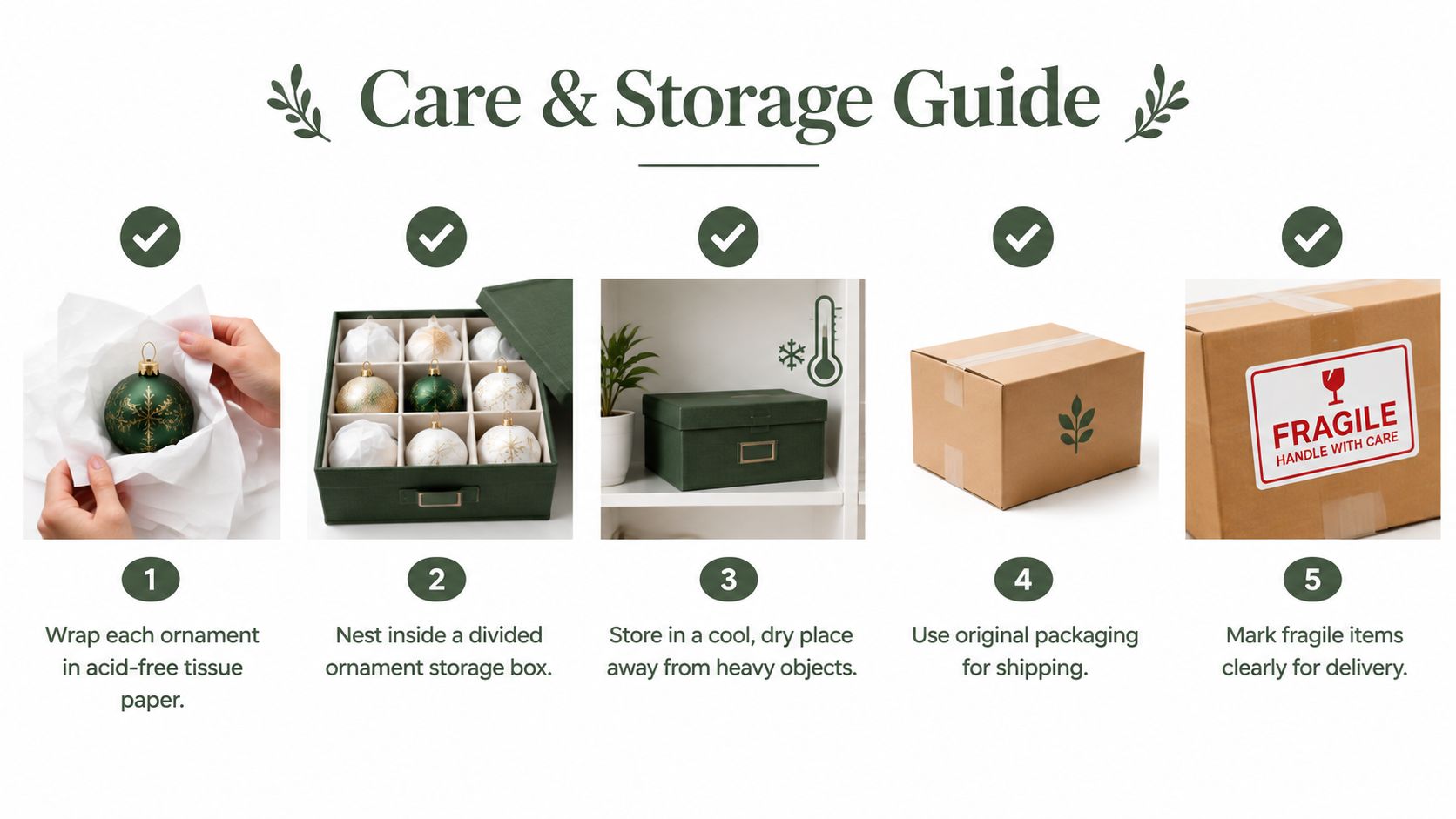
The easiest way to protect a Christmas house ornament is to give it a dedicated storage system from the beginning. Wrap each piece in acid-free tissue, place it in a divided ornament box, and keep the box flat in a cool, dry closet away from attic heat, direct sunlight, and heavy items that could compress the roofline.
Glass and ceramic need extra protection. Use their original packaging when available, add a second outer box for shipping or long-term storage, and avoid letting painted surfaces touch one another. Wood and metal tolerate tighter stacking, but they still benefit from individual wrapping because rubbing can chip paint, scratch finishes, or dull raised details.
Order with the calendar in mind
Personalized orders need more time than generic stock. The practical planning guidance for this purchase recommends allowing 2 to 3 weeks for personalization and 7 to 10 days for generic ornaments. If you're relying on expedited delivery, check the seller's cutoff dates before December 18, and don't assume a shipping upgrade shortens production time.
When a piece has sentimental or monetary importance, consider insurance and signature confirmation. On arrival, inspect the roof, chimney, hanging loop, paintwork, and any personalization before discarding the packaging. Photograph damage immediately and keep the box until the seller confirms that no return shipment is needed.
Store the ornament where you can find the story behind it. A labeled box prevents a meaningful address, year, or family name from becoming an unidentified decoration.
For year-round care, dust with a soft, dry cloth, keep finishes away from harsh cleaners, remove batteries from illuminated pieces when applicable, and check the ribbon or hanging hardware before every season. Coin-cell batteries and loose small components also need secure compartments and careful handling, particularly in homes with young children, as described in holiday decoration safety guidance for families.
Bringing It All Together
A confident purchase comes from combining three decisions instead of treating them separately: material, personalization, and placement. Start with the location. A small hanging house belongs on a tree, while a larger, weightier piece can anchor a shelf, mantel, wreath, or door.
Then select the material that supports that location. Metal is a practical choice for a tree or busy family space when you want resilience. Ceramic gives a shelf display the delicate look of a figurine, but it deserves a protected position. Wood brings warmth to a mantel and accepts engraving naturally, while glass makes the strongest statement where light and sparkle can do the work.
Use the story to decide on customization
Personalization makes sense when the ornament belongs to a specific person or milestone. Engrave a name, address, or year for a legacy gift, a first home, or a family remembrance. Leave the piece generic when you're decorating your own tree with flexibility in mind, buying for an uncertain recipient, or building a collection that can evolve.
Placement also determines scale. Use pieces under 3 inches for crowded tree branches and reserve 5-inch-and-up designs for doors, shelves, or standalone displays. Before ordering, measure the available area, note the color of nearby hardware, and decide whether the finish should blend with the room or contrast against it.
The historical appeal of the category helps explain why these choices feel so personal. Modern glass Christmas ornaments are widely traced to Lauscha, Germany, where mold-blown colored glass baubles emerged in the mid-16th century. Documented production accelerated in the 19th century, the earliest surviving order for “Christmas baubles” dates to 1848, and the inside-silvered process helped the local industry flourish by 1870, according to this history of Christmas tree ornaments. By about 1880, American importer F.W. Woolworth had noticed Lauscha decorations and helped organize their export to the United States, turning a regional craft into a global seasonal product line.
Measure your space, choose the finish that connects with your entryway or tree, and place your order before the early-December shipping rush. You'll have time to inspect the ornament, wrap it properly, and present it with confidence instead of treating it as a last-minute decoration.
Farmhouse World offers rustic Christmas ornaments alongside personalized metal signs, farmhouse wall décor, and gift-focused home accents. Visit Farmhouse World to browse house-friendly seasonal pieces and choose an ornament that fits your material, placement, and gifting plans.


