

You've set the table for a weeknight meal, but the long stretch of bare wood still feels a little stark. A runner can soften that surface without hiding it, adding a tactile layer that makes the table feel ready for dinner, not dressed for a showroom.
The right natural table runner does more than match the room. Its fiber affects how it feels, how you'll care for it, and whether it suits everyday meals, holiday gatherings, outdoor entertaining, or a thoughtful gift. Choosing well starts with how you use your table, then moves to material, fit, and care.
Table of Contents
- Why Natural Table Runners Anchor Farmhouse Style
- Understanding Natural Fibers Linen Cotton and Jute
- Choosing the Right Size and Proportion
- Styling Natural Runners for Every Season
- Caring for Linen Cotton and Jute Runners
- What Natural Really Means for Sustainability
- Comparing Fibers Side by Side
- Making Your Final Choice
Why Natural Table Runners Anchor Farmhouse Style
On a casual evening, the table might hold a bowl of soup, a stack of plates, and a small vase from the garden. On a holiday, it might carry candles, serving dishes, and place settings for guests. In both scenes, a natural-fiber runner gives the table a clear center while leaving much of the wood visible.
That balance is a big part of farmhouse style. Linen, cotton, and jute bring visible texture and a softer touch than a smooth, hard tabletop. A runner also draws the eye along the table, helping a dining area feel composed without requiring a full cloth or elaborate decorations.
The look works because natural materials don't appear perfectly uniform. Linen may show a relaxed crease, cotton can have a soft, familiar hand, and braided jute adds a coarser weave. Those small variations bring warmth to a room, whether the table is an antique farmhouse find or a clean-lined piece in a modern home.
A practical layer, not just decoration
A runner can create a landing place for a centerpiece and give plates or serving pieces a visual connection. It can also help define a dining space in an open kitchen, where the table shares the room with counters and other activity. For inspiration on bringing rustic details together, browse these farmhouse kitchen decor ideas.
Choose a runner that fits the way you dine. If meals are relaxed and frequent, a washable fabric may be more useful than a delicate decorative piece. If you bring out a runner mainly for gatherings, a more textured or patterned option can serve as the focal point.
The aim isn't to cover every mark or make the table look formal. It's to add a layer that feels natural in your home and works with the things already on the table. Once the material and proportions suit your routine, the runner can stay in rotation through ordinary dinners and special occasions alike.
Understanding Natural Fibers Linen Cotton and Jute
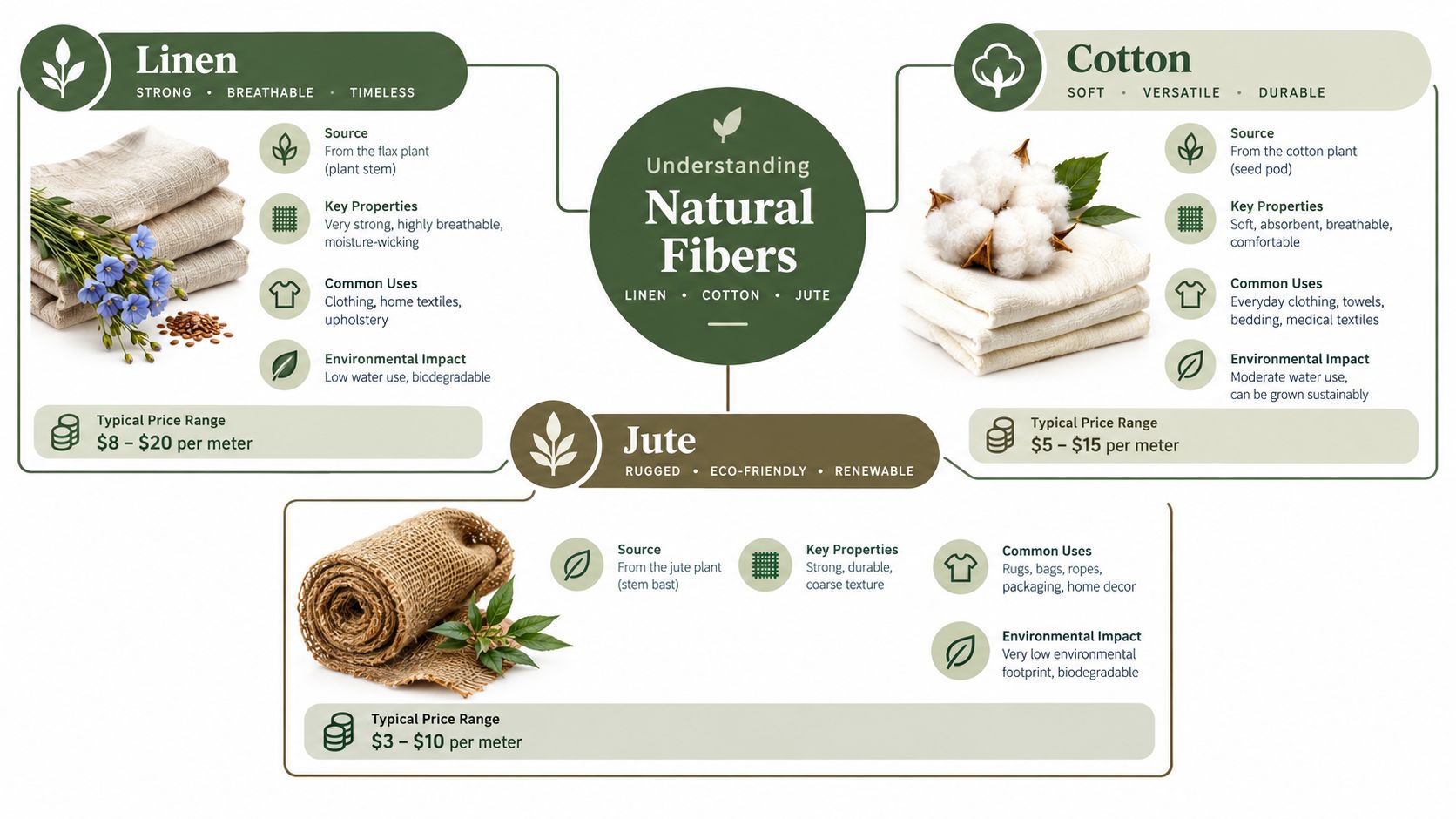
Think of fibers as wardrobe choices for your table. One feels crisp and relaxed, another is easy to live with, and a third makes a stronger textural statement. Knowing the difference helps you choose for use, not just appearance.
Linen for a relaxed, lived-in look
Linen is made from flax and has a naturally textured surface. It often drapes in soft folds and develops a more supple feel with repeated use, while retaining a casually rumpled appearance. If you like a table that looks welcoming rather than perfectly pressed, those creases can be part of the charm.
Linen has an interesting quality that's useful in dining settings: a comparative textile review reports that it can be approximately 20% stronger when wet than when dry (comparative review of linen's wet strength). That can support prompt spot-cleaning after a spill, but it doesn't mean a finished runner is safe to wash at high heat. The weave, seams, finish, and drying method all affect how a particular item holds up.
Cotton for familiar everyday use
Cotton comes from the cotton plant and is often soft to the touch, with a flexible drape that suits many table styles. It's a useful option when you want an approachable fabric that works with everyday place settings and can be easier to clean than a highly textured runner. The exact care depends on the product, so check its label rather than assuming every cotton item can be treated the same way.
If you're weighing linen and cotton fabrics in more detail, More Sewing's fabric guide offers a helpful introduction to their different characteristics.
Jute for pronounced texture
Jute is a plant fiber commonly woven or braided into a sturdy-looking, earthy surface. It can add a rustic accent to wood, ceramics, and simple tableware, but its coarse texture makes it a different choice from a soft cloth runner. Think of it as a decorative layer for a table that won't need frequent laundering.
Choosing the Right Size and Proportion
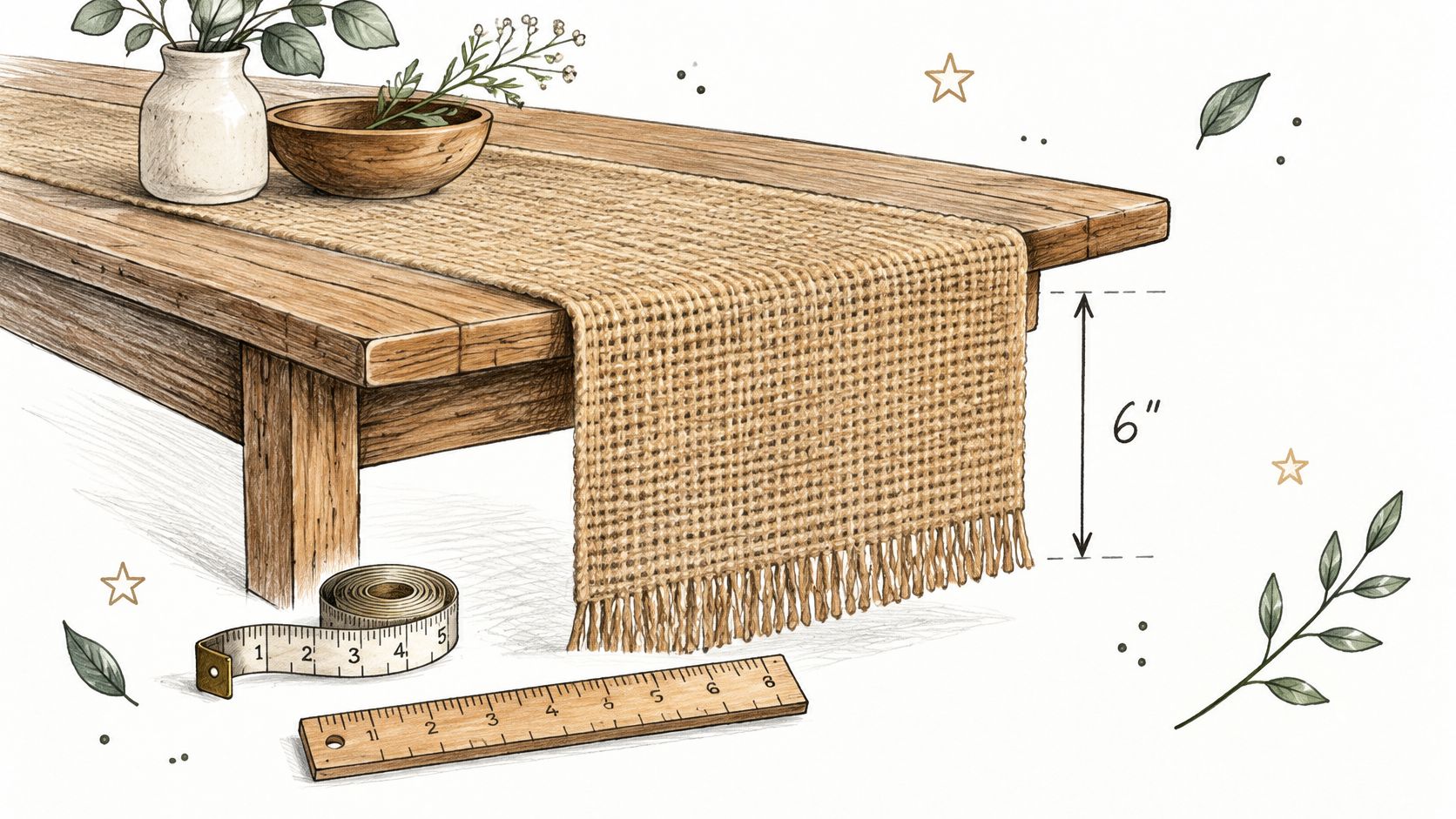
A runner looks intentional when its length relates to the table, rather than ending just short of the edges or hanging awkwardly low. Start by measuring the tabletop from end to end. Then decide whether you want the runner to stop at the edge or extend past it.
For a traditional drape, allow roughly 6 to 12 inches of overhang at each end as a styling guideline. It's a visual rule of thumb, not a requirement. A runner that sits fully on the tabletop can work well when you want a neat look or need to keep fabric away from children, pets, or a busy walkway.
Match length to the table and the setting
On a rectangular table, center the runner along its length and check that the end drop looks balanced. If you're styling an oval table, a runner can follow the central line and echo the table's longer shape. For a round table, try a shorter runner set across the diameter, or use one that extends over two opposite edges. Either way, make sure it doesn't interfere with chairs or serving dishes.
Console tables have different proportions from dining tables. A shorter runner can mark the center and create a base for a lamp or bowl, while a long runner may compete with other objects. The goal is visual balance, not a specific formula.
Consider the featured braided jute sizes as practical reference points: 13 by 36 inches and 13 by 48 inches. Before choosing either, measure your furniture and picture where the ends will land. A smaller console may suit the shorter size, while a longer table might need more coverage. These dimensions don't guarantee a fit for every table, so use your own measurements.
Practical rule: Lay a towel or piece of paper on the table at the runner's intended width and length. It's an easy way to judge the proportion before buying.
For more ideas on coordinating a runner with furniture and table shape, explore these modern farmhouse dining table ideas.
Styling Natural Runners for Every Season
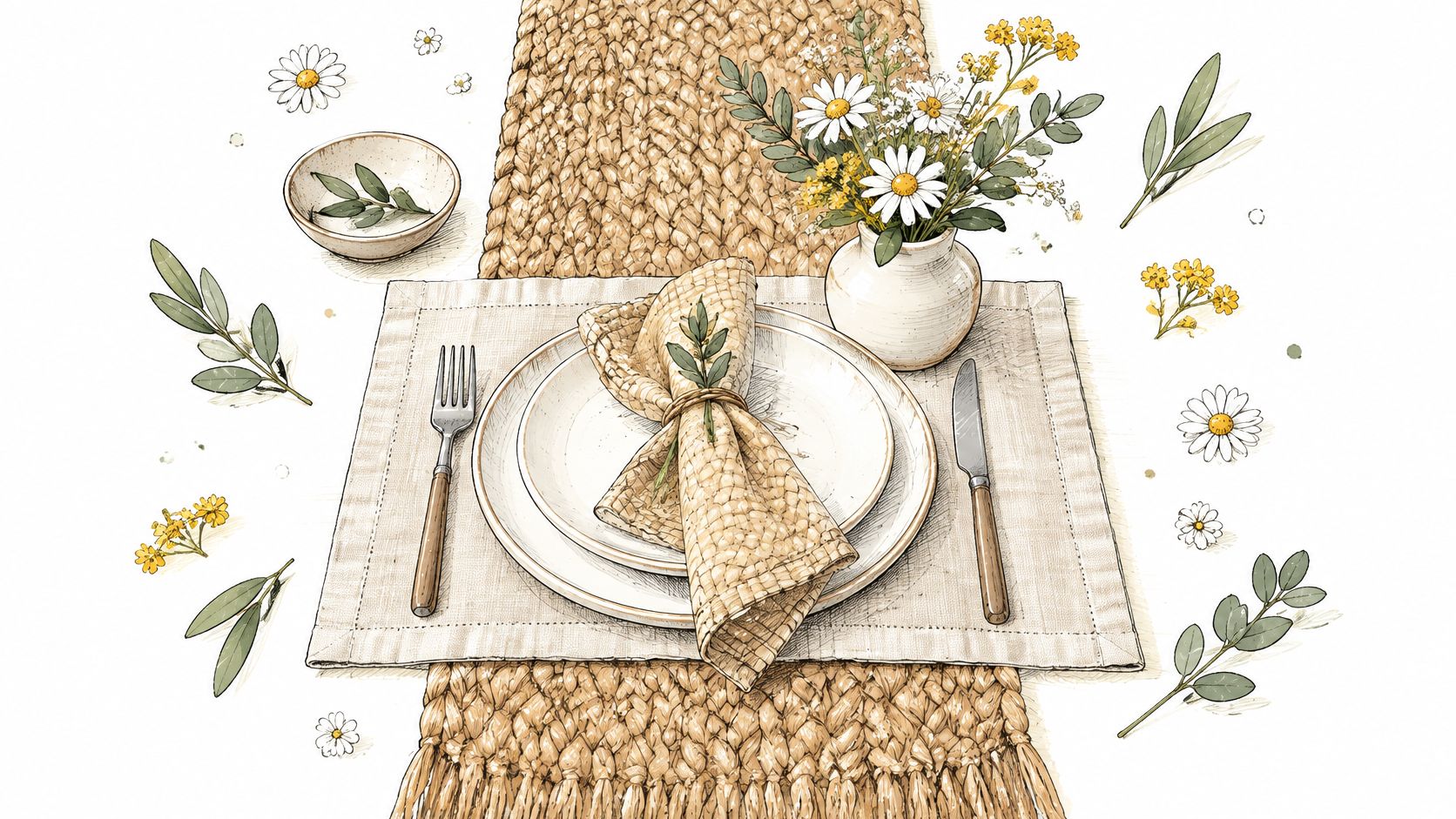
A natural runner is a quiet backdrop. The place settings, centerpiece, and seasonal accents can change around it, which means you don't need a different runner for every occasion. Keep the runner as the steady layer, then adjust color and texture through the objects placed on top.
Let the season guide the accents
For spring and summer, pair a light linen or cotton runner with simple ceramics, fresh greenery, or a small vase of flowers. Leave room between objects so the table feels open. This works especially well for everyday dining, when the centerpiece needs to move easily for serving.
In autumn, add deeper colors and tactile details. A jute or burlap texture can complement wood bowls, warm-toned napkins, and seasonal foliage. For more ways to build a fall table around rustic materials, take a look at these farmhouse fall decor ideas.
Holiday tables can take a different direction without changing the foundation. Keep the runner, then add richer napkins, candlelight, or a small arrangement that suits the gathering. A braided runner with a hand-stenciled motif can bring pattern into the mix: the Black Stars Braided Oval Table Runner is made from natural jute and features a hand-stenciled star design.
Use contrast to keep the table from feeling too matched
A rougher runner can look balanced with smooth dinner plates; a soft linen can sit comfortably beneath vintage serving pieces. You don't need every object to share the same style. A restrained mix of textures often feels more personal than a table where every piece matches.
For outdoor entertaining, choose a runner that suits the setting and can be removed or cleaned according to its care instructions. Keep delicate cloth away from damp ground or spills that may be difficult to manage. A low-key setup with sturdy plates and a simple centerpiece can make the table feel welcoming without asking the runner to do too much.
Caring for Linen Cotton and Jute Runners
Good care begins with the product label, not a broad assumption about a fiber. A runner's weave, dyes, stitching, and finish can affect its needs, even when two pieces use the same material. Follow the manufacturer's instructions first, especially for washing temperature and drying.
Match the cleaning method to the material
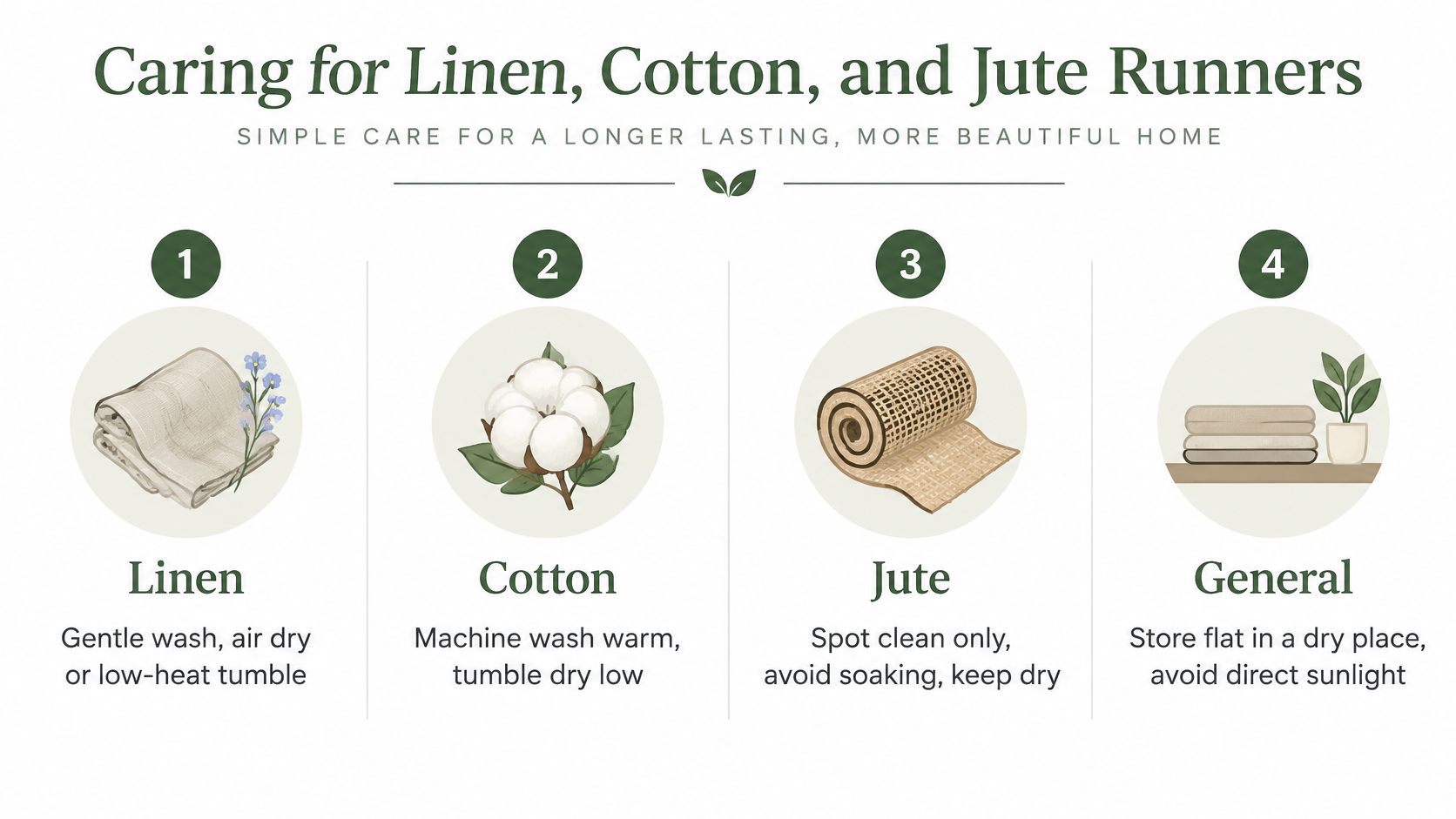
For linen, deal with spills promptly and wash gently if the care label permits. Air drying or low-heat drying may help limit unnecessary stress, while a few creases are normal for the fabric. Wet strength doesn't protect a runner from shrinkage or wrinkling caused by heat and agitation.
Cotton may be easier to manage for routine dining, but don't assume every cotton runner can go through the same wash cycle. Check whether it's machine washable, use the care label's recommended settings, and avoid bleach unless the manufacturer specifically allows it. Strong cleaning products can affect color and fabric finishes.
Jute needs a lighter touch. Spot-clean small marks according to the item's directions, avoid soaking the runner, and don't wring it. Prolonged moisture can be a problem for a coarse natural-fiber weave, so let it dry fully before putting it back on the table.
A quick review of this horse kitchen towels buying guide can also help when comparing kitchen textiles and their practical features.
Store it so the next meal is easy
Before putting a runner away, make sure it's clean and completely dry. Store it flat or loosely folded in a dry place, and avoid prolonged direct sunlight that could affect its appearance. If it's a linen runner, a relaxed fold is often more suitable than trying to keep every crease pressed out.
Most significantly, don't confuse fiber strength with finished-product durability. Hem construction, yarn, seam density, weight, and colorfastness also matter, and care advice for one runner may not apply to another. Gentle handling and the maker's instructions are a safer guide than treating every natural textile as interchangeable.
What Natural Really Means for Sustainability
“Natural” tells you something about where a fiber comes from. It doesn't, by itself, tell you how the crop was grown, how the fabric was dyed, how far the item traveled, how long it will last, or what happens when you're done using it.
That distinction matters to shoppers. In the 2024 Global Home Textiles Survey, approximately 60% of consumers said they always or usually check fiber-content information before purchasing, and 78% considered cotton home textiles among the most sustainable options (survey context on natural fibers and home textiles). Those figures describe consumer views and habits, not proof that a particular cotton runner has a lower impact.
Ask what a label actually verifies
Certifications answer different questions. GOTS can address organic-fiber content and processing requirements, while OEKO-TEX STANDARD 100 focuses on testing for harmful substances. They aren't interchangeable claims.
OEKO-TEX STANDARD 100 assesses textiles from yarn through the finished article, including components such as thread, trims, coatings, and accessories, and its program covers more than 1,000 harmful substances (OEKO-TEX STANDARD 100 requirements). For a runner, ask whether the certificate description covers the finished product and its relevant components. The standard is a human-health textile assessment, not a certification of organic origin, environmental superiority, or food-contact suitability.
A retailer should only say that a runner was tested under the standard when the item has valid certification. That doesn't justify describing it as chemical-free or sustainably produced. For a broader perspective on evaluating materials in the home, Vinson's guide to eco-conscious furniture choices can help frame questions about sourcing and product claims.
Judge the whole item, not one appealing word
Consider the farming method, dyeing and finishing, transport, packaging, likely service life, and end-of-life options. Also ask whether the item is built to withstand how you plan to use it. A runner that stays in regular rotation may be a more practical purchase than a poorly made item marketed with an “eco” label but replaced quickly.
Your decision can be simple: check the fiber content, look for specific and verifiable certification claims, and choose a finish and construction suited to your table. Durability and repeated use belong in the sustainability conversation alongside fiber origin.
Comparing Fibers Side by Side
| Fiber | Texture | Durability | Care Difficulty | Best Use |
|---|---|---|---|---|
| Linen | Softly textured, relaxed drape | Can soften with use; finished-product quality varies | Moderate, follow the care label | A composed everyday table or special gatherings |
| Cotton | Soft and familiar | Depends on weave and construction | Often straightforward, but check instructions | Frequent meals and flexible styling |
| Jute | Coarse, pronounced texture | Suited to decorative use; construction matters | Higher, keep dry and spot-clean as directed | Rustic accents and statement settings |
Use this as a starting point, not a guarantee about any specific runner. If low-fuss cleanup matters most, look for a cotton piece with care instructions that suit your routine. If texture and a more rustic presence are the priority, jute makes a noticeable statement. Choose linen if you like its relaxed drape and don't mind natural creasing.
Making Your Final Choice
Start with the table you use most. For everyday family meals, favor a runner whose care instructions fit your cleaning habits; cotton may be a practical place to begin. For holiday styling, linen can bring a softer, more refined texture, while a patterned jute runner can anchor a rustic centerpiece.
Then check the fit. Measure the table, decide whether you want an overhang, and make sure the runner won't interfere with seating or serving. Finally, be honest about care: a fabric that needs more attention may be a poor match for a table that sees frequent spills.
The right natural table runner isn't the one with the most appealing fiber or the strongest sustainability language. It's the one that fits your table, your routine, and the look you want to live with.
Farmhouse World offers farmhouse-style home decor, including table runners and other accents for living spaces, along with personalized gifts. Visit Farmhouse World to explore pieces that can bring a rustic touch to your table and the rest of your home.


