

You want your farmhouse to feel proud of its American roots, but you don't want the living room to look like a Fourth of July aisle. The oversized flag is folded in the closet, the red accents feel too bright against your warm wood, and the porch needs something more personal than another disposable banner.
The answer is quiet Americana, a restrained approach to patriotic home decor that uses heritage, family, place, and service as design cues. The strongest rooms don't rely on a wall covered in flags. They use a thoughtful color palette, durable materials, personalized details, and accents that can move easily between holidays and everyday life.
Table of Contents
- Quiet Americana - A New Approach to Patriotic Style
- Color Palettes That Blend Tradition with Rustic Charm
- Seasonal Displays Versus Year-Round Patriotism
- Personalizing Entries, Porches, and Coops
- Choosing Durable Materials for Long-Lasting Decor
- Care, Storage, and Gift-Giving Strategies
Quiet Americana - A New Approach to Patriotic Style
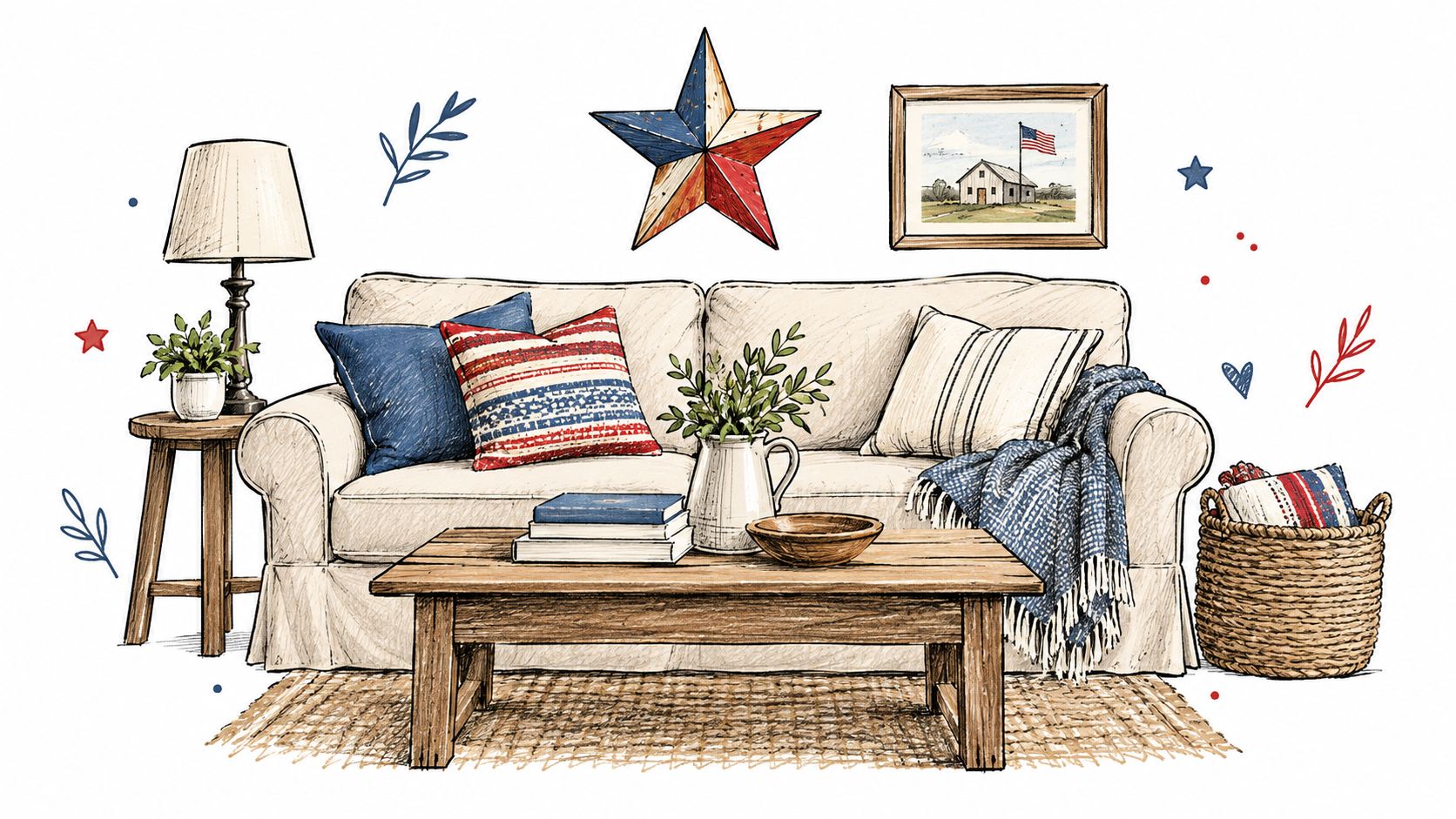
Mara had the right instincts but the wrong display. Her farmhouse living room already had a cream sofa, a reclaimed wood coffee table, iron lighting, and a collection of family photographs. She wanted to honor her grandfather's military service and her family's rural history, yet every patriotic item she considered seemed too loud. A large flag over the mantel would dominate the room, while plastic stars and bright banners would fight the neutral upholstery.
The better solution was a small collection of meaningful pieces. She placed a weathered blue sign near the entry, added a muted red cushion to the sofa, and displayed a framed family photograph beside a vintage-style star. The room still felt like her home, not a temporary holiday set.
Let meaning lead the decoration
Quiet Americana starts with personal significance, not a color scheme. A family name, a state outline, a homestead date, a service branch reference, or a simple star motif can express belonging without turning the room into a political statement. That distinction matters because people display national symbols for different reasons. A June 2025 CBS News poll on flag imagery found that 68% of Americans said they display flags or flag imagery often or sometimes to show patriotism, while 41% said they do so often or sometimes to make a political statement.
Your home can leave room for the first meaning without inviting the second. Use symbols that speak to family, community, work, sacrifice, and place. A personalized sign with a family name can feel more welcoming than a wall of identical flags. A ranch emblem, a state shape, or a carefully chosen historic date can carry real emotional weight while remaining suitable for an entryway throughout the year.
Stylist's rule: If a patriotic object has no connection to your family, place, or values, it probably shouldn't be the focal point.
Build a room that can live beyond July
Use cream, tobacco, weathered gray, faded navy, and natural wood as the foundation. Add red sparingly, preferably through one textile, a small vessel, or a distressed painted detail. This lets the room retain its farmhouse character after the holiday decorations return to storage.
A woven throw can soften a leather chair, while a small star pillow can connect the seating area to a rustic gallery wall. For a meaningful textile with a clearly patriotic focus, the Ecuadane America 250 throw offers a resource to consider when you want warmth and national symbolism in the same layer.
Quiet Americana also works in homes that include different backgrounds and viewpoints. Renters can use removable textiles and tabletop pieces. Veterans' families can incorporate service references without making the entire room military themed. Mixed-political households can choose shared ideas such as family, home, craftsmanship, and gratitude.
The finished space should feel collected rather than coordinated. Let the patriotic details support the farmhouse story already present in your home.
Color Palettes That Blend Tradition with Rustic Charm
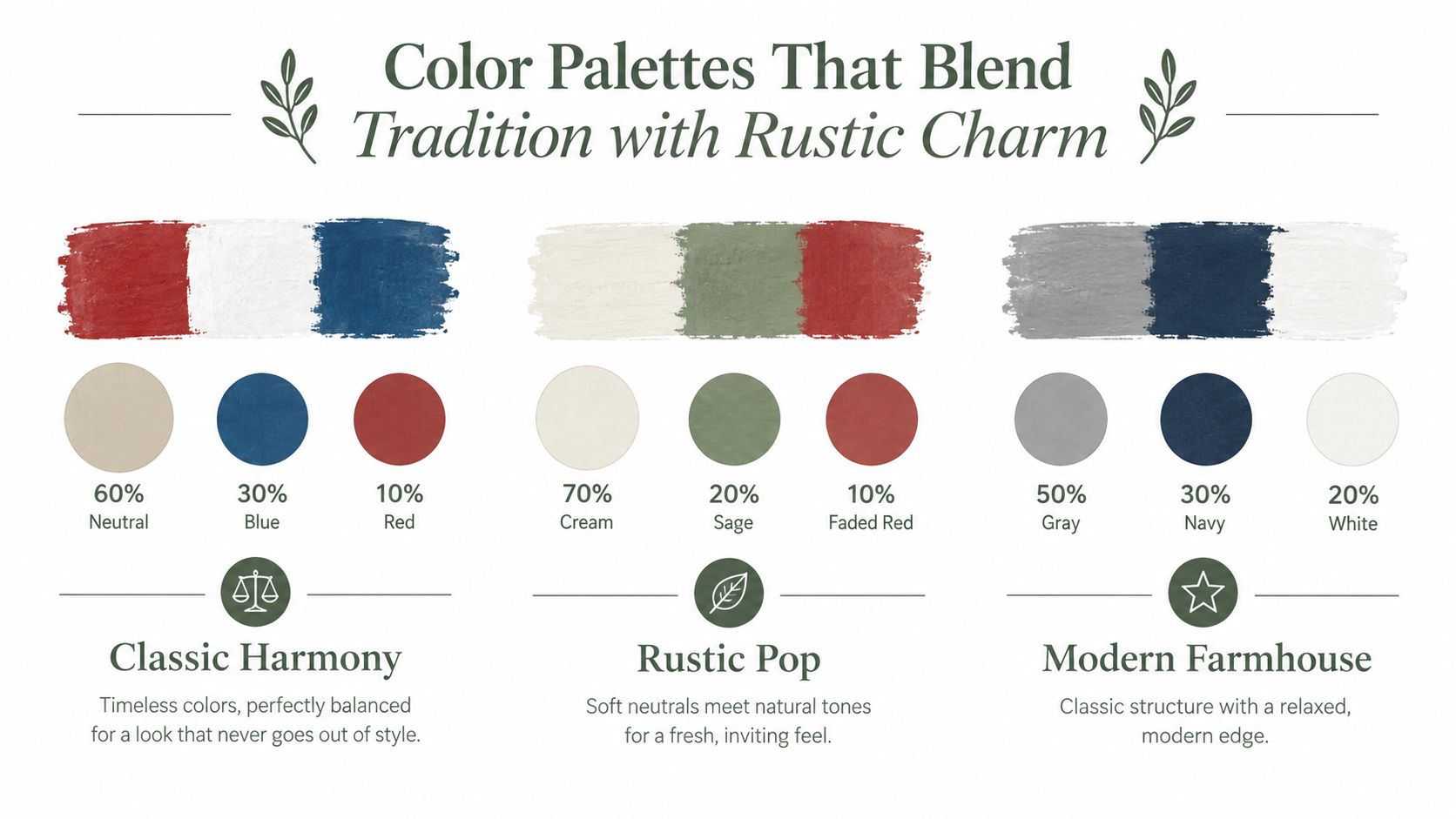
Traditional red, white, and blue can overwhelm a farmhouse because the colors arrive with strong visual contrast. The fix isn't to abandon them. It's to control their intensity and give them enough neutral space to breathe.
Start with the largest surfaces first. Walls, sofas, rugs, curtains, and major furniture should remain in your established farmhouse range, such as cream, warm white, taupe, gray, natural oak, or distressed black. Then introduce navy as the main patriotic color and reserve red for small moments. Blue settles naturally beside reclaimed wood and galvanized metal, while a faded red looks more intentional than a glossy primary red.
Use white as the bridge
White connects the three patriotic colors to rustic materials. It softens navy beside dark iron, separates red from warm wood, and keeps a porch display from looking crowded. Choose the right white for the room. Cream and ivory suit honey-toned timber, while a cleaner white works with cool gray floors and blue-painted cabinetry.
Follow this sequence:
- Set the neutral base. Keep the dominant furniture and backdrop quiet so the accents have somewhere to land.
- Choose one anchor color. Navy usually integrates most easily with farmhouse interiors. Use it on a cushion, sign, painted stool, or exterior door.
- Add red as punctuation. A red stripe, berry-toned textile, or small painted object gives the room energy without taking over.
- Repeat the accent in another material. Pair a navy sign with blue pottery, or echo faded red in a textile and a small metal detail.
- Break up matching sets. Avoid buying every object in the same red-white-and-blue pattern. Variation makes the room look collected.
Pair color with texture
Color alone creates a theme. Texture creates a home. Combine painted wood with woven cotton, iron with linen, and distressed metal with smooth ceramic. A patriotic pillow on a linen sofa feels calmer than the same pillow on a chair surrounded by matching banners.
In the kitchen, try navy dishware with white shelves and one muted red utensil crock. In the living room, use a cream throw, a faded blue cushion, and one red accent on a wood bench. On the porch, let the door or wall provide the strongest color, then keep the wreath, planter, and flag accent restrained.
Seasonal color can also prepare the room for later changes. The Pumpkin Watercolor Pillow Cover - Original Art is an 18-by-18-inch washable cover with a zipper closure, and its fall artwork can replace a summer accent when the season shifts. The point isn't to make patriotic decor match every holiday. It's to choose a flexible neutral foundation that supports thoughtful rotation.
Don't use bright red, bright blue, shiny metallics, and distressed finishes in equal measure. That combination usually looks like a party supply collection. Let weathered surfaces and soft neutrals do most of the visual work.
Seasonal Displays Versus Year-Round Patriotism
A seasonal display gives you permission to be bolder. A year-round arrangement gives your home continuity. Neither approach is automatically better, but mixing them without a plan creates clutter and makes every holiday piece feel permanent.
Choose year-round pieces for objects with personal meaning or strong farmhouse construction. A family-name sign, a state outline, a simple star, or a service-related plaque can remain visible because it expresses identity rather than a calendar date. Choose seasonal pieces for obvious holiday signals, such as bright banners, novelty tableware, striped runners, and highly literal flag patterns.
| Display approach | Works best for | Main risk | Styling recommendation |
|---|---|---|---|
| Year-round patriotism | Family signs, rustic wall art, navy textiles, heritage objects | The room can feel over-themed | Keep the symbols subtle and use neutral surroundings |
| Seasonal patriotism | Flags, banners, bright cushions, table settings | Storage clutter and short use periods | Store by room and rotate only a focused group |
| Layered approach | Homes that value both continuity and celebration | Too many accents competing at once | Keep a permanent anchor and swap smaller pieces |
Create a permanent anchor
Pick one object that establishes the story without demanding attention. On a mantel, that might be a personalized metal sign balanced by pottery and family photographs. In a dining room, it could be a navy textile beneath neutral serving pieces. On a porch, an address plaque can carry more design authority than several small flags.
Use the same principle in the bedroom and kitchen. A small star motif in a quilt, a blue cabinet, or an antique-looking framed print can remain in place because it reads as part of the home's vocabulary. Keep the overt holiday layer in a labeled storage bin so the core room remains useful after the celebration ends.
For a focused holiday refresh, look for practical colorful 4th of July picks from LuminAID, especially when outdoor entertaining calls for a few temporary accents rather than a complete porch redesign. Bring out only what the space can support.
Rotate by room, not by impulse
A good rotation has a beginning and an end. Replace the living room pillow covers, add a porch flag, and change the dining table runner. Don't add new objects to every shelf just because they carry the right colors.
Use the farmhouse mantel decor guide for placement principles, then apply restraint. Remove one everyday object before adding a seasonal one. This keeps the display intentional and makes the change feel like styling rather than accumulation.
Year-round patriotism suits homeowners who want a steady sense of heritage. Seasonal decorating suits people who enjoy the ritual of unpacking and repacking. A layered system works for most households, provided the permanent pieces remain quiet and the temporary pieces stay limited.
Personalizing Entries, Porches, and Coops
The exterior of your home should identify the people and place behind the door. A personalized patriotic display works best when it begins with the architecture, not with a pile of themed accessories.
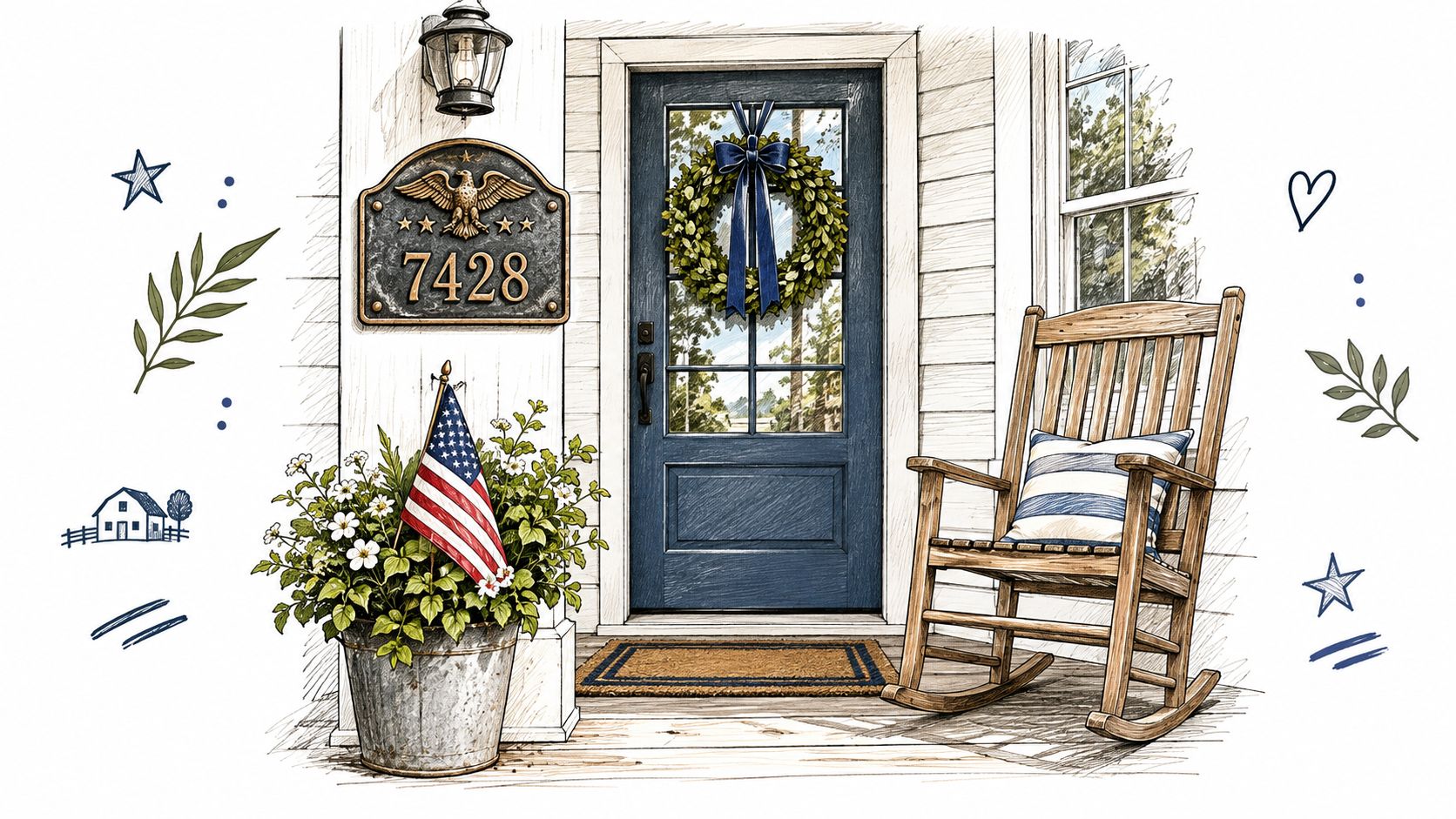
Start at eye level. Measure the area beside the door, above the porch bench, or between two windows before choosing a sign. A narrow vertical sign suits a tight entry, while a wider plaque belongs above a garage, porch beam, or outbuilding. The finish should relate to existing hardware. Black metal suits lanterns and dark door fittings, while copper or weathered silver can connect with warmer wood and galvanized planters.
Give each exterior zone one job
The front door should welcome. The porch should support gathering. The coop or barn should identify the working part of the property. When every zone carries the same flag, star, and red-white-and-blue treatment, the exterior loses hierarchy.
Use this practical arrangement:
- Entry door: Choose one focal object, such as a wreath, vertical sign, or small flag. Keep the surrounding trim simple.
- Porch seating: Add a navy or faded red cushion, a sturdy throw, and one low planter. Avoid placing fragile objects where wind or foot traffic can damage them.
- Address area: Let a legible address plaque do the work. Pair it with a small star, state outline, or family name instead of several competing signs.
- Coop or utility building: Use a personalized sign that identifies the flock, family, or homestead. Keep the message clear and choose mounting hardware that can tolerate moisture.
- Ranch or acreage entrance: Scale matters more than ornament. A larger sign with restrained lettering will look more established than a collection of small decorations.
Personalization should feel specific, not decorative for its own sake. A family name, homestead name, established date, or service branch reference can make the display meaningful. Don't include every possible detail on one sign. Select the information a visitor should understand at a glance.
For practical construction ideas around a working outbuilding, the predator-proof pallet coop plans from Pure Grubs can provide useful context before you add a sign or decorative treatment. A beautiful plaque won't compensate for a poorly protected coop.
Mount for the weather you have
Use reinforced attachment points rather than lightweight adhesive strips on exposed surfaces. Keep metal away from standing water, leave room for air movement, and inspect fasteners when you change seasonal pieces. A covered porch still experiences humidity and wind, so indoor hardware isn't automatically suitable outdoors.
For more ideas on proportion, layering, and first impressions, consult these entrance decorating ideas. Then edit the result. One strong sign, one living element, and one patriotic accent usually look more polished than a crowded collection.
A porch should look ready for a neighbor, not staged for a catalog. Let the family name and the materials tell the story.
Choosing Durable Materials for Long-Lasting Decor
Outdoor patriotic decor fails in predictable ways. Fabric fades, cotton stays damp, untreated steel rusts, and weak seams tear at mounting points. The red-white-and-blue palette makes fading especially obvious, so durability should be part of the design decision before you buy.
For exposed signs, favor aluminum or properly finished steel over unprotected metal. Powder-coated surfaces can provide a more consistent barrier than a thin decorative paint layer, but the finish still needs inspection around drilled holes, edges, and fasteners. Choose rust-resistant hardware, especially on porches where rain can collect behind a plaque.
Match the material to the location
A covered entry and an open pasture don't create the same environmental load. Interior wall art can prioritize texture and appearance. A porch flag needs weather performance. A coop sign needs both legibility and protection from moisture, dust, and repeated handling.
| Location | Suitable priority | What to inspect |
|---|---|---|
| Interior wall | Appearance and tactile finish | Surface treatment, hanging method, cleaning instructions |
| Covered porch | Moisture resistance and stable mounting | Coating, seam quality, hardware, drainage |
| Open yard | UV and weather resistance | Lightfastness, reinforced edges, attachment points |
| Coop or barn | Cleanability and corrosion resistance | Smooth finish, sealed edges, rust-resistant fasteners |
Fabric choice deserves equal attention. Polyester is generally better suited to outdoor flag-style decor because it offers comparatively strong weather and ultraviolet resistance. Nylon dries quickly and can work well when lightweight movement and rapid drying matter. Cotton belongs in protected interiors or short-term applications because wetting adds weight, increases mildew risk, and speeds deterioration when sunlight is also present.
Read past the phrase UV resistant
“UV resistant” is too vague to guide a serious purchase. Ask for the ISO 105-B02 lightfastness grade, which measures color change under artificial light on the Blue Wool Scale from Grade 1, very poor, to Grade 8, outstanding. A grade of 4 or higher is commonly treated as a practical baseline for seasonal outdoor display, as explained in this guide to flag environmental certifications.
Also ask whether the fabric is solution-dyed or UV-treated, how the print is applied, and how long the manufacturer expects the piece to remain outdoors. Dye-sublimated or otherwise fiber-integrated color can be preferable to a surface print, but the complete construction still matters.
Buying rule: Request the substrate, dye or ink method, lightfastness grade, intended exposure duration, seam construction, and care instructions before treating an outdoor item as an investment.
Rotate pieces that receive constant sun, place them in partial shade where practical, and take fabric accents indoors during severe weather. For a detailed approach to treating metal surfaces and preventing corrosion, use this guide on how to protect metal from rust. A durable design isn't maintenance-free. It's designed so maintenance can succeed.
Care, Storage, and Gift-Giving Strategies
Good patriotic home decor earns its place by surviving more than one season. Care begins with a simple inspection whenever you take an item out of storage. Look for loose stitching, chipped coating, bent corners, mildew odor, rust around hardware, and fading along the most sun-exposed edge.
Clean according to the material instead of using one routine for everything. Dust painted metal with a soft, dry cloth before using a lightly damp cloth for stuck-on soil. Dry the surface completely, especially around mounting holes and seams. For textiles, follow the care label, remove inserts before washing, and never store fabric while it feels damp.
Store by material and location
A labeled system saves time and prevents damage. Use flat storage for thin signs, but don't stack heavy items on top of them. Wrap painted or printed surfaces in acid-free tissue or clean fabric rather than allowing rough cardboard to rub against them. Keep hardware in a small labeled pouch attached to the relevant item.
Use this end-of-season checklist:
- Metal signs: Inspect edges and fasteners, clean gently, dry fully, and wrap without trapping moisture.
- Fabric flags and runners: Wash only as directed, air-dry completely, fold loosely, and store away from direct heat.
- Pillow covers: Remove the insert before cleaning and store covers flat or folded with other washable textiles.
- Wood accents: Check for swelling, peeling, or soft spots before placing them in a dry storage area.
- Wreaths and garlands: Protect their shape with a breathable cover instead of compressing them under heavy objects.
- Small tabletop pieces: Group them by room so next year's display doesn't become a hunt through unrelated boxes.
Give meaning, not clutter
A personalized gift works when it reflects the recipient's daily life. A ranch family may appreciate a name or homestead sign. A veteran's household may prefer a restrained service reference. A new homeowner might value an address plaque that makes the entry feel established. For someone who enjoys changing interiors, a washable pillow cover, framed rustic artwork, or seasonal textile offers flexibility without demanding permanent wall space.
Avoid guessing at a person's political style. Choose symbols of family, service, place, craftsmanship, or hospitality. A neutral wood finish with a navy detail can feel more thoughtful than a novelty item selected only because it uses patriotic colors.
The same standard applies when buying for yourself. Spend your attention on pieces that can move between rooms, layer with existing farmhouse furnishings, and remain useful after the holiday. A permanent family sign plus a few replaceable seasonal accents creates more value than a box full of one-use decorations.
The lasting display is the one you can care for, store easily, and understand at a glance when you unpack it next year.
Start with one meaningful anchor this season. Measure the space, check the material specifications, and choose accents that support your home instead of competing with it.
Farmhouse World offers personalized metal signs, rustic wall art, and complementary accents for living spaces, entries, porches, coops, and ranch properties. Visit Farmhouse World to choose a durable family, address, or homestead piece that gives your quiet Americana style a personal center.


