

You've opened the Christmas bins, draped a garland over the mantel, and realized nothing quite belongs together. There's a shiny ornament collection, a tired ribbon, and an empty wall that somehow makes the room feel unfinished. Before you buy more, choose what deserves attention. Rustic farmhouse Christmas decor works best when you spend on a focal piece, soften it with fabric, and let a restrained palette connect the house.
Table of Contents
- Defining the Rustic Farmhouse Christmas Look
- Room-by-Room Pieces and Counts for Every Space
- How to Build a Personalized Metal Sign Focal Point
- Budget Tiers and What to Buy First
- Greenery, Tree and Lighting Setup Without Fire Risk
- Storing and Reusing Decor So Next Year Costs Less
- Pick Your First Focal Piece This Season
Defining the Rustic Farmhouse Christmas Look
A wood tray on the coffee table holds a few ornaments; evergreen softens the mantel, and a linen runner grounds the dining table. The room feels seasonal because natural, handmade, and weathered materials work together, not because every surface carries a holiday motif. Wood and metal give the decor structure, greenery softens hard edges, and textiles add comfort.
Start with pieces that earn their place beyond December. A tray you already use can display ornaments for the season, then return to everyday use. A linen runner can support a holiday centerpiece without becoming a Christmas-only purchase. Keep seasonal wording to a few intentional pieces.
Core materials and colors of the style
| Element | Materials | Colors | Where it fits |
|---|---|---|---|
| Wood | Reclaimed or printed wood signs, wood star ornaments, wood tray | Warm brown, cream | Mantel, entry wall |
| Metal | Steel or aluminum personalized signs, lantern hardware | Black, copper, galvanized silver | Porch, living room wall |
| Greenery | Cedar, pine or mixed evergreen garland and wreaths | Deep green, muted sage | Mantel, banister, door |
| Textiles | Burlap ribbon, jute rug, linen table runner | Oatmeal, natural white, muted plaid | Dining table, entry floor |
| Ornaments | Glass or wood balls, cotton stems, dried orange slices | Red, cream, brass | Tree, bowls, garland accents |
Pick three base colors from the table: cream or oatmeal, warm brown, and deep evergreen make a calm foundation. Use black, copper, or galvanized silver for hardware. Add red ornaments or brass details as a restrained accent, swapping one in rather than adding several competing colors.
Traditional tree decorations included paper, ribbon, fruit, sweets, and household materials, according to the National Christmas Tree Association's history of Christmas trees. That tactile mix still suits farmhouse style: a few natural or food-based ornaments can give a tree character without requiring a matching set.
What makes the room feel less convincing
Glitter, glossy plastic, bright primary colors, and identical accessory sets can overpower quieter finishes. Keep sentimental ornaments, but give them a deliberate place, such as one section of the tree or a bowl, instead of scattering them across every vignette.
Before buying: Write down your base colors and preferred materials. Choose a new piece only if it fits that palette on its own, without prompting another purchase.
Check finishes alongside color. Weathered wood and matte metal sit comfortably together; heavily distressed furniture, shiny ribbon, and reflective signs can compete even when their colors match. A few varied textures add interest, while too many competing finishes make the arrangement feel busy.
Room-by-Room Pieces and Counts for Every Space
Give each room an anchor, a small supporting group, and breathing room. The anchor establishes scale, so size it against the wall or furniture behind it, not against the shelf where you found space.
Use this layout to think in zones rather than individual shopping finds.
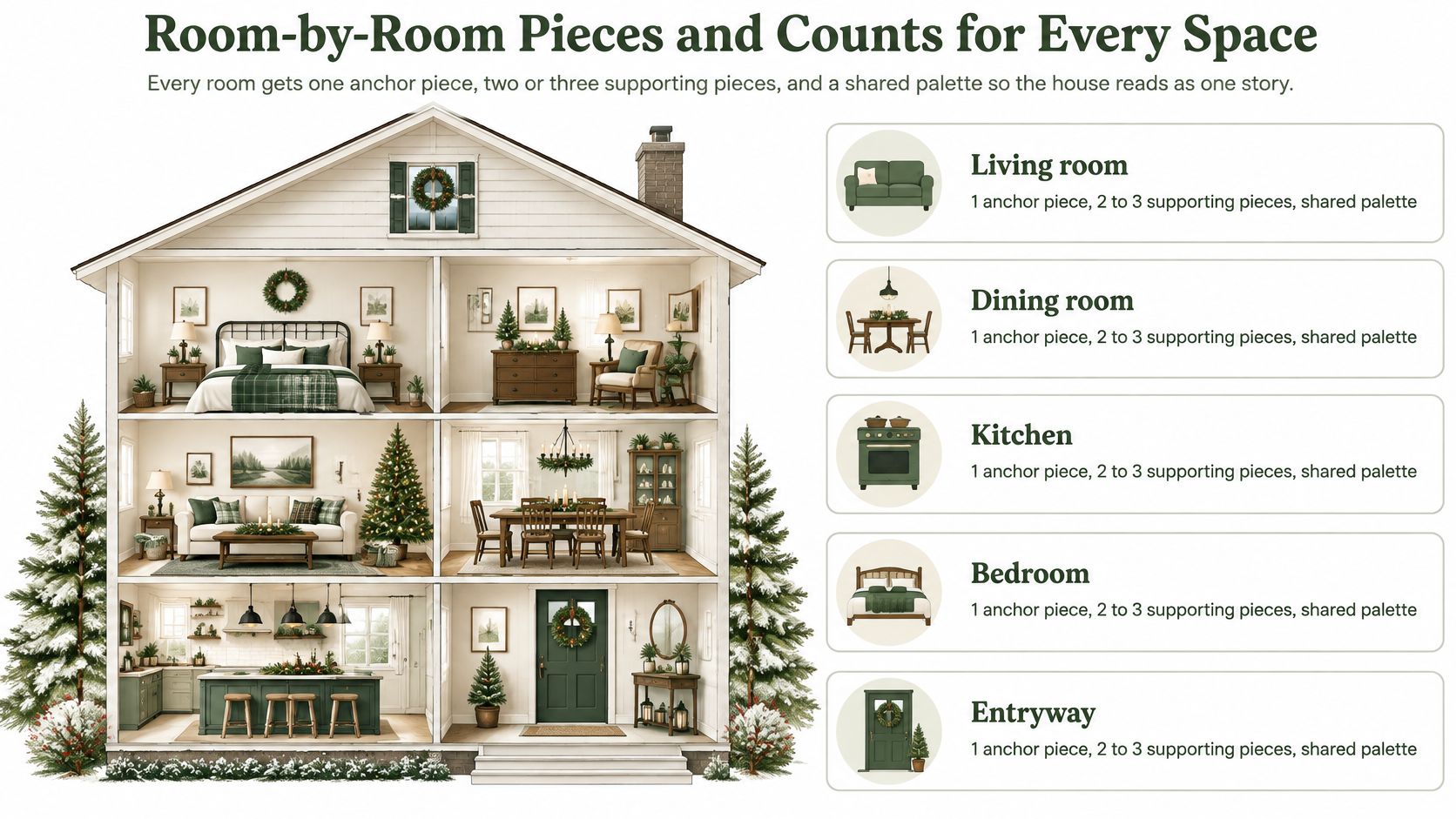
Anchor and supporting pieces by room
The counts below are a hypothetical starter arrangement, not required purchase quantities. Count pieces you already own, and treat a filled bowl or lantern group as a styling unit rather than shopping for every component anew.
| Room | Anchor piece | Supporting pieces | Pieces to start |
|---|---|---|---|
| Living room | Large wood or metal sign above the sofa | Textile throw, two candle holders, garland on a shelf | 4–6 |
| Entryway | Name or wreath sign at eye level | Rustic runner or rug, small lantern | 2–3 |
| Mantel | Garland with battery candles | Metal sign, ornaments in a wood bowl | 5–7 |
| Tree | Natural-toned ornaments and a wood star | Burlap ribbon, wood bead strands | 25–40 ornaments |
| Dining table | Table runner | Candle holders, sprig of greenery | 3–4 |
| Porch | Wreath and lit sign | Pair of lanterns, garland on the railing | 3–4 |
In the living room, let the wall piece carry the visual weight. Fold the throw over a sofa arm rather than adding another decorative object to the coffee table. If the tree already dominates the room, keep the shelf garland modest.
The entryway needs to function. Hang the sign where coats won't cover it, secure the rug against slipping, and keep the lantern out of the door swing. A decorated entrance that makes guests shuffle sideways isn't successful.
Make each arrangement earn its space
On the mantel, battery candles provide height while a low bowl balances the sign. Don't fill every gap with ornaments. For the tree, start with your existing collection and distribute the neutral pieces before deciding whether it needs more.
The dining table should remain usable during meals. A handmade runner is a useful place to repeat fabric colors, and the free Christmas table runner pattern from On Pins & Needles Quilting Co. offers a practical starting point if you sew.
For the porch, position lanterns outside the walking route and secure decorations against movement. Use these farmhouse Christmas porch decor ideas to plan around the doorway rather than crowding the steps.
In a small apartment, skip a separate dining display and concentrate the detail at the entrance. In an open-plan home, repeat the same metal finish across visible zones. Kitchen and bedroom accents can come from relocated pieces, not additional collections.
How to Build a Personalized Metal Sign Focal Point
A sign can carry the room through Christmas and still look at home after the greenery comes down. Choose wording tied to the household, such as a family name, then add seasonal details around it. A short name is easier to reuse than a long holiday message, and one well-sized focal piece usually needs less surrounding decor.
Map the arrangement before ordering. Check the wall for switches, sconces, curtains, and furniture that could compete with the sign or limit its placement.
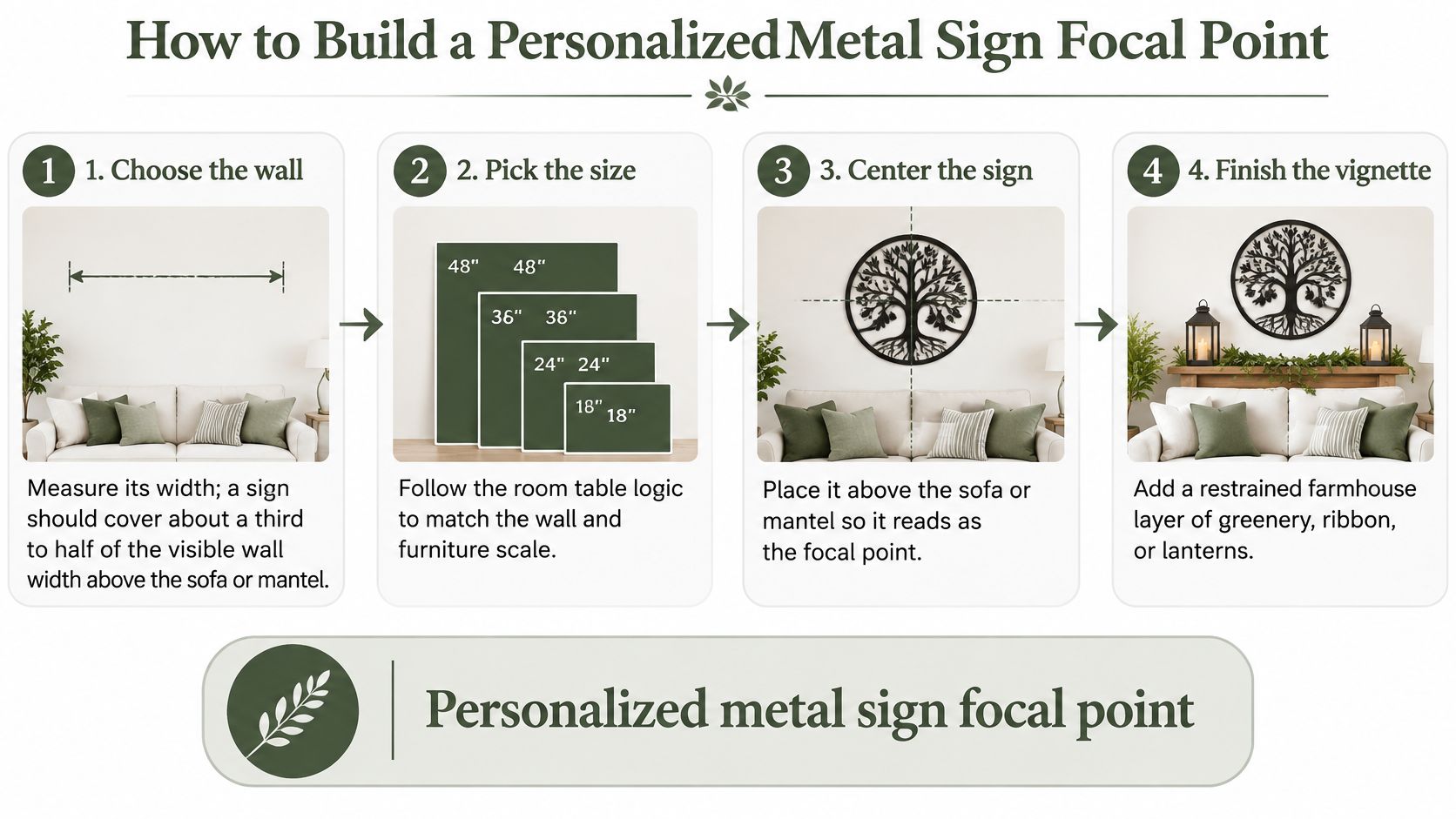
Plan the scale before the wording
- Choose the wall. Measure the visible area above the sofa or mantel, leaving out curtains and nearby furniture. Tape up a paper silhouette before ordering. A sign that looks substantial in a product image can feel too small on a broad wall.
- Match the outline to the furniture. Check the silhouette from the doorway and from the seat where the room is usually viewed. If the sign looks undersized, choose a stronger focal piece or a narrower wall instead of filling the space with small accessories.
- Keep the wording readable. A family name, established date, or short seasonal word is easier to read than a long phrase in decorative lettering. Judge the text from the distance guests will see it, not only up close.
The Personalized Windmill Steel Sign is one option for a customized focal point. Check its preview for the exact finish and characters, then compare the sign's shape and wording with the wall you measured.
Check the details that affect installation
- Inspect the proof character by character. Confirm spelling, capitalization, punctuation, and line breaks before approving the order. Check that the preview matches what you intend to display.
- Choose hardware for the sign and wall. Check the sign's weight, mounting points, and wall construction, then choose compatible fasteners with an appropriate load rating. Magnetic hardware needs a compatible metal attachment surface. It does not replace securely anchoring a bracket to the wall.
- Mark placement with painter's tape. Center the composition over the furniture, check it with a level, and view it while seated. A sign may be centered on the wall but still look misplaced above a sofa that sits off-center.
- Finish below, not all around. Add greenery along the lower edge or place a tray on the surface beneath the sign, keeping the lettering clear. Avoid hanging another attention-grabbing object at the same height.
For more ideas on scale and placement, this guide to farmhouse metal signs can help you assess how the sign relates to the room.
Leave enough empty wall to recognize the sign's outline at a glance. Supporting decorations should frame the focal piece, not camouflage it.
Check production and delivery information before choosing an installation day. If the order is not ready, leave the wall clear rather than rushing to hang a sign with incorrect text.
Budget Tiers and What to Buy First
A modest holiday budget can still create a finished focal area. In 2024, 64% of surveyed consumers expected to spend $100 or less on holiday decor, according to Field Agent research published by Storesight. Start with one focal piece, add a textile layer, then repeat the same palette in another room instead of buying a full collection at once.
The illustration shows how the look can grow from a starter setup to a mantel upgrade and then a full room.

Budget tiers and reuse plans
Use these ranges as working budgets, adjusting the mix to suit what you already own. They are planning examples, not current product price quotes.
| Tier | Typical spend | Pieces to buy | Reuse plan |
|---|---|---|---|
| Starter | About $50–$100 | One metal sign, a short garland, and a few neutral ornaments | Move the sign between the entry and mantel; store the ornaments together |
| Mid-range | About $100–$250 | A sign, wreath, textile runner, and candle holders | Recombine the pieces across rooms each year |
| Full setup | About $250–$500 | Several signs, a rug, fuller tree decor, and a porch set | Store by room in labeled bins for repeated seasonal use |
Buy the focal piece first, the textile layer next, and small repeats last. For example, a starter setup can center on one sign and garland, with a runner or ornaments brought over from existing decor. If the sign takes most of the budget, finish one corner with what you own rather than scattering new purchases through the house.
Compare wood and metal at the same visible size. Open metal lettering leaves more of the wall visible, while a solid wood panel covers more of a busy background. Choose for the wall and the effect you want, rather than assuming one material always costs less.
Spend on pieces you can reuse
Check personalization proofs and remake policies before paying. For fabric and ribbon, compare undertones together where possible. Cream, ivory, and bright white can look unexpectedly different beside one another.
The video offers a styling reference for arranging seasonal decor. Use its ideas to assess placement and palette, then buy only what fills a specific gap.
Fresh greenery adds scent and irregular texture, but it needs care and replacement. Metal, wood, and fabric can be reused; the savings come from storing them and bringing them back, not replacing the theme each year. Clearance ornaments make sense when they fill a known gap. A discount doesn't make an unrelated color useful. Before buying, decide where each piece will go this season and where it can work next year.
Greenery, Tree and Lighting Setup Without Fire Risk
Manage moisture before arranging fresh greenery. Select cedar, pine, or mixed evergreen material that isn't shedding, recut woody stems, soak cut greenery overnight, and use a holder that keeps those stems hydrated.
Keep it in the coolest practical position, away from fireplaces, radiators, heating vents, and direct sun. The University of Missouri Extension notes that live wreaths may last only about a week indoors, while outdoor winter conditions can preserve them for months.
Install greenery where you can inspect it
Secure garlands with soft ties or ribbon at the points where the weight pulls downward. Protect finished surfaces, keep stair handrails usable, and don't rely on a decorative bow to support a heavy arrangement.
- Inspect daily. Remove fresh material when it begins drying rather than waiting until it looks completely brown.
- Use flameless light near foliage. Dry greenery and an open flame are an avoidable combination, even inside an attractive lantern arrangement.
- Keep water contained. Use watertight vessels and protect wood surfaces, while separating electrical connections from watering areas.
For candle styling away from combustible decorations, the creative holiday candle decorations from Jackpot Candles offer ideas you can adapt with battery-operated alternatives. A lantern doesn't make an unsafe candle location safe.
Set up the tree before decorating it
Choose a real or artificial tree based on the care and storage you're willing to provide. For a real tree, use a stable water-holding stand, maintain the water supply, and keep it away from heat; for an artificial tree, check the manufacturer's assembly and lighting instructions.
Arrange larger ornaments deeper into sturdy branches, medium pieces through the body, and smaller details toward the tips. This creates depth without requiring every branch to carry an ornament. Keep heavy metal or wood pieces away from delicate branch ends.
Inspect lighting before switching it on
Choose lights rated for the intended location, look for a recognized safety mark, and inspect cords and sockets before installation. Use outdoor-rated jacketed extension cords outside, respect the product's connection limits, and route cables so doors and fasteners can't pinch them.
Lighting or electrical distribution equipment is involved in 40% of U.S. Christmas-tree fires, according to the National Fire Protection Association. Switch displays off when the home is unattended and before bed.
Stop and investigate: Dropping needles, brittle stems, damaged insulation, or an unexpectedly warm cord aren't cosmetic problems. Disconnect the affected lighting and remove drying greenery before continuing.
These precautions reduce risk; no decorative arrangement is risk-free.
Storing and Reusing Decor So Next Year Costs Less
Storage is part of the decorating budget. A scratched sign, crushed garland, or tangled light set can turn a reusable purchase into another replacement, so pack for the materials rather than squeezing everything into the nearest empty bin.
Reusable trees are already common: a 2021 American Christmas Tree Association figure reported by Parade found that 84% of Christmas-tree displays used artificial trees. Whether your tree is real or artificial, the surrounding ornaments and accents can remain consistent.
Pack by material and condition
| Material | How to pack it | What to avoid |
|---|---|---|
| Metal and wood | Wrap separately in clean cloth, with hardware in labeled bags | Bare surfaces rubbing together |
| Textiles | Clean, dry, and place in breathable bags in a dry storage area | Sealing away damp fabric |
| Ornaments | Use divided, padded trays | Heavy pieces resting on fragile glass |
| Artificial greenery | Store loosely, preserving its shape | Tight folds and heavy bins stacked on top |
| Lights | Unplug, inspect, dry, and coil around a rigid organizer | Sharp bends and tangled plugs |
Remove fresh greenery and food-based decorations that show deterioration before packing. Photograph finished arrangements and place a printed inventory inside each bin, so you won't buy duplicates because you've forgotten what's stored.
Repair before replacing
Test lights before storage and again before installation. The Christmas light tips from South Mountain Window, published by South Mountain Window Cleaning, LLC, explain bulb-testing considerations; don't attempt to rescue a set with damaged wiring.
- Keep sound pieces. Retain decorations that fit your home and have a practical storage place.
- Repair suitable damage. Replace a missing ornament hanger or loose ribbon before it becomes next season's unfinished job.
- Retire unsafe items. Discard broken glass and damaged electrical products rather than hiding them at the bottom of the bin.
Use farmhouse Christmas ornaments as inspiration for recombining the collection you own. A neutral runner can return for a spring dinner, and nonseasonal wall art can move into a bedroom.
Keep pieces that suit the palette, work in another location, and tolerate storage. If something fails that test, decide whether it needs a better home, repair, or replacement rather than automatically buying more.
Pick Your First Focal Piece This Season
The entryway comes into view each time you leave or return home; the living room wall may hold attention for longer. Choose the anchor wall by standing at the doorway and noticing which open area naturally draws the eye. A focal piece works hardest where you regularly see it, so the display can stay small and still feel deliberate.
Choose the anchor wall
Make one decision first: which wall should carry the seasonal focal point? Look from the main sightline, then check that the display will not interfere with doors, furniture, or everyday use. The measurement steps for a metal sign are covered in the earlier section on building a personalized sign focal point.
A custom metal sign or ready-made wall art can lead the arrangement. Keep supporting accents modest: repeat one finish in a small ornament or candle holder, rather than placing several signs with competing messages. The aim is a clear focal point, not a collection that spreads across every available surface.
Sketch the wall and furniture below it. Mark the anchor's outline with painter's tape, then arrange pieces you already own around it. Take a phone photo from the doorway. The smaller view often makes crowded spacing or an awkward balance easier to spot before you buy anything.
Set a practical finish line
Choose an order-by date that leaves enough time for the item to arrive before you plan to decorate. For personalized work, allow for the current production and delivery information when setting that date. If the timing is uncertain, build the display around ready-made pieces you already have and add a custom item another year.
Before using the arrangement regularly, check that greenery and lighting are set up safely. Keep everyday functions in view: keys need a place in the entry, a side table should still hold a drink, and dinner space should remain usable. If the display crowds those routines, remove a supporting piece.
The first focal area can be the whole project for this season. Live with the arrangement before adding more; buy only when you can name a specific visual gap or practical need. That restraint makes the look easier to reuse and keeps next year's decorating costs down.
Farmhouse World sells custom metal signs, rustic home accents, and personalized gifts, including table runners, candle holders, and Christmas ornaments. Browse Farmhouse World for a focal piece that can work beyond Christmas, then add only the accents the chosen wall needs.


