

No single item changes a kitchen table faster than a runner, and that's not just a styling opinion. In a real-life restaurant experiment with 247 participants, fabric table linens improved preferences for appetizers and overall meal quality compared with paper linens, and they also raised perceptions of service, ambiance, and the overall experience, according to a study published through Taylor and Francis Online. A runner gives you that fabric effect without hiding the wood you chose in the first place.
Treat these kitchen table runner ideas as styling systems, not isolated fabric picks. Each one shows how the runner works with layering, signage, tableware, and seasonal swaps, so you can repeat colors and textures instead of copying a photo exactly. If you're still learning about weight, drape, and formal versus relaxed linens, start with styling with Lewis and Sheron Textiles, then come back and pick the one system that matches your table, your tolerance for ironing, and how often you host.
Table of Contents
- 1. Burlap and Linen Farmhouse Runner
- 2. Ticking Stripe Runner
- 3. Buffalo Check or Gingham Runner
- 4. Jute or Rope Coastal Farmhouse Runner
- 5. Embroidered Poultry or Rooster Motif Runner
- 6. Western Ranch Runner with Cowhide or Brand-Inspired Motifs
- 7. Personalized Monogram or Name-Embroidered Runner
- 8. Seasonal Layered Runner with Centerpiece Tray
- Kitchen Table Runner Ideas at a Glance
- Style Your Table, Then Make It Yours
1. Burlap and Linen Farmhouse Runner
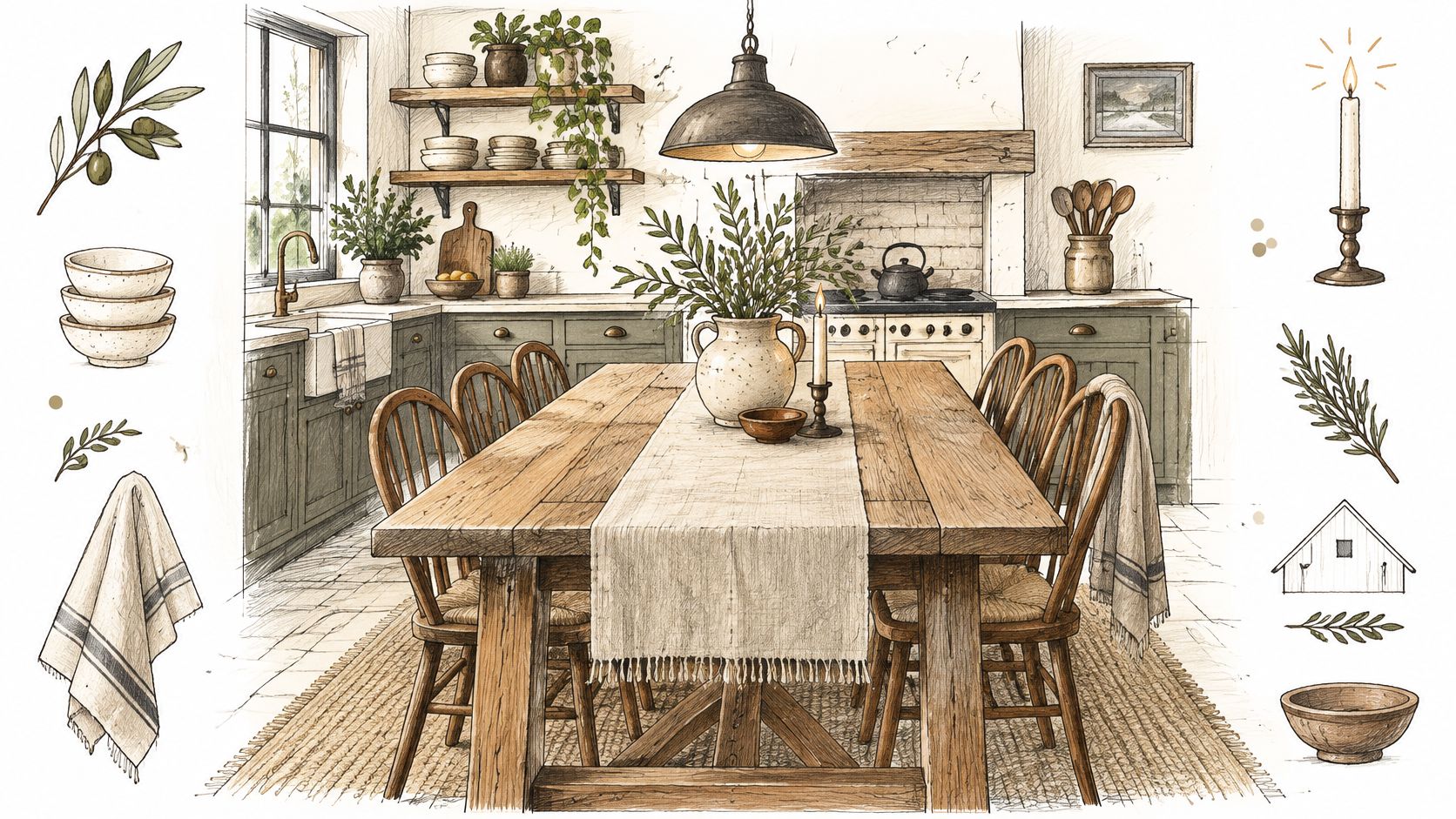
Start with burlap, linen, or a burlap and linen blend if you want the most flexible base in farmhouse styling. The loose weave and slightly uneven surface make an oak or pine table feel lived in rather than staged. Because the palette stays quiet, a black metal sign on the sideboard, cream ceramics, or a dark candle holder gets to be the focal point.
This image shows how a light natural runner softens a wood table without covering it completely.
How to Size It Without Guessing
Use runner length equals table length plus total end drop as your working formula. A practical framework is to target approximately one third of the tabletop width, then add 12 to 24 inches to the table length for a 6 to 12 inch drop at each end, as set out in Sophie Allport's tablecloth size guide. On a typical rectangular table, that keeps plates and placemats on wood while the center stays framed.
For harvest season, pair burlap with mason jars and wheat stems, but keep the arrangement narrow. One heavy candle holder at the center helps stop lightweight linen from shifting when people pass dishes. You'll find more fiber and finish comparisons in this guide to natural table runners for farmhouse tables.
Be honest about care. Linen wrinkles and usually looks better pressed, while burlap can shed and doesn't love repeated washing. I'd reserve pale linen for adult dinners and use a darker blend, or a washable cotton that mimics linen, for daily family meals.
2. Ticking Stripe Runner
Ticking earns its place because it does two jobs at once. The sturdy cotton twill and narrow stripes look historic, and those long lines visually stretch a shorter table. Navy and cream is the safest starting point, black reads more modern farmhouse, and red works when you want a cheerful country kitchen rather than a muted one.
Runners aren't a new invention, either. The Victoria and Albert Museum catalogs a table runner measuring 151.1 centimeters long by 60.9 centimeters wide, in the V&A collection record for that table runner. That scale is a useful reminder that a runner can define a substantial central area, not just add a thin decorative line.
A Worked Example
Say you've got a whitewashed farm table, white ironstone plates, and a galvanized lantern. A navy ticking runner ties the cool metal to the plates without adding another pattern. Keep napkins solid, align the stripes with the long edges, and let the lantern sit dead center so the lines look intentional from the doorway.
Practical rule: If the stripe is bold, everything that touches it should be solid. One pattern leads, the rest supports.
Choose a finished hem rather than a raw cut edge if you'll wash it often. Ticking holds its shape better than loose burlap, but low quality printed stripes can fade unevenly. Woven stripes, where the color runs through the fabric, are worth choosing for a runner you'll use weekly.
3. Buffalo Check or Gingham Runner
A bold check needs breathing room. On a dark, heavy chair set, a red-and-black buffalo check runner can make the table feel crowded, so balance it with simple dishes and a restrained centerpiece. Gingham's smaller scale suits a breakfast nook or a light-colored table where a softer pattern works better.
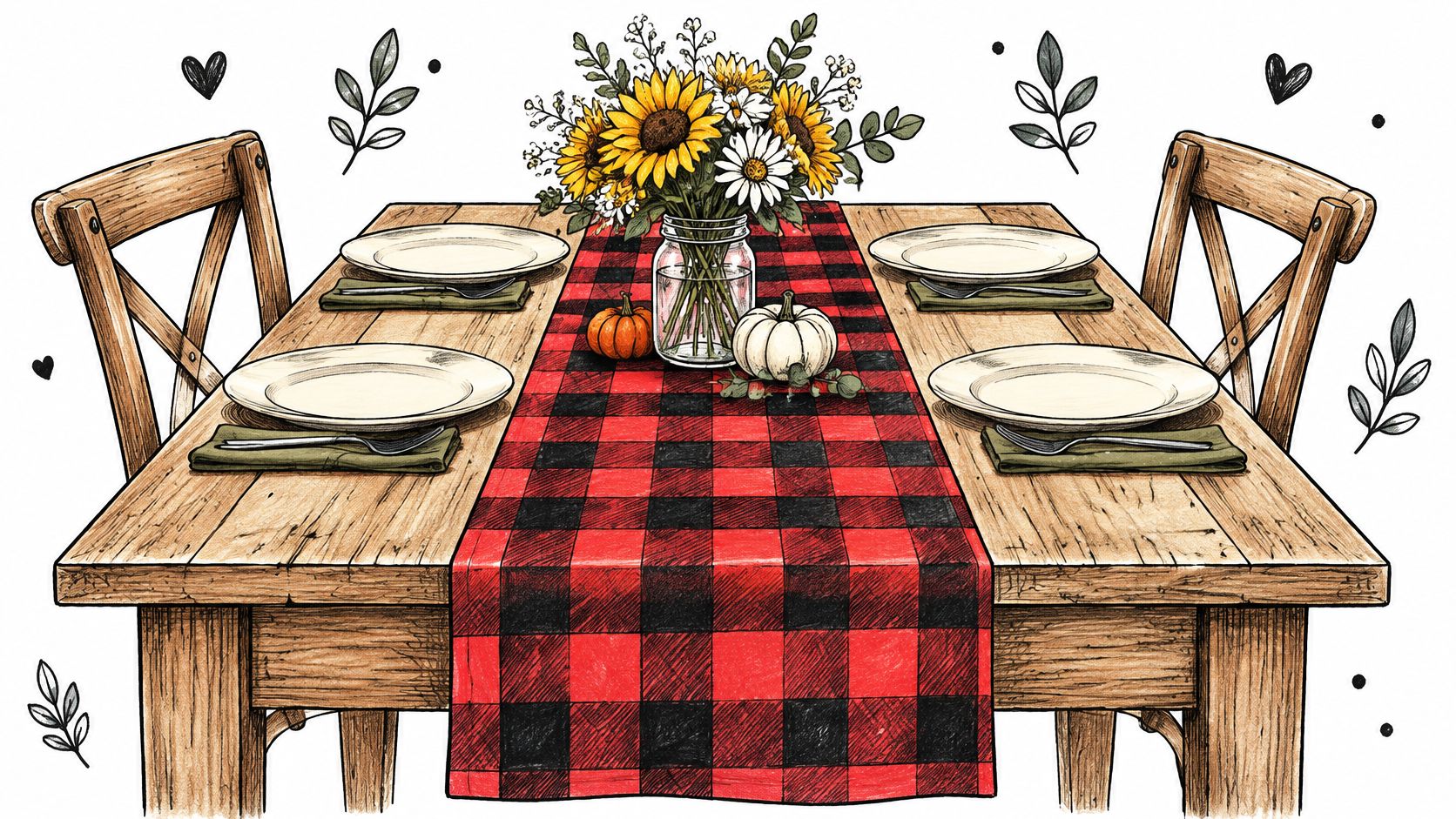
For a holiday setting, pair red buffalo check with wooden ornaments and evergreen. A nearby metal Home Sweet Home sign can repeat the red or black and connect the table to the room. For summer, switch to blue-and-white gingham, white dishes, and a pitcher of hydrangeas. Keep the tableware simple so the pattern remains the focal point.
- Limit the pattern count: Use checks on the runner and, at most, one small accent, such as napkin ties.
- Echo a room color: Pick up red from a sign, blue from cushions, or black from chair frames.
- Press the fabric first: Creases can make the checks appear crooked, even when the print is straight.
Checks also disguise small food marks better than pale solid linen, making gingham a practical choice for everyday breakfasts with children.
4. Jute or Rope Coastal Farmhouse Runner
A coastal farmhouse table needs texture more than color. Jute and braided rope add a sandy, woven surface, while white ceramics and pale blue glass keep the setting light. Pair either with a pale wood or white-painted table, then keep the coastal accents restrained.
For a simple centerpiece, set white pillar candles and a small piece of driftwood on a jute runner. Braided rope under blue-and-white bowls adds texture without introducing another print. Keep shells in a bowl or tray so they don't crowd the place settings.
Where Braided Jute Fits
A braided runner has more visual weight than a thin woven strip, so it can anchor simple dishes without taking over the table. The Black Stars Braided Oval Table Runner Accented by Blue & Red is made of 100% natural jute, is hand stenciled, and comes in 13 inch by 36 inch and 13 inch by 48 inch sizes. On a pale table, white dishes let its star pattern and Americana colors stand out.
Jute can snag, scorch, or hold moisture. Place chargers, placemats, or trivets beneath hot, wet, or rough-edged dishes.
Choose pale sandy jute for a bright room; darker jute gives a white table more definition. Shake crumbs out promptly, since the braided texture can catch them.
5. Embroidered Poultry or Rooster Motif Runner
Put rooster or hen embroidery near the runner's ends, where guests can see it. Keep the center open for a tray, pitcher, or serving bowl; a centerpiece that covers the motif hides the detail that gives the runner its character.
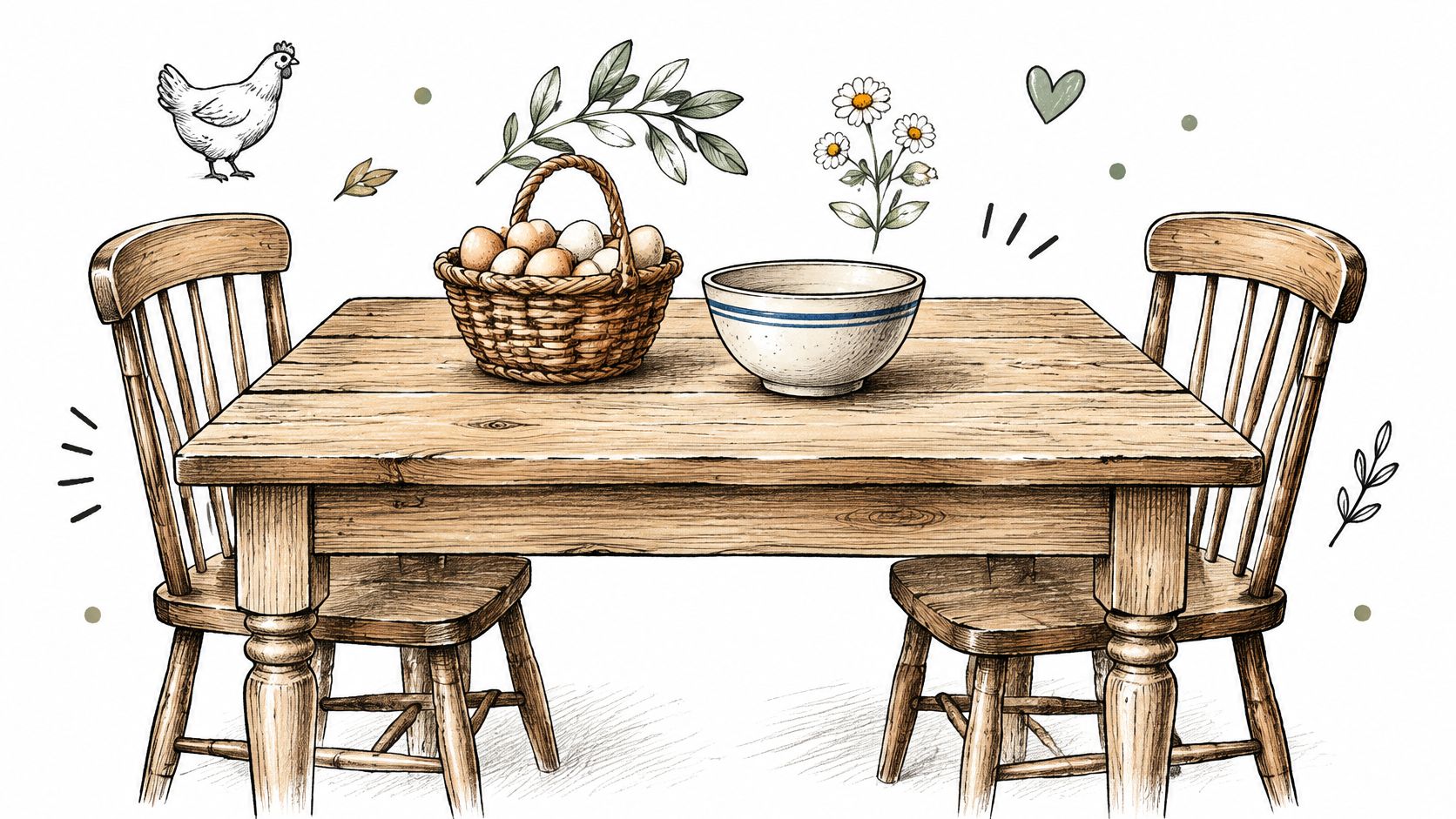
Your kitchen probably already has a Farm Fresh Eggs metal sign or a ceramic hen on the counter. Tie those accents to the table with rust, sage, or mustard stitching, then repeat one of those colors in napkins or greenery. Keep the runner's poultry motif as the main picture, rather than echoing the same rooster on every surface. For another way to carry the theme into the room, browse these rooster rugs for farmhouse kitchens.
- Match colors, not pictures: Pick up the embroidery's rust or sage in the napkins, flowers, or serving pieces.
- Protect the stitching: Hand wash the runner or use a gentle cycle inside a mesh bag. Avoid bleach.
- Keep spring light: An egg-basket print pairs well with cream dishes and a simple centerpiece.
A rooster runner already makes a clear farmhouse statement. Let the tableware and seasonal accents support it, rather than compete with it.
6. Western Ranch Runner with Cowhide or Brand-Inspired Motifs
Keep the dishes matte and quiet so the runner can carry the theme. A faux cowhide, brand-inspired motif, or lone-star design pairs well with plain linen napkins, dark stoneware, and a single iron or leather accent. Repeat one color from the runner in the tableware to make the mix feel deliberate.
A Ranch Table That Still Feels Calm
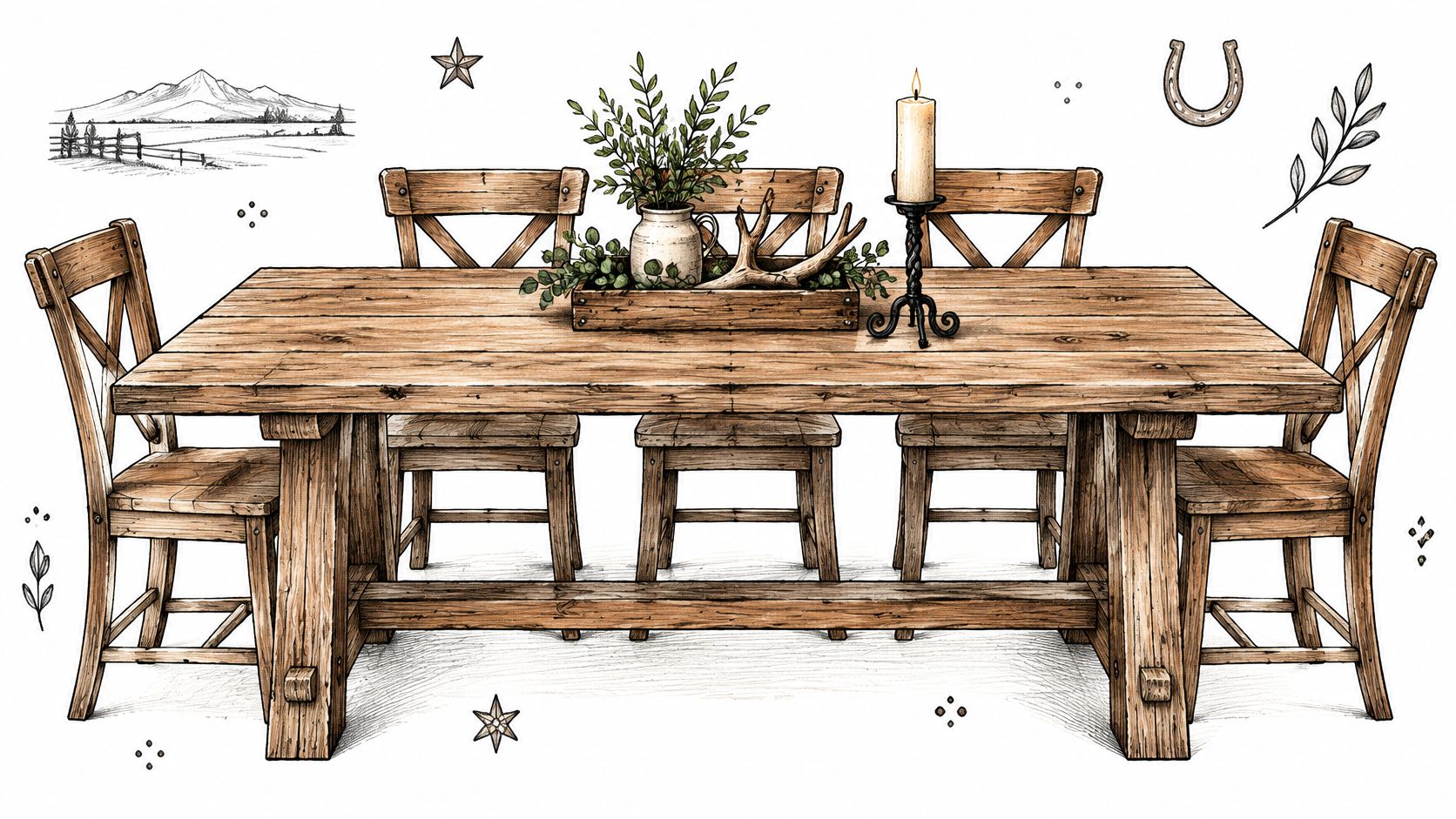
Set a faux cowhide runner on reclaimed wood, then echo its dark tones with a metal sign or an iron candle holder. A star-patterned runner can also connect to an iron chandelier through a repeated shape. Keep the centerpiece compact enough to leave the runner's design visible, and choose serving pieces in neutral finishes so the table remains practical.
Check the pattern's scale against the runner's width. Large cowhide spots can be cut off at the edges and look accidental, so inspect how the design reads when the runner lies flat. For a table used for crafts, homework, and dinner, a woven star cotton runner is easier to care for than faux hide, though it makes a quieter statement. Keep faux hide out of direct sun to limit fading, and wipe it clean rather than soaking it if the backing is not washable.
7. Personalized Monogram or Name-Embroidered Runner
Personalization turns a runner from decor into a keepsake, which is exactly why you should slow down before ordering. A family surname, monogram, or established date embroidered on the ends works for weddings, housewarmings, and anniversary tables. It also means a spelling mistake lives on your table for years.
Ask for a proof when the seller offers one and check every letter, the date format, and the thread color against your dishes. Script suits cottage rooms and curved chair backs. Block letters suit modern farmhouse tables with black hardware and straight lines. If you've got a personalized family name metal sign at the front door, echo its font family loosely rather than trying to match it exactly.
You'll find layout inspiration in this guide to a custom monogram sign for farmhouse homes. The same logic applies on fabric. Initials at each end feel balanced, while a full surname across the center forces you to keep centerpieces small forever.
Order early: Personalized work and holiday deadlines don't forgive late decisions. Confirm lead time before you build a wedding or Christmas table around delivery.
For a wedding gift, a linen runner embroidered with a surname and Est. 1985 style date feels personal without being hard to store. Choose a neutral base so the couple can use it after their taste in accent colors changes.
8. Seasonal Layered Runner with Centerpiece Tray
A narrow seasonal topper should show the base runner on both sides. Keep a neutral runner on the table year-round, then swap the topper and tray accents with the season. Red buffalo check suits Christmas over burlap; sage pairs with linen in spring; a deeper stripe and wheat bring autumn color. The base protects the table and saves a full restyle.
A tray keeps the centerpiece contained while leaving the fabric visible. Choose wood for a warm, rustic finish or metal for a sharper contrast.
How to Keep Layers From Looking Messy
Use the base runner's proportions as your guide, and choose a narrower topper that still leaves both fabrics clearly visible. Keep the topper shorter than the base at each end. Anchor the center with a wooden tray, low box, or small metal Gather sign. Arrange the seasonal pieces on the tray so you can lift the centerpiece aside for a family-style meal.
- Store toppers flat or rolled: Breathable bags help prevent sharp creases and musty drawer smells.
- Limit the tray: Candles, one sign, and one form of greenery are enough on most kitchen tables.
- Check sight lines: Sit in the chairs and make sure the centerpiece doesn't block conversation across the table.
This system also makes seasonal changes simple. If a topper stains or no longer suits the room, replace that smaller layer and keep the neutral base.
Kitchen Table Runner Ideas at a Glance
Choose by how the table works day to day, then match the runner to the room's existing details. A narrow stripe can echo a sign or chair fabric; a rooster motif can pick up kitchen decor; a textured neutral gives patterned plates more space to stand out.
| Runner Style | Look & Feel | Best For | Practical Trade-Off |
|---|---|---|---|
| Burlap and Linen Farmhouse Runner | Natural texture, muted earth tones, relaxed farmhouse style | Everyday rustic tables and neutral decor | Best when a relaxed, slightly rumpled finish suits the room |
| Ticking Stripe Runner | Classic narrow stripes with a cheerful country feel | Long tables and rustic or coastal farmhouse decor | Repeats easily with striped towels or simple tableware |
| Buffalo Check or Gingham Runner | Playful checks, from bold and rugged to classic and cheerful | Country kitchens and seasonal table settings | Strong pattern can compete with busy dishes or signage |
| Jute or Rope Coastal Farmhouse Runner | Textured natural fibers in airy, sandy tones | Beach homes and bright coastal farmhouse spaces | Choose it for texture, not for a smooth surface for serving |
| Embroidered Poultry or Rooster Motif Runner | Farm-themed motifs in earthy or classic colors | Homesteads and kitchens with farm decor | Works best when other farm motifs are kept restrained |
| Western Ranch Runner with Cowhide or Brand-Inspired Motifs | Bold Western patterns in brown, black, cream, and rust | Ranch-style dining rooms and Western decor | A focused choice for rooms already using Western accents |
| Personalized Monogram or Name-Embroidered Runner | Custom, personal details on cotton, linen, or canvas | Keepsake gifts and family-focused homes | The personal detail makes it less adaptable to a new color scheme |
| Seasonal Layered Runner with Centerpiece Tray | Neutral base with seasonal accents and a focal centerpiece | Tables that need to serve meals as well as display decor | Requires enough clear table space for both the tray and place settings |
Style Your Table, Then Make It Yours
A runner works best when it connects the table to the room around it. Measure the tabletop, then leave enough clear space for plates, glasses, and elbows. Standard dining tables are generally 28 to 30 inches high, and planning guidance commonly allocates about 24 inches of table edge space per diner, according to Learn Architecture's dining table dimensions guide. Let that footprint guide your centerpiece: a narrow tray or low arrangement keeps the table usable.
Before shopping, note what will stay in the room: the chairs, a wall sign, or the dishes used every day. Choose a runner pattern that picks up one of those existing details, then decide whether the centerpiece should echo the pattern or provide a quieter counterpoint. A rooster motif can pair with plain dishes and a simple tray; checks or stripes leave more room for patterned tableware.
Shop in this order: measure the table, identify the colors and motifs already in view, then compare runner lengths and shapes with the centerpiece you plan to use. Farmhouse World's Black Stars Braided Oval Table Runner, made of 100% natural jute and hand stenciled, comes in 13" x 36" and 13" x 48" sizes and is on sale for $32.95 to $39.95. Its oval shape suits a centerpiece that follows the table's centerline, while the black pattern gives neutral dishes a defined anchor.
For seasonal changes, keep the main tableware and sign in place, then switch the tray contents or add a small topper. Saved tablescape images can help compare patterns and color pairings before buying; this roundup of Pinterest niches for eCommerce marketing explores how home decor discovery starts with saved images.
Measure first, then choose the detail that ties the runner to the room. The result should feel coordinated without making the table harder to use.


