
You've got a long driveway, a gate guests can easily miss, and a family name you'd like to put on the property. A custom metal ranch sign can help visitors find the entrance and give the place a distinct identity, but it needs to do more than look right in a photo. Its material, lettering, finish, placement, and purpose all affect how well it works outdoors.
That distinction matters especially when you're choosing between a decorative sign and an official rural address marker. A personalized sign can welcome guests and identify a ranch, but it shouldn't replace required civic or emergency signage. The guide below focuses on the practical decisions that make a sign both personal and useful.
Table of Contents
- Why a Custom Metal Ranch Sign Is Worth the Investment
- Understanding Materials and Construction
- Choosing the Right Size and Finish
- Personalization and Design Tips
- Installation and Mounting Methods
- Maintenance, Pricing, and Shipping Expectations
- Gift Ideas and Use Cases
- Final Checklist Before You Order
Why a Custom Metal Ranch Sign Is Worth the Investment
A ranch sign often earns its place at the point where people first encounter the property. At a driveway entrance, it can help a delivery driver or first-time guest recognize the right turn. On a barn or gate, it can mark a family name, farm name, or homestead identity. The same sign may also become a familiar part of the surroundings, visible to the people who live and work there every day.
That mix of wayfinding and personal identity is why the sign's location should shape its design. A plaque meant to be read close up on a porch can carry more decorative detail than a marker beside a long approach. If the lettering is too small or the background creates glare, an attractive sign may still fail at its practical job.
The agricultural setting makes property identity relevant well beyond large commercial operations. The first U.S. Census of Agriculture was conducted in 1840, and the 2022 census was the 30th in the series. It counted 1,900,487 farms and ranches, covering 880,100,848 acres, approximately 39% of U.S. land; 95% of U.S. farms were family-owned and operated (U.S. Census of Agriculture history and 2022 results). Those figures help explain why names, inherited identities, and family emblems matter on rural properties. They don't mean every property needs a sign, but they do show how farms and ranches remain part of the country's physical setting.
A marker, not just a decoration
A thoughtful sign choice starts with the job it needs to do. If the goal is to welcome visitors at a gate, prioritize legibility from the direction people approach. If it's intended for a coop, stable, or interior wall, a smaller design can emphasize theme and detail. For broader planning around the structure framing the entrance, a 2026 metal fence and gates guide can help you consider how a sign will sit alongside the gate and surrounding hardware.
Think of the sign as a small outdoor fixture. It faces weather, movement, and changing light, so good material and mounting choices matter as much as the artwork. A durable, well-positioned sign can identify a place and express its character without asking decoration to do the work of official address signage.
Understanding Materials and Construction
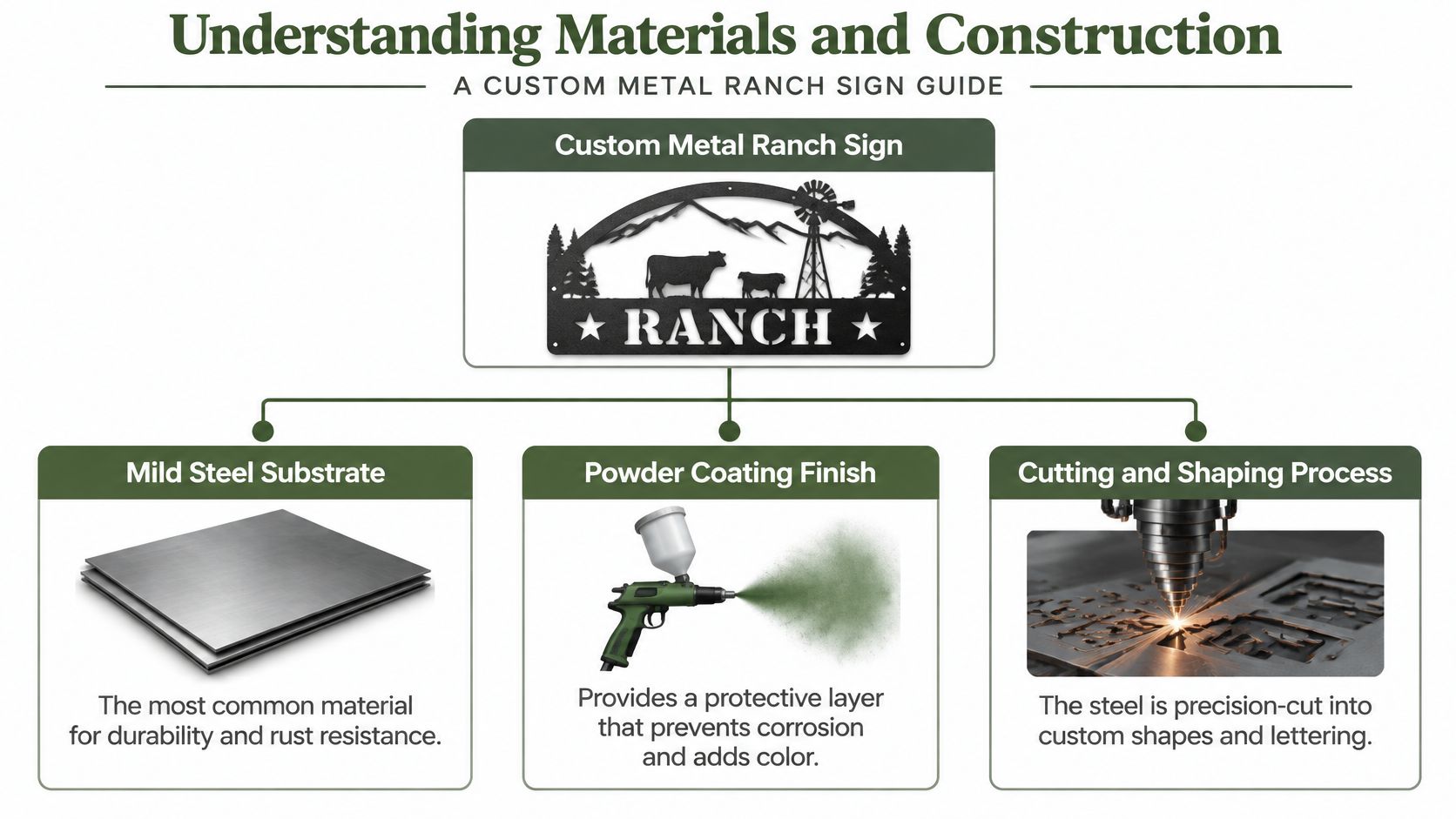
A custom metal ranch sign is a small outdoor structure. Wind presses against it, rain reaches its edges, and sunlight gradually affects exposed surfaces. Mild steel is a common substrate for personalized signs because it can be cut into lettering and shapes, but steel needs a suitable protective system to limit corrosion.
Laser cutting shapes the metal, while powder coating adds a finished surface and protective layer. These processes contribute different things: cutting defines the design; coating helps protect the exposed metal and supplies color. Neither makes installation details irrelevant. Cut edges, mounting holes, and fastener joints can become vulnerable points if water collects or the coating gets damaged.
Corrosion protection works as a system
Outdoor corrosion can be driven by moisture, coastal chlorides, deicing salts, and water trapped around fasteners. That's why buyers should assess the whole assembly rather than judging durability by color or finish alone. A corrosion-resistant metal or properly prepared coated-steel substrate, protected edges, compatible hardware, and a mounting position that drains all contribute to service life.
Zinc protection is useful on steel because zinc corrodes preferentially when exposed steel becomes electrochemically active. Zinc-aluminum coatings add a barrier contribution from aluminum. For a practical explanation of why salty air changes material choices around outdoor structures, see this guide to corrosion protection for Wamberal patios.
Questions to ask before ordering
Ask what the substrate is, what coating protects it, and whether the maker addresses cut edges. Check whether mounting hardware is included, and confirm that any hardware you supply is suitable for the sign and installation surface. In a wet joint, dissimilar metals can accelerate corrosion at the less noble metal, so compatible fasteners are a sensible part of the specification.
A powder-coated mild-steel sign offers a balance of shaped design options and a protective finish, but it still needs sensible care. A sign installed where water repeatedly sits around its lower edge or bolt holes has a different exposure than one mounted to drain freely. Read product specifications carefully, and treat broad phrases such as “weather resistant” as a starting point for questions, not a complete materials description.
Choosing the Right Size and Finish
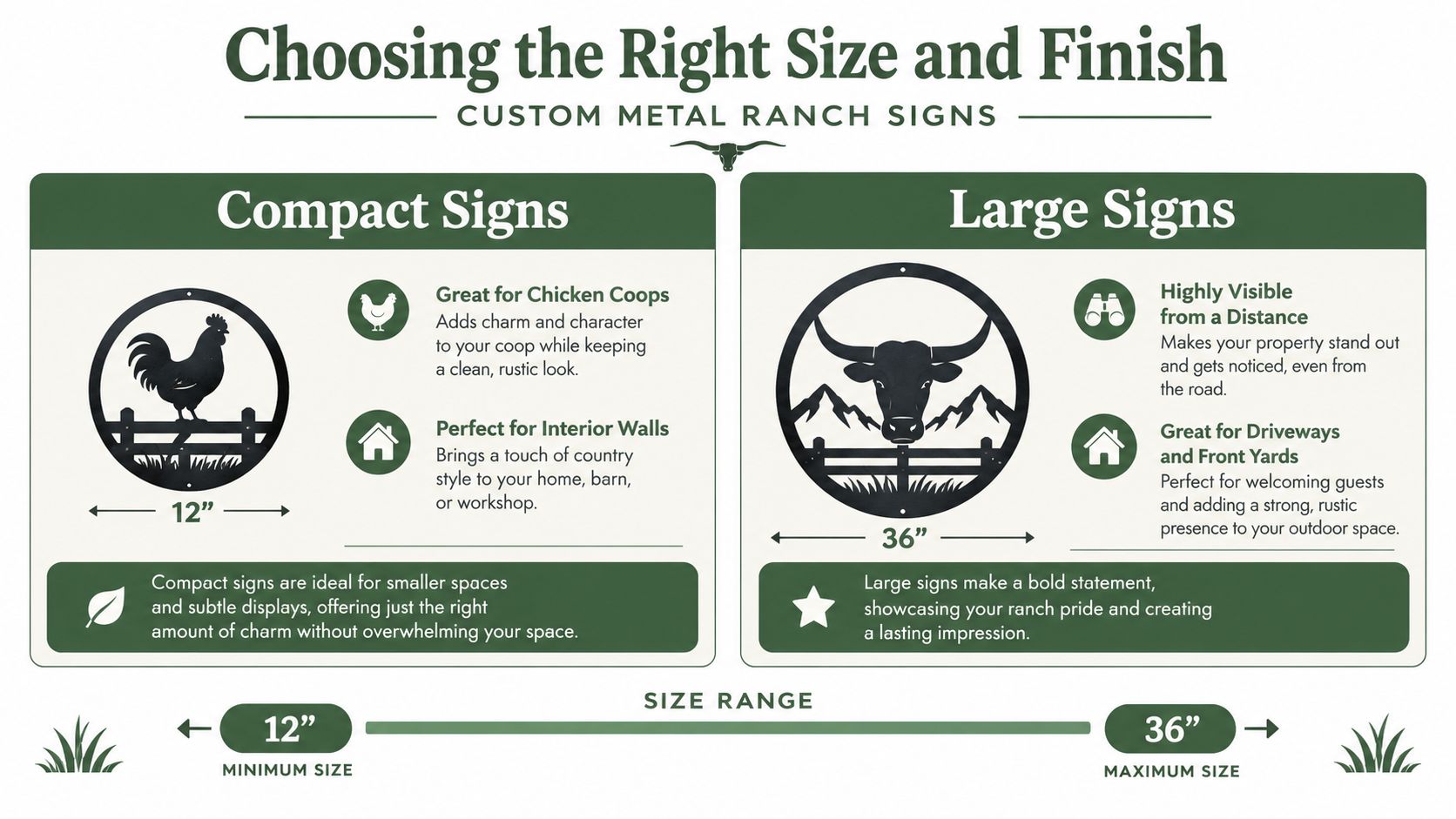
Size the sign for the person reading it, not the wall holding it. A delivery driver approaching from the road needs a different sign than a guest standing on your porch. A compact plaque suits a coop door or interior wall. A driveway entrance at the end of a long lane needs letterforms a stranger can read on the first pass, without slowing down or circling back.
That's the wayfinding test I use with customers: can someone who has never visited find your entrance on the first try?
FHWA sign guidance offers a useful legibility principle for letter scale and viewing distance. Its maintained-legibility methodology uses 12.2 meters, or 40 feet, of legibility distance per inch of letter height under defined nighttime assumptions (FHWA sign legibility guidance). Treat that as a starting reference. Ornate type, oblique viewing angles, poor lighting, and summer vegetation all erode real-world readability, so put the lettering budget into the main name or address and let secondary details serve people who are already close.
Match finish to light and background
A matte or low-gloss finish is often the practical choice near a road or driveway because it cuts reflected glare. FHWA guidance recommends orienting a sign close to a right angle to the intended approach and adjusting it if reflection reduces legibility. The same optical issue applies to decorative signs: low sun and headlights can wash out a glossy face.
Color has to work twice. It must contrast with the sign field itself and with whatever sits behind it, whether that's a wall, a gate, a tree line, or open sky. Black lettering on a light field, or light lettering on a dark field, is generally easier to distinguish than tones with little separation. A finish that looks rich in a product photo can disappear against a dark barn wall.
Compare the choices
| Location or purpose | Practical direction |
|---|---|
| Coop or interior wall | Compact size, with room for a short name or theme |
| Porch or barn entrance | Medium scale that balances visibility and the structure |
| Driveway or open approach | Larger lettering and strong contrast, positioned toward the approach |
| Bright, exposed location | Low-gloss finish to limit distracting reflections |
Wood exteriors deserve a quick note here. Dark bronze and black finishes can vanish against stained timber, while lighter steel tones read well against pale siding. The TimberLodge365 cedar cladding guide is a useful reference when you're judging how a sign's color and finish will sit against a wood exterior.
For a farm-themed decorative option, the Personalized Farm Sign features a windmill, barn, and rolling fields, with space for a family or farm name. Choose its scale for the viewing conditions first, then confirm it suits the wall.
Personalization and Design Tips
Good personalization makes the sign feel like it belongs to the property. The challenge is fitting the name, artwork, and any extra details into a layout that remains readable. Start with the message people need to recognize first, then add decoration only if it doesn't compete with that message.
Build the design in a clear order
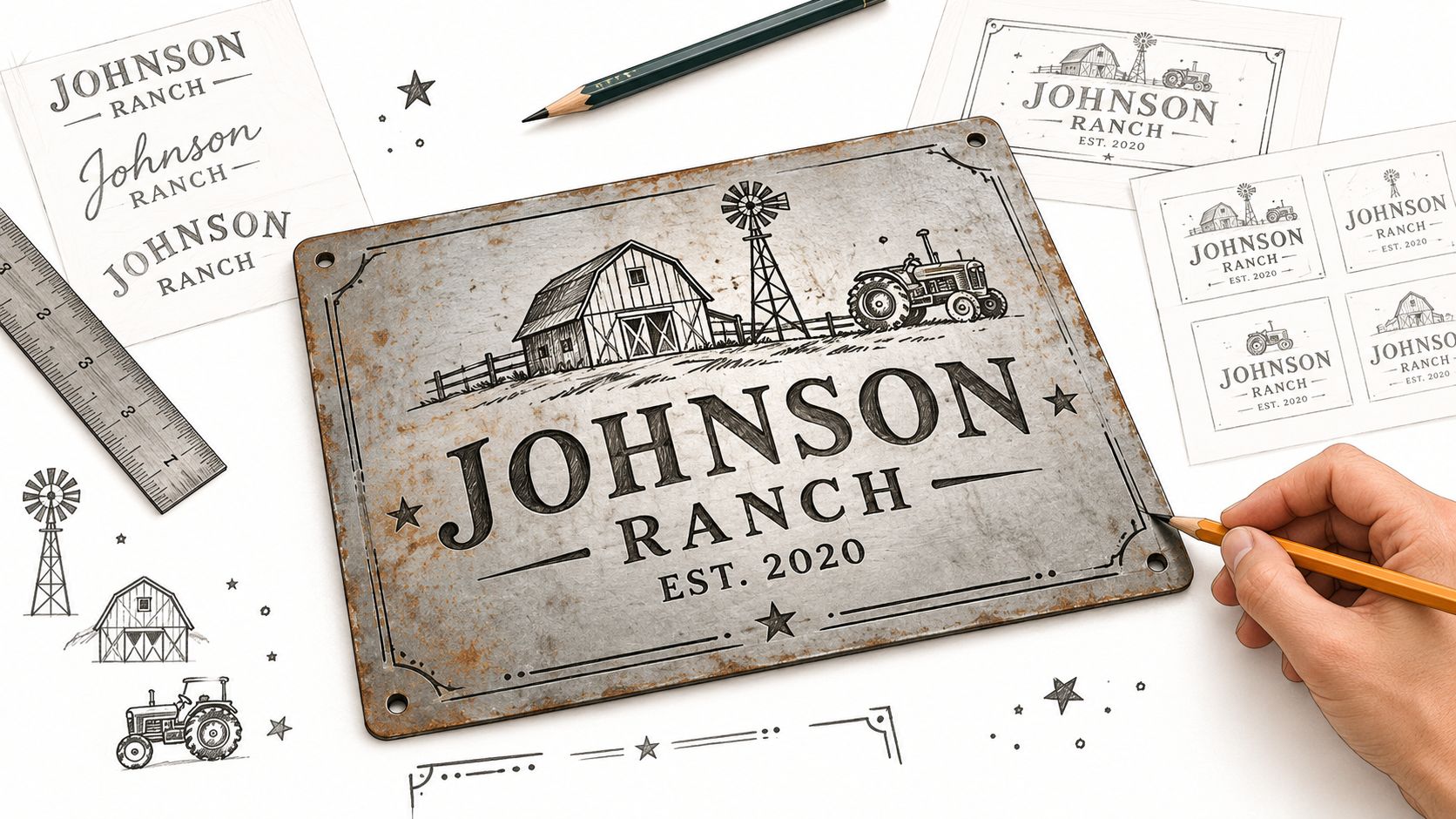
- Choose the main wording. Decide whether the most important text is a family name, ranch name, or address. A single strong line is easier to read from farther away than several equally prominent lines.
- Add one supporting detail. An established date, monogram, or short secondary line can add meaning, especially on a sign viewed up close. If it must be read from the road, keep secondary text small in importance, not necessarily tiny in size.
- Pick artwork that supports the name. A tractor, windmill, barn, horse, or livestock silhouette can reinforce the setting. Dense decoration around letterforms may make the name harder to distinguish, particularly at a distance.
- Check type and contrast. Open letter shapes and clear spacing usually serve outdoor readability better than highly ornate lettering. Make sure the text stands apart from the background and remains visually dominant.
Review the preview carefully
A personalization preview gives you a chance to catch spelling and layout problems before production. For personalized metal signs from Farmhouse World, the preview shows the exact text that will appear on the finished product (personalized tractor monogram sign details). Check every character and line break rather than assuming a preview is only an approximate mock-up.
Punctuation can matter, too. The product information notes that hyphens won't appear on the finished piece and recommends periods or slashes in their place. If a name or address uses punctuation, check the product's specific rules and adjust the wording before ordering. Then look at the preview at the sign's intended size and ask whether the primary message still stands out.
Installation and Mounting Methods
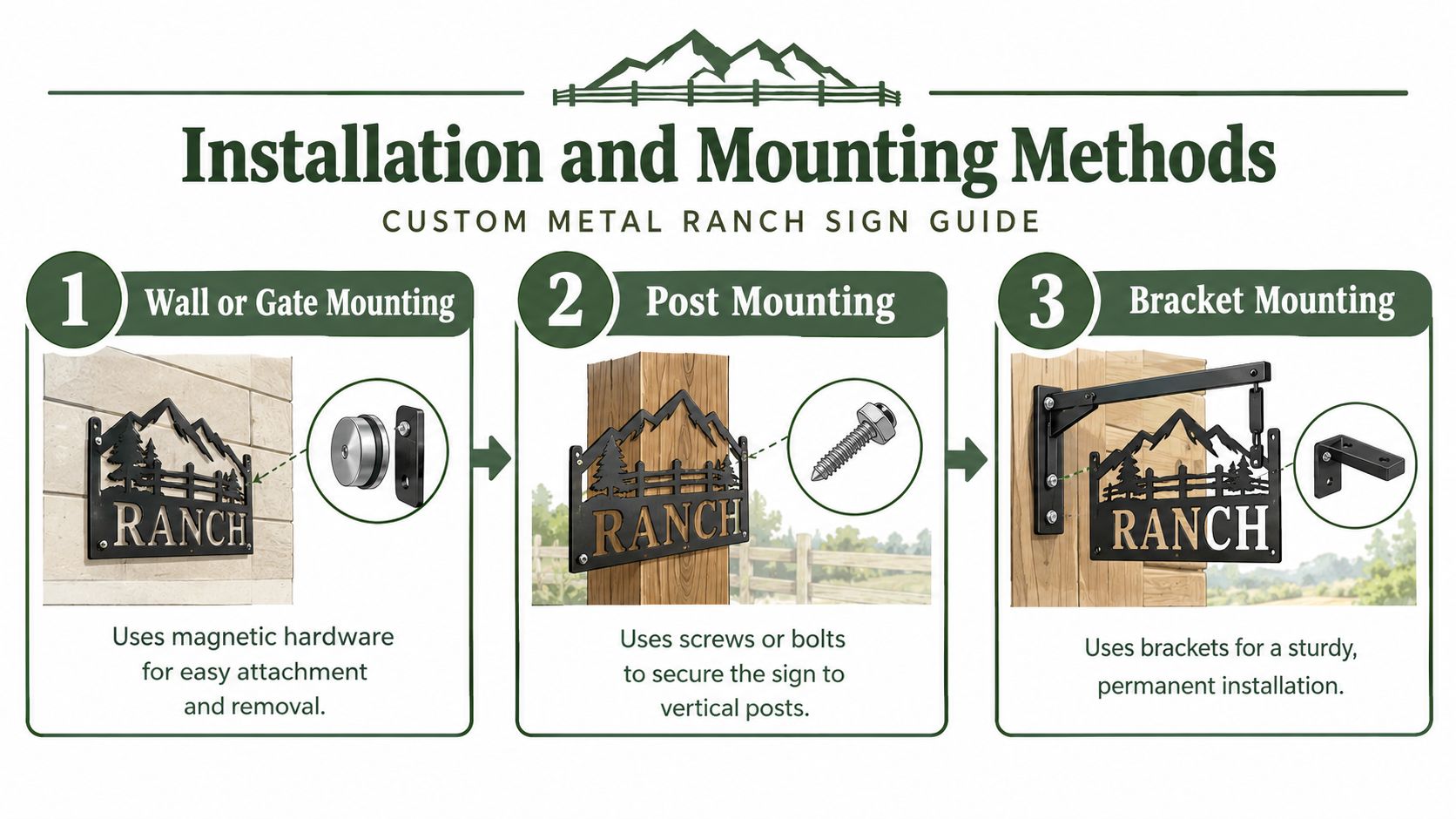
A well-made sign can still disappoint if it swings in the wind, sits behind vegetation, or catches on a moving gate. Choose the mounting method for the surface and viewing position, then check the hardware and surroundings before installation. Don't assume a sign includes the fixings needed for your particular wall, fence, or post.
Choose the surface first
- Wall or gate: Use hardware suited to the material and the sign's mounting points. Magnetic hanging hardware may suit a compatible metal surface when easy removal is useful, but don't assume a magnet will work on every gate or sign.
- Fence or barn: Fasten through appropriate points into a stable section of the structure. Avoid placing the sign where boards, hinges, or gate movement can obstruct it or put stress on the attachment.
- Ground-mounted post: Select a stable post and anchoring approach for the soil, local conditions, and sign exposure. The post must resist movement from wind and seasonal ground changes; choose an installation method suited to the site rather than relying on a shallow or loose setting.
FHWA guidance says sign mountings should hold panels permanently and resist wind-induced swaying or displacement (FHWA sign mounting guidance). That principle applies to decorative property signs as well. Keep the panel secure, and avoid mounting it where water will sit against the lower edge or around fasteners.
Before digging a post hole, contact 811 to check for buried utilities. Muscatine County's guidance highlights this step for owners installing signs themselves (Muscatine County sign installation guidance). Place a freestanding sign where drivers can see it without putting it in the path of road maintenance or equipment. If you're mounting a sign on a gate, check its full movement so the panel won't strike a post, latch, or nearby structure.
Plan for changing conditions
Vegetation, snow, and road spray can obscure a sign or reduce contrast over time. Check the approach from the direction visitors will travel, not just from the front porch. Boone County advises positioning emergency signs to remain visible above seasonal snow and weeds and away from snowplows (Boone County rural address sign FAQ). Those are useful reminders for placement, though local rules for official address markers may differ.
For a larger or post-mounted sign, professional installation may be worth considering if the site is exposed, the ground is difficult to work, or you're unsure about the structure's stability. For additional ideas about positioning a decorative sign on a gate, consult this guide to signs for gates.
Maintenance, Pricing, and Shipping Expectations
A powder-coated sign still needs a yearly once-over. Dust, pollen, and road film build up on the face and reduce contrast, which matters if drivers need to read the name at speed. Wash with mild soap and a soft cloth, rinse, then check the spots that tend to fail first: cut edges, the lower rail, bolt holes, scratches, and any joint where dissimilar metals meet.
Treat every chip or scratch as a repair item. Once bare steel is exposed, moisture creeps under the coating and lifts it from the inside, so match the touch-up product to the maker's finish system and skip abrasive pads and pressure washers. Coastal air and winter deicing salt deserve a post-season check because chlorides hold moisture against the panel. The routine in this guide to protecting metal from rust covers coating-safe cleaning in more detail.
Plan the order and delivery
Custom work runs on a production queue, so the clock starts at design approval rather than at checkout. As noted in the product listing above, Farmhouse World quotes a 7–10 business day production-and-ship window and free shipping on orders over $49. Confirm the current window at checkout because holiday lead times move, and if you order in November or December, allow an extra two to three weeks so the sign is not still in transit on the day it is needed.
Budget for the installed sign. Material gauge, finish, size, and whether mounting hardware is included all change the total, and a post, anchors, or an installer can cost more than the panel itself. The sound comparison is whether the sign suits the exposure, mounts securely, and stays legible without needing replacement every few seasons.
Gift Ideas and Use Cases
A personalized sign can mark a new home, a family farm, or a place that has become part of someone's story. For a housewarming, a family name at the entrance gives a new property a clear identity. For a wedding or anniversary, a shared name or meaningful date can make the gift specific without needing an elaborate design.
A birthday gift for a rancher or homesteader might feature a familiar farm motif, while a smaller sign can distinguish a chicken or duck coop. A horse stable, hunting cabin, or vacation rental can also benefit from a well-placed name sign, as long as visitors can read it and it doesn't replace required civic address signage.
The strongest gifts match the recipient's setting. A sign for a sheltered porch can lean into decorative detail; one near a driveway should put the name first and use enough contrast to be noticed from the approach. If the recipient is still shaping a country-style space, these ranch decor ideas can help connect the sign to the surrounding look.
Some signs also carry a family story. A ranch name and date can recognize how a property has been used and cared for, without turning the sign into a long inscription. Keep the message concise enough to remain legible. A gift that works as both a personal marker and a visible part of everyday life is often more meaningful than a decorative object tucked away indoors.
Final Checklist Before You Order
Before placing an order, work through the decisions that affect both appearance and use:
- Confirm the message: Check spelling, punctuation, and the order of names or lines.
- Set the viewing distance: Choose a size and letter scale that suit the approach, not just the wall.
- Choose the finish: Balance color and style against glare, background contrast, and exposure.
- Review construction: Verify the substrate, protective coating, edges, and hardware needs.
- Plan installation: Decide where the sign will go, how it will be secured, and whether digging requires a utility check.
- Keep official signage distinct: Check local rules if the sign is intended to help identify an address. A decorative sign may supplement, but shouldn't replace, an official marker.
- Inspect the preview and timeline: Approve the exact text and leave room for custom production and seasonal delays.
A good custom metal ranch sign joins practical wayfinding with a clear sense of place. Get the message, materials, and installation right, and the sign can serve the property without sacrificing its character.
Farmhouse World offers personalized metal signs in farmhouse and ranch-inspired designs, with previews that show the text planned for the finished sign. Visit Farmhouse World to explore options and choose a sign that fits your property, message, and mounting plan.


