
A ranch name has to work beyond the gate. It may appear on letterhead, invoices, a livestock brand, a social handle, or a box of direct-sold beef. On the entrance sign, it needs to be readable from the road in poor weather, when a driver is focused on finding the driveway.
The word ranch predates the cattle drive. It comes from the Mexican-Spanish rancho, meaning the home or headquarters of a ranchero. The Texas State Historical Association's account of ranching traces organized ranching in Texas to the 1730s, when Spanish authorities and settlers let herds graze along the San Antonio River near missionary, military, and civilian communities.
Names such as Ojo de Agua, Las Mesteñas, La Parra, and Santa Gertrudis reflect a tradition of descriptive Spanish and Mexican ranch names tied to a place. A name like these can carry a strong sense of heritage, but its lettering must stay clear on a physical sign. Accents, unfamiliar spellings, and long words can be harder to read at a distance, so consider how the name will fit before choosing an elaborate icon or finish.
The ten styles ahead are evaluated for how they work on metal: the space the lettering needs, the icon that suits it, the finish, and readability from the road. The same name also needs to hold up on everyday ranch equipment, such as the electric side-by-side you use for fence checks.
Table of Contents
- 1. Initial and Letter Brands (e.g., Lazy J, Rocking R)
- 2. Family Surname Ranches (e.g., YO Ranch, Schreiner Ranch)
- 3. Landscape and Terrain Names (e.g., Hidden Valley, Creekside, Mesa View)
- 4. Wildlife and Animal Names (e.g., Eagle's Nest, Antelope Ranch)
- 5. Sky, Sun, and Weather Names (e.g., Big Sky, Sunrise Ranch)
- 6. Brand Iron Symbol Names (e.g., Double Diamond, Triple Bar, Circle Dot)
- 7. Hen House and Homestead Names (e.g., Willow Creek Farm, Cluck Haven)
- 8. Heritage and Historic Place Names (e.g., Old Homestead, Heritage Ranch)
- 9. Cowboy and Western Phrase Names (e.g., Saddle Up Ranch, Lone Star Trail)
- 10. Famous Pop-Culture Ranch Names (e.g., Ponderosa, Rocking Chair)
- 10 Ranch Naming Styles at a Glance
- From Name to Gate: Making Your Ranch Name Official
1. Initial and Letter Brands (e.g., Lazy J, Rocking R)
Letter names are ranch shorthand cut to the bone. One letter, one describing word, and the identity is finished: Lazy J, Rocking R, Bar U. The form comes straight off the brand burned or painted on livestock, which is why it reads as authentic even to people who have never worked cattle.
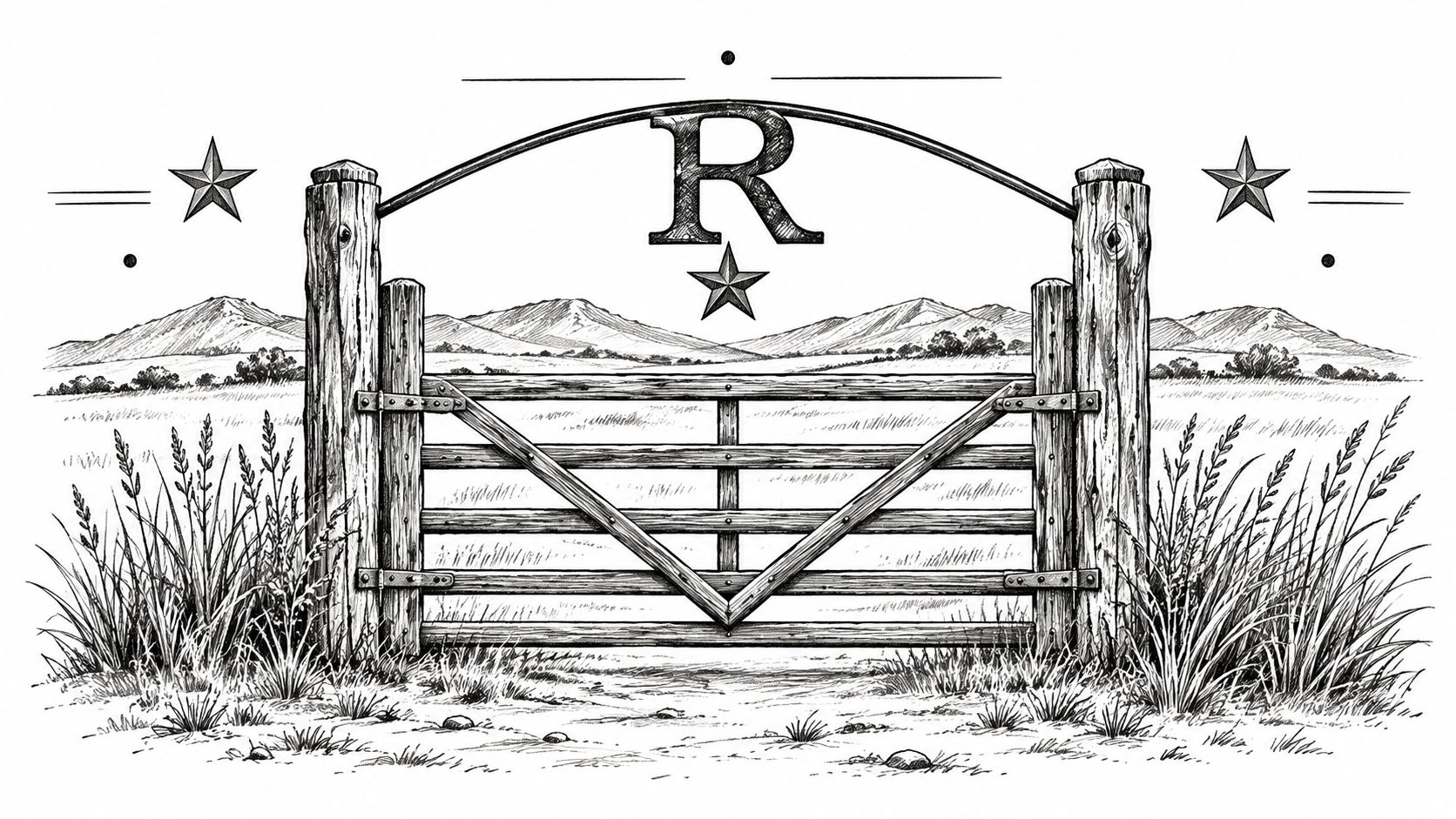
On metal, nothing beats it for legibility. A single capital can be cut large, with the describing word set beneath in a smaller size so the two don't compete. At 24 inches the letter is unmistakable from the road, and the same layout still reads on a 12 inch porch plaque.
Why the spoken form matters
The weakness is transmission. Rocking R and Rockin' R sound identical and spell differently, and that gap shows up on invoices, search results, and address forms. Research on brand spelling published in the Journal of Consumer Psychology finds that accurate spelling improves recall because people store both the sound of a name and its written form. A name that gets retyped wrong loses half of that advantage.
- Check the state brand registry first: a working ranch with branded stock needs the letter-and-figure combination to clear the local registry before it goes on a gate.
- Add a built element: an iron-style border or a horseshoe icon gives the single letter something to sit inside so the sign doesn't look like a house number.
- Choose Black or Copper: both hold a branded, rustic look and keep the contrast high against a natural background.
Test it the way a buyer will. Say “Lazy J Ranch” to someone who can't see it and ask them to text it back. If they type Lazy Jay, the order form, the website, and the sign all inherit the mistake.
2. Family Surname Ranches (e.g., YO Ranch, Schreiner Ranch)
A family surname gives a ranch sign a clear point of ownership. YO Ranch in Kerr County, Texas, is associated with the Schreiner family, while King Ranch in South Texas bears the surname of its founder, Richard King. In both cases, the name gains weight through its long connection to the property.
That history is the strength of a surname, and its trade-off is specificity. Neighbors may recognize the family, but buyers who encounter the name on a listing or storefront may need nearby wording to explain the operation.
Where a surname stops being private
Using a surname for your land is personal. Using it to sell goods or services makes it a business name, so check for conflicts before ordering a sign or building a brand. The USPTO can refuse marks that are similar in sound, appearance, meaning, or commercial impression. Two businesses using the same surname in the same market may be difficult to distinguish.
Search state business and assumed-name records, trademark databases in the markets you serve, domains, social handles, maps, and agricultural directories. If you brand livestock, check with the state brand authority too.
On a metal sign, a surname can look sparse if it sits alone across a wide panel. Give it a visual anchor, such as an established year, place name, or small icon. The personalized ranch sign guide offers layout ideas for balancing a family name on a sign. The Custom Country Farm Sign is another option for displaying a farm or family name.
- Add the established year: A date beneath the name signals family history without adding another descriptive word.
- Match the typeface to the operation: Serif and script styles suit a traditional family name; condensed sans-serif lettering gives a working ranch a more direct look.
- Size the design to the setting: Measure the gate post or porch wall, then allow clear space around the lettering and any icon. Short surnames can use larger letters; longer ones need room to stay readable from a distance.
3. Landscape and Terrain Names (e.g., Hidden Valley, Creekside, Mesa View)
A terrain name can help a visitor picture the property, but broad terms like valley, creek, mesa, ridge, meadow, and hollow are easy to share. Hidden Valley is common across the West. Ponderosa Ranch near Lake Tahoe, Nevada, ties its name to the trees around it, giving the setting a more specific cue.
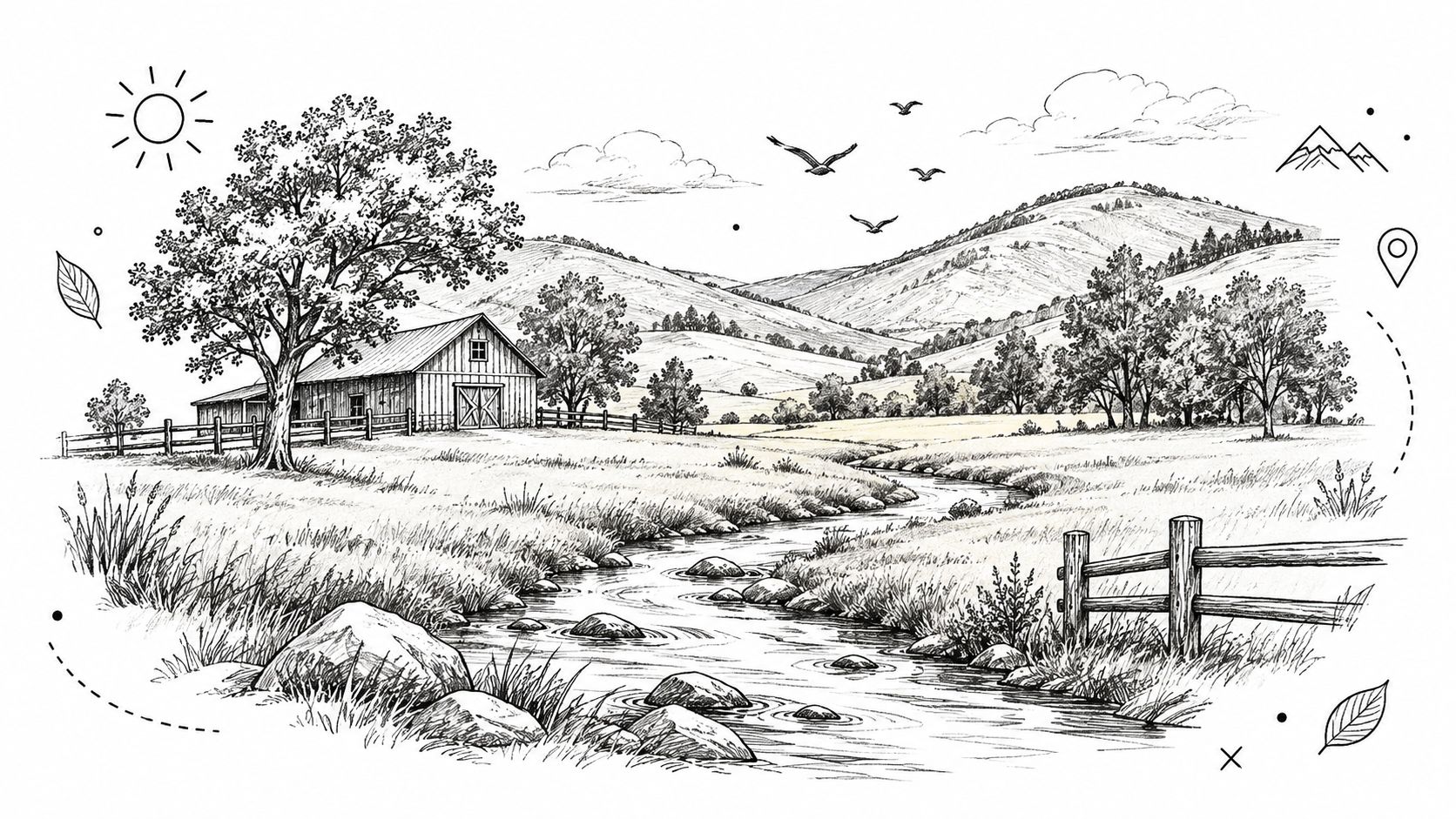
A name such as Creekside may sound appealing, yet it can blend with other properties using the same word. A local feature makes the name easier to recognize and gives it a stronger identity.
Practical rule: Choose a terrain feature specific to the property, rather than a broad word that could describe countless ranches.
Turning a terrain feature into a name
Use the creek name on the deed, the county's name for a ridge, a dominant tree species, or a feature known to people who have walked the property. “Cedar Ridge Ranch” describes a setting, while “Bridle Hollow” has a more distinctive feel.
The same specificity matters on a metal sign. A short name with a clear place cue is easier to read from the road; a long name may need smaller lettering, which reduces legibility. A simple creek, ridge, or tree icon can reinforce the name, but detailed artwork competes with the lettering. Choose a finish that suits the gate or entryway, and keep the name large enough to read at a glance. The guide to metal ranch entrance signs covers placement, height, and finish choices for gate posts and driveways.
Brand-memory research published in the Journal of the Academy of Marketing Science links distinctiveness with recall, consideration, and choice, while familiarity supports implicit memory. Aim for a name that signals the kind of place it is and still gives people a specific detail to remember.
Test a shortlist by showing it to a few people, taking it away, and asking them to recall the names a few minutes later. Ask what they think each property does, too. Strong recall with no sense of the property's character means the name may need a clearer cue.
4. Wildlife and Animal Names (e.g., Eagle's Nest, Antelope Ranch)
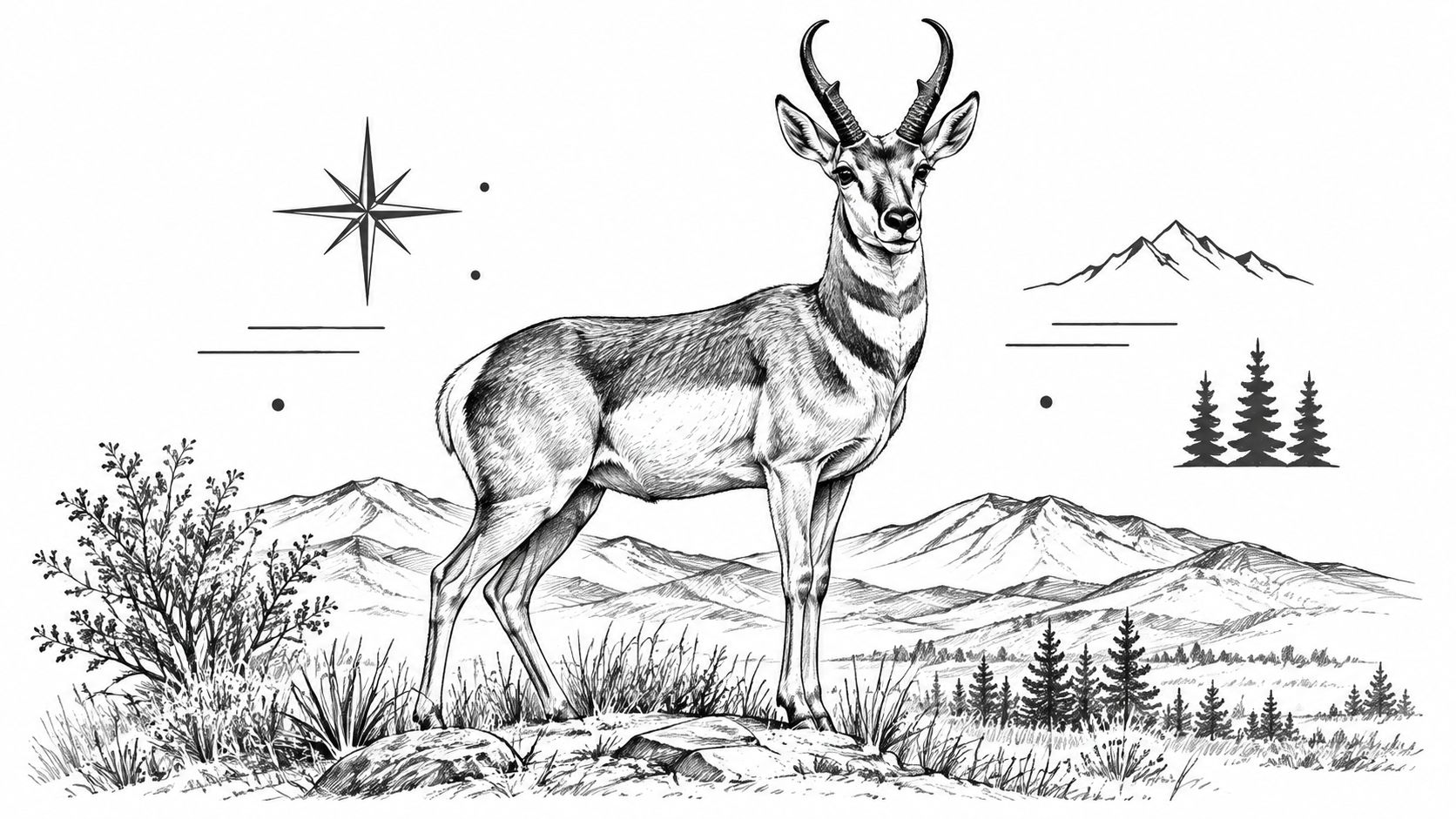
An animal name earns its place when the species belongs to the property and the name stays readable on the gate. “Antelope Ranch” is clear, but common enough to blend with other properties. Pairing an animal with a specific, locally meaningful detail can make it easier to recognize.
Eagle and hawk names evoke familiar Western imagery, but the name alone does not show whether a property is a working ranch, a rental, or an event venue. A sign icon can help. Choose an animal visitors might see nearby, and keep its silhouette simple enough to read from the road.
The expansion test
Choose a name that still fits if the operation grows beyond one species. A name built around a single animal can feel restrictive if you later add horses, produce, cabins, or events. A broader property name leaves room for those changes without losing its connection to the place.
Place-based naming works when the place is real. Check local maps and county histories for established names, and avoid Indigenous place names unless you have a specific, documented connection and guidance from the community connected to them. Invented “tribal” phrasing can make a sign feel careless.
- Choose a native species: the name feels grounded when the animal belongs on or near the property.
- Simplify the silhouette: a single-color profile in black or white reads more clearly at a distance than a detailed illustration.
- Give the name priority: make the lettering larger than the icon, so the animal supports the name instead of competing with it.
5. Sky, Sun, and Weather Names (e.g., Big Sky, Sunrise Ranch)
Sky names sell a feeling: openness, early light, weather moving across a wide horizon. Big Sky, Montana, attached the phrase to a whole region, and Sunrise Ranch and Sunset Ranch appear on horse and cattle operations all over the country because the imagery is universal and immediately understood.
That universality is the problem. Sky words are among the most crowded in the category, and a name that could belong to any property in any state gives a buyer no reason to remember yours.
Why sky names fade on a sign
Finish choice decides whether a sky name looks good or disappears. Gold and copper lettering on a light wall or a pale gate loses contrast fast in direct sun, and thin script strokes wash out entirely at midday. Black, white, or a deep red holds up in every light condition, and gold works when the panel behind it is dark.
A sky name also wants a second element. Pair the sky word with a landmark, a ridge, a butte, or a family detail, and the name stops being a mood and becomes a place. Sunrise over Antelope Flats is a name. Sunrise Ranch is a placeholder.
- Keep it to two words plus Ranch: long names force smaller lettering, and small lettering is the most common reason a custom sign disappoints on arrival.
- Set the sky word on its own line: one large word above one smaller word gives the panel a focal point.
- Repeat the palette indoors: a canvas print or wall piece in the same gold and rust tones ties the entryway to the gate.
6. Brand Iron Symbol Names (e.g., Double Diamond, Triple Bar, Circle Dot)
Symbol names are the most Western option on this list, and they come by it naturally. A study of Montana naming practices documented more than a dozen ranches and settlements whose names derive directly from cattle-brand symbols, including 777 Ranch, Bar LC Ranch, C Bar Z Ranch, Circle Ranch, Diamond Dot Ranch, N Bar Ranch, OX Ranch, Rafter NZ Ranch, and XIT Ranch. The tradition had real scale: a National Park Service history brochure records more than 50,000 cattle brands registered in Montana at the beginning of the twentieth century, with roughly 98% of Montana cattle still branded when the brochure was prepared.
That history explains why the style still carries weight. It also explains why it's crowded. Every combination of bar, circle, diamond, cross, and letter has been tried by somebody, often in the same county.
Reading a brand symbol at a distance
A geometric name is a graphic first and a word second. A double diamond cut into a 24 inch panel is legible from a moving vehicle; a four-character combination in a condensed font is not. Build the sign around the mark, then let the word Ranch sit beneath it.
A brand-inspired name has to work as a mark before it works as a name. If it doesn't survive being cut at small size, it won't survive being remembered.
- Verify the mark: check your state brand registry before using any figure commercially, even if you don't run branded cattle.
- Cut the shape, don't print it: a raised or cut-out diamond catches shadow and reads better outdoors than a flat graphic.
- Use copper or silver for the symbol: a metallic finish highlights the mark against a black field without adding a second color.
7. Hen House and Homestead Names (e.g., Willow Creek Farm, Cluck Haven)
Hen house names need to feel at home on a coop door and still make sense on an egg carton. “Cluck Haven” signals a playful backyard flock; “Willow Creek Farm” leaves more room if the property's work or audience changes. The USDA National Agricultural Statistics Service estimated 1,880,000 farms in the United States in 2024, a count that includes ranches and small operations of every kind.
Sizing a coop sign
Coop signs are usually read from a path, so a 12 to 18 inch panel can suit a door or run gate. Set the sign near eye level, and give the main lettering enough height to read at a glance. The name should lead; a small date or decorative line can disappear at a distance.
The Custom Chicken Coop Sign can be personalized with any name and date. Keep the wording to three words or fewer so the letters have room on the metal. A simple hen or rooster icon adds character without crowding the name, and a finish that picks up the coop trim keeps the sign visually connected to its setting.
- Keep the name short: fewer words leave more space for clear, readable lettering.
- Choose a simple icon: a hen or rooster silhouette adds detail without competing with the name.
- Match the coop: choose a sign color that works with the trim, rather than relying on a passing trend.
8. Heritage and Historic Place Names (e.g., Old Homestead, Heritage Ranch)
Heritage names lean on words that do the emotional work directly: Old, Heritage, Homestead, Legacy, Founders. Bar U Ranch in Alberta, now a Canadian national historic site, is the model for how the framing works, presenting the property as a piece of history rather than a production facility.
The words themselves are the most crowded in the entire category. There are hundreds of Heritage Ranches, and the phrase tells a reader almost nothing about where you are or what you do. What separates a strong heritage name from a weak one is evidence.
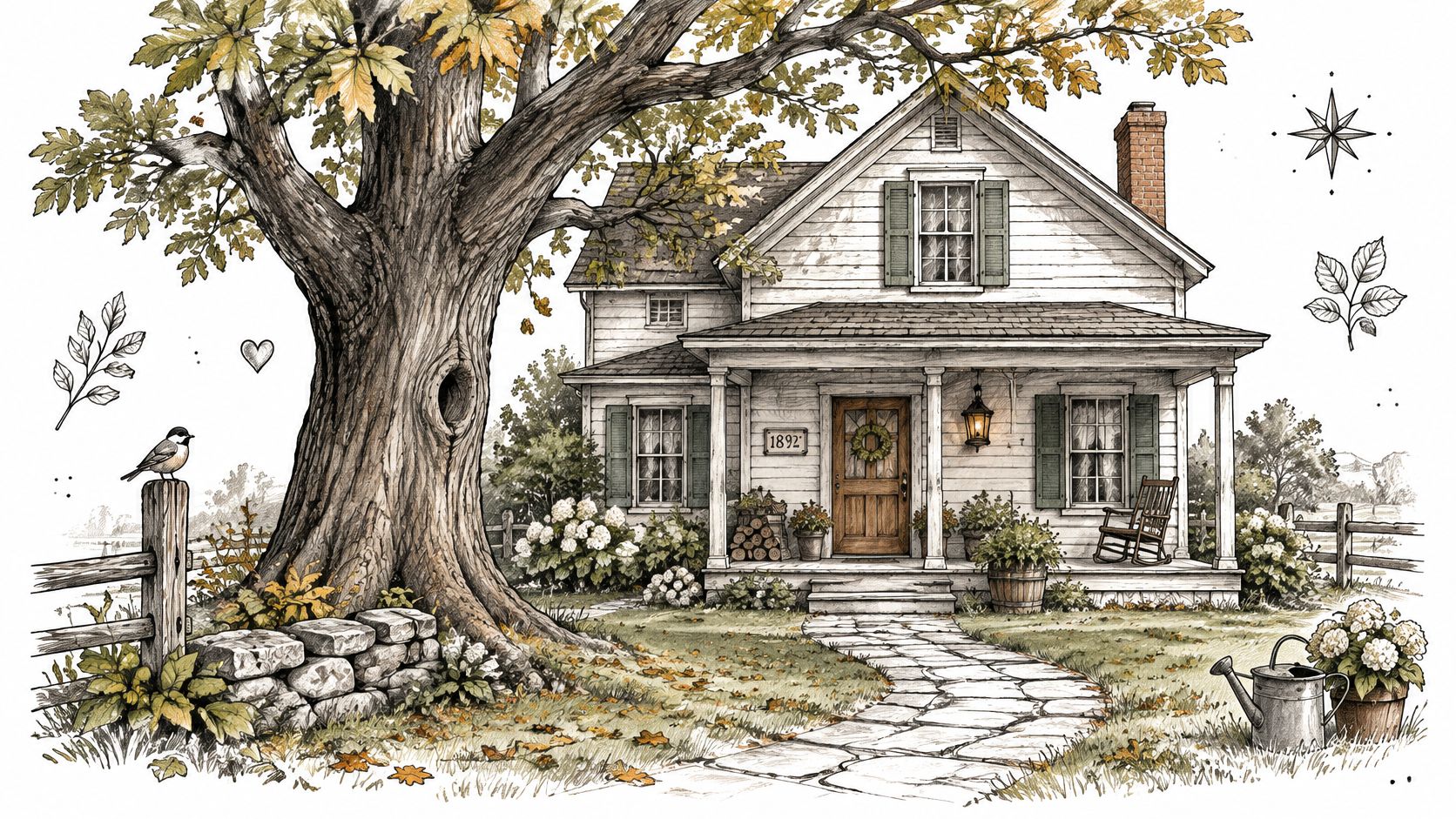
Making the founding year legible
A date under a name is the cheapest credibility a sign can carry, and it only works if it can be read. On a 12 inch panel, a year set at a fifth of the main letter height turns into a gray smudge from ten feet away. Either enlarge the year or move up a size.
The visual rule is consistent. The family or property name sits on the top line at full weight, the year sits beneath in a smaller but still cut-through size, and any decorative element stays outside that block so nothing crowds the lettering.
- Use a distressed finish, not a distressed font: weathered color reads as age; a scratchy typeface reads as a craft fair.
- Order the year as part of the design: added later, it lands in the wrong size and the wrong place.
- Keep a smaller version for family: a second, smaller sign of the same design makes a sensible gift for the people who built the place.
9. Cowboy and Western Phrase Names (e.g., Saddle Up Ranch, Lone Star Trail)
Phrase names pull from the working vocabulary of the trail: Saddle Up, Lone Star, Trail's End, Lazy River, Headin' Home. Lone Star is so closely tied to Texas ranching that it functions as a regional shorthand, and Trail's End has been used by Western lodges and dude ranches for decades.
The problem isn't charm, it's ownership. Common phrases belong to everyone, which makes them hard to protect and hard to reclaim if a neighboring operation picks the same one. They also tilt the property toward hospitality. A guest ranch called Saddle Up makes sense. A cattle operation called Saddle Up sounds like it takes bookings.
Clearing a phrase you didn't invent
Treat any phrase you've heard before as unowned until proven otherwise. Search the trademark database for your market and your category before you print it on a sign, a hat, or a feed sack, and expect a crowded field for the obvious ones. If it survives the search, add a local element so the name points at your property.
- Set it in a slab serif: bold slab letterforms carry Western styling better than script at a distance.
- Add one icon, not three: a horseshoe, star, or spur beside the phrase, and nothing else.
- Consider gold on black: the classic Western pairing, and still the highest contrast option for an entrance sign.
For interior use, phrase names translate well to wall pieces, and the rustic Western wall art collection shows how the same typography carries from a gate sign to a hallway.
10. Famous Pop-Culture Ranch Names (e.g., Ponderosa, Rocking Chair)
Some ranch names arrive with a soundtrack. Ponderosa comes straight from the long-running Western series Bonanza, and Ponderosa Ranch near Lake Tahoe in Nevada turned the association into a themed attraction for visitors who grew up with the show. Rocking R Ranch, the Apple Valley, California property owned by Roy Rogers and Dale Evans, later became home to the Roy Rogers and Dale Evans Museum, which is a different route to the same result: a name people already recognize.
Recognition is genuine value for a gift shop, a decor line, or a guest experience. It's close to worthless for a commercial cattle or farming operation, where the name has to survive a trademark search and a buyer's scrutiny.
Borrowing the feeling without the name
The usable version of this style is a rhythm, not a title. Take the two-word cadence and the nostalgic weight and attach them to something local: a creek, a ridge, a family detail, a piece of equipment that stayed on the place for forty years.
Trademark rules apply the moment money changes hands. A famous name used on a product, a sign you resell, or a shop front invites a problem that a slightly less familiar name avoids entirely. For personal decor inside a home, the risk is lower, but the sign still has a job, and a name that reads as a replica dates the room.
- Pair nostalgia with a local detail: Trail's End at Cottonwood Creek keeps the feeling and adds the proof.
- Use a vintage-style sign for gift appeal: aged typography and a muted palette suit the retro reference.
- Check before you sell: personal use and commercial use are different questions with different answers.
10 Ranch Naming Styles at a Glance
A name can sound right and still fail on the gate. Check how its letters, icon, and finish will read from the road before settling on a style.
| Naming Style | Tone | Best For | Sign Fit | Main Risk |
|---|---|---|---|---|
| Initial and Letter Brands | Traditional, bold, Western | Ranches with a livestock brand or cowboy aesthetic | Compact lettering stays legible at a distance | An unfamiliar letter combination can be hard to remember or mistake for another brand |
| Family Surname Ranches | Personal, legacy-minded | Multigenerational ranches and family homesteads | A surname with a founding year gives the sign a clear hierarchy | Long or difficult-to-pronounce surnames can crowd the sign and slow recognition |
| Terrain Names | Welcoming, nature-inspired | Properties named for local scenery | A simple terrain icon can support the name without crowding the lettering | A valley, creek, or mesa reference may feel inaccurate if it does not match the property |
| Wildlife and Animal Names | Natural, vivid, memorable | Ranches and farms with a regional wildlife connection | An animal silhouette makes a strong focal point on a metal sign | Fine details in the silhouette can disappear when viewed from a distance |
| Sky, Sun, and Weather Names | Open, peaceful, optimistic | Ranches seeking a spacious, freedom-focused feel | Sunrise or sunset imagery suits a wide sign layout | Gold lettering can lose contrast against a bright sun or pale background |
| Brand Iron Symbol Names | Authentic, bold, graphic | Ranches seeking a traditional brand-inspired identity | A simple mark can work as a clear, standalone sign icon | A symbol too close to an existing brand can be mistaken for it |
| Hen House and Homestead Names | Warm, playful, homey | Backyard chicken keepers and hobby homesteads | Short names leave room for a hen or coop icon | A playful font can make small lettering harder to read |
| Heritage and Historic Place Names | Traditional, enduring | Multigenerational families and commemorative signs | Founding years and aged finishes reinforce the theme | A historic date or “Old” label can misrepresent a newer property |
| Cowboy and Western Phrase Names | Adventurous, spirited | Western decor, gift signs, and cowboy-themed properties | Bold lettering and one Western icon keep the design readable | Long phrases can force smaller lettering or a cramped layout |
| Famous Pop-Culture Ranch Names | Nostalgic, recognizable | Fans and themed properties | Vintage styling suits novelty and gift signs | A recognizable reference can imply a media connection that the property does not have |
From Name to Gate: Making Your Ranch Name Official
A ranch name is ready for the gate only after it clears four practical checks: brand records, business and trademark filings, online availability, and readability from the road.
Livestock brand registry. If you run branded cattle or horses, check the letter-and-figure combination with your state brand authority. Livestock brands are registered separately from business names, so approval in one system does not establish availability in the other.
Business and trademark records. Search your state's business and assumed-name filings, then trademark databases in the markets where you sell. Check close matches in sound, appearance, and meaning, not only exact spellings.
Domain and handle availability. Check whether the name is available on the platforms you plan to use. A string of extra words or numbers can make a name harder to remember and type.
The gate reading. Stand at the distance visitors will approach from and read the name aloud. Then say it over the phone to someone who has never seen it written and ask them to type it. If they misspell it, simplify the wording before ordering a sign.
Getting the sign right the first time
Set the wording before you choose the panel. Include every period, slash, name, and date exactly as it should appear. Compare the production proof against the text you submitted. Custom signs follow the submitted text, not your intended meaning.
Match the panel size to its post or wall, leaving enough space around the lettering. Consider viewing distance, too: a detailed icon or long ranch name can become hard to read on a small panel. Choose a finish and lettering color with enough contrast for the light where the sign will hang.
Farmhouse World sells custom metal signs that can be personalized with names, dates, and design variations. New customers can use code FARM10 for 10% off their first order. For help choosing a size, color, or wording, call 888-886-1005. If the property is still under consideration, start by evaluating off-grid ranch land costs.
A gate sign should make the name legible at a glance. Before you commit, compare the final wording and layout with the available panel size, icon, and finish. When your shortlist is down to two, Farmhouse World offers custom metal signs and personalized gifts to help bring the chosen name to the entrance.


