

You're probably standing in the kitchen with a coffee in one hand and a stack of unlabeled fall bins in the other, looking at a porch that still feels like summer and a mantel that never got the memo. That's the starting point for fall decor farmhouse, not a mood board. Treat it like a layering job, not a full reset, and you'll get a home that feels pulled together by the weekend instead of dragged into October by panic.
Table of Contents
- Where You Are Probably Starting This September
- The Fall Palette That Actually Works in a Farmhouse
- Living Room Layers You Can Set in a Weekend
- Kitchen and Dining Room Styling With Small Wins
- Entryways, Porches, and Outdoor Fall Touches
- Where Personalized Metal Signs Earn Their Spot
- Your Room-by-Room Fall Checklist
Where You Are Probably Starting This September
The mistake most farmhouse homes make in early fall is trying to decorate every surface at once. Don't do that. Clear the obvious summer leftovers first, then work from the rooms people see most, because a clean base makes even a small seasonal update read as intentional.
Start with what already exists
If your house already has shiplap, oak, chalk paint, neutral walls, or warm wood floors, you've got the right base. Farmhouse fall styling works best when you layer on top of that existing quiet backdrop instead of swapping the whole room. That's why the style has staying power, even as tastes move around. Its roots trace back to 1700s New England homes and later resurfaced in the 1990s as designers brought those rural cues back into modern interiors (source).
Here's the sequence I'd use in a real house:
- Clear summer residue first. Pull out rope-wrapped lanterns, shell bowls, bright florals, and anything coastal.
- Audit what you already own. Keep the neutral pieces, baskets, wood trays, candleholders, and blank frames.
- Pick three focal zones per room. One anchor, one supporting piece, one soft layer.
- Order custom pieces early. Signs and personalized accents need lead time, so don't leave them for the last minute.
- Reserve one weekend for textiles and natural accents. That's when the room starts to read as fall.
Practical rule: buy the custom sign first, then build around it. Signs are the easiest way to make the room feel finished without adding clutter.
If you want a quick visual reset, give your home a cozy fall update is a useful reference for thinking about textiles before you start shopping decorative filler.
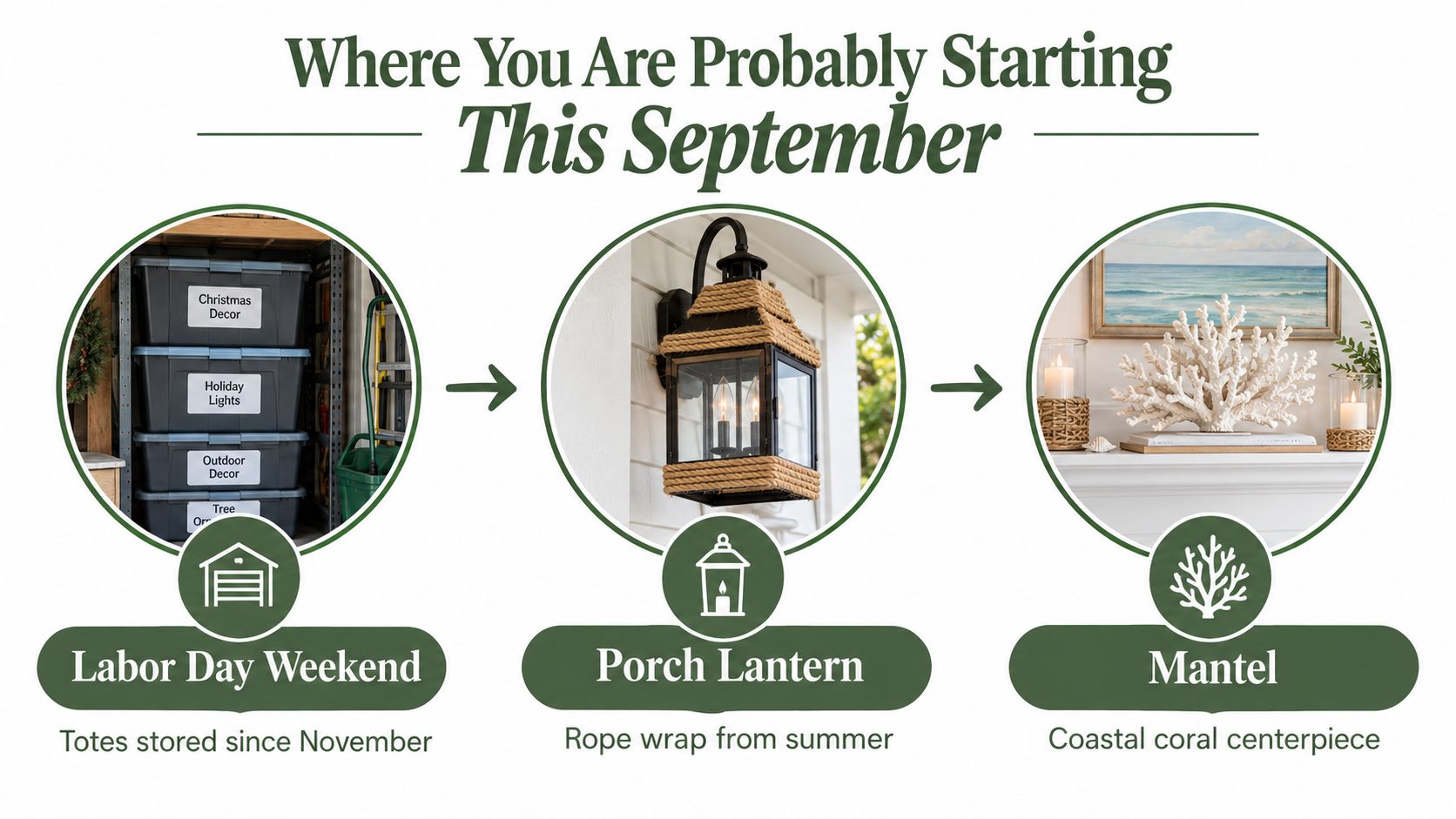
By the time you finish the first sweep, you should know exactly which rooms need a textile swap, which ones need a sign, and which ones only need one or two natural accents. That's the difference between a house that looks styled and a house that looks crowded.
The Fall Palette That Actually Works in a Farmhouse
Orange is not the problem. Too much orange is the problem. A farmhouse space already carries a lot of visual calm, so the fall palette needs to add warmth without breaking that quiet structure.
Keep the colors narrow
The cleanest approach is two dominant colors plus one muted accent. My preferred combination is burnt sienna, clove, and a soft accent like sage or aged plum. Those shades sit well against the usual farmhouse neutrals, bone, flax, putty, and soft white, without turning the room into a themed display.
Metals matter more than people admit. Oil-rubbed bronze gives you depth on candleholders and hardware. Antique pewter works on frames and smaller objects. If you want one warmer note, use unlacquered brass sparingly, because shine can get loud fast in a rustic room.
Wood tones are part of the palette, too. Raw oak and walnut already feel autumnal, even before you add a leaf or pumpkin. If your walls are crisp white, use them as the reset point. Let deeper shades land on pillows, runners, and one or two anchor objects rather than on every large piece in the room.
| Dominant Color | Best Rooms | Pairing Metal | Avoid Pairing With |
|---|---|---|---|
| Burnt sienna | Living room, dining room | Oil-rubbed bronze | Bright coral |
| Clove | Kitchen, entryway | Antique pewter | Neon orange |
| Sage | Bedroom, porch | Unlacquered brass | Deep red |
| Aged plum | Dining room, mantel | Oil-rubbed bronze | Yellow gold |
The best modern farmhouse pieces tend to lean rustic without looking overly distressed, which is exactly the direction many shoppers want. If you're comparing styles, modern rustic home decor ideas is a useful internal reference point for seeing how to keep the look grounded instead of overdone.
My read on it: a farmhouse room looks more expensive when the palette is restrained. The room should feel collected, not decorated.
Keep the base neutral, then let one color do the seasonal talking in each room. That's the whole trick.
Living Room Layers You Can Set in a Weekend
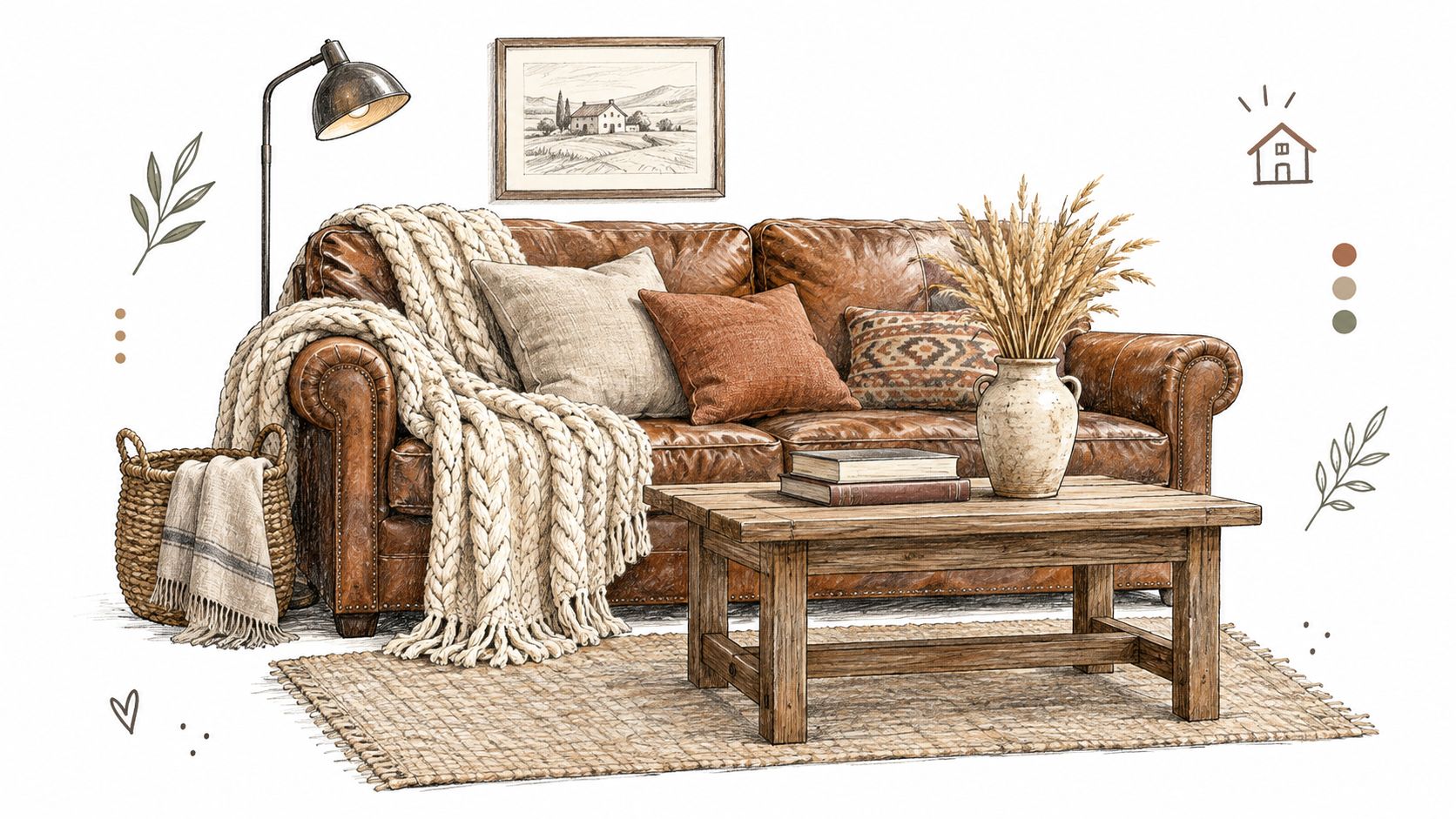
Start with texture, not decor objects. If the sofa still has lightweight summer covers, replace them with chunky wool or stonewashed linen in clay and oat. The room will feel like fall before you add a single pumpkin.
Build from the mantel outward
The mantel needs only three elements if you want it to look deliberate. Put a wood dough bowl in the center, fill it with mini white pumpkins and pinecones, then add a pair of taper candles in bronze holders at slightly uneven heights. Finish with a single framed monogram or family-name sign above the mantel so the arrangement has a focal point.
From there, move to the coffee table. Don't pile on little objects. Swap the summer tray stack for a single wood slab, one candle, and a small stack of harvest-toned hardcovers. If you like wall styling above the sofa, the article on sizing and hanging football prints is useful for thinking about scale, even if you're hanging a family sign instead of sports art.
A few more moves finish the room without overworking it:
- Throw placement matters. Drape a cable-knit throw over the back of the sofa, not folded on the arm.
- Rug layering helps. If the room can handle it, slide a low-pile jute or vintage-wash rug under the existing one so a raw edge shows.
- Add one floor accent. A woven basket by the hearth filled with birch logs reads more authentic than extra knickknacks.
- Keep the window area simple. One olive branch in a stoneware crock is enough near a bright window.
If you're tying the room together with rugs, area rugs for wood floors is the right internal guide to check before you buy.
The living room should feel like the first room people settle into, not the room where you prove you own fall decor. Keep the number of pieces low, and let texture do the heavy lifting.
Kitchen and Dining Room Styling With Small Wins
A farmhouse kitchen does not need a seasonal takeover. Keep the counters open, then place fall details where the room already gathers people: the island, dining table, pantry door, and open shelves. The result feels layered rather than staged.
Start with the table. Replace the summer runner with a low-pile striped or grain-sack runner in cream and rust, keeping the overhang even. Center a 36-inch dough bowl on the island or dining table and fill it with three white pumpkins, sprigs of dried wheat, and a single beeswax taper. Leave enough room for plates, serving dishes, and conversation.
Use the wall space to add height. A 24-inch round wreath of preserved eucalyptus above the range hood or on the blank wall between cabinets softens the kitchen without making it busy. On open shelving, place two stackable stoneware crocks beside a small amber glass bottle. Stop there. Repeating small seasonal objects across every shelf will make the room look crowded.
A personalized sign earns more space than another pumpkin. Mount a 12x8-inch custom kitchen sign on the pantry door with Gather or Bread & Butter in matte black metal. It gives the kitchen a clear identity while using a practical location. Farmhouse World carries personalized metal signs and rustic accents suited to this placement, so one sign can resolve a blank spot without adding clutter. For more direction on balancing useful pieces with seasonal accents, review these farmhouse kitchen decor ideas before shopping.
Keep the table details simple and tactile:
- Wrap plain napkins with twine.
- Tuck in a sprig of rosemary.
- Set them where guests can see them.
Skip scented candles in the kitchen. Coffee, bread, and dinner already provide a better scent story, while the beeswax taper supplies visual warmth without competing with food.
The strongest finish is restraint. Keep the counters visually light, give the centerpiece room to breathe, and let the existing farmhouse materials, wood, stoneware, and metal carry the fall mood.
Entryways, Porches, and Outdoor Fall Touches
A narrow stoop can still look finished. Start with the door, then add only the pieces that improve the view from the sidewalk and survive the weather.
Give the door one clear frame
Place a pair of 24-inch tobacco baskets on either side of the door, with two cream or burgundy mums in each. Leave orange out when you want a quieter farmhouse palette. Mount a 24x8-inch address sign or family-name sign in matte black or raw steel at eye level, on the door or beside it. Raised lettering stays readable from the curb.
Lay a coir or plaid runner across the stoop. Choose one that fits the landing without curling at the edges or looking like an indoor rug left outside. Set the porch bulb to 2700K warm white for a softer evening glow. Along the railing, use a low garland of faux bittersweet and eucalyptus. Keep it low enough to preserve the entry's clean lines.
The inside entry needs working space more than seasonal objects. Use a bench, one plaid wool throw folded in thirds, and two lumbar pillows in muted olive. If the opposite wall looks bare, hang a 16x12-inch Welcome or Home sign there. That single sign gives the tight zone a focal point without narrowing the walkway.
Skip the usual craft-fair extras:
- Scarecrows
- Corn shock bundles
- Anything with glitter
- Oversized novelty signs
Keep outdoor decor weatherproof, legible, and calm. If it looks busy from the sidewalk, it is too much.
Apply the same filter to coops, side porches, and narrow stoops. Choose natural textures, durable finishes, and one readable sign rather than several small decorations. The result carries the farmhouse base into fall and still works after Halloween.
Where Personalized Metal Signs Earn Their Spot
A farmhouse sign should solve a placement problem. Give it a wall that needs a clear focal point, not a surface already crowded with furniture, textiles, and seasonal objects. Custom metal works best as one deliberate marker in each zone.
Start with the room's strongest sightline. Above a mantel, a 30x10-inch horizontal sign carrying a family name or established date anchors the arrangement through fall and beyond. In a mudroom, mount a 12x12-inch monogram or rule-line sign above the bench. Its firm lettering holds the wall together while bags and boots collect below.
Bedrooms call for a quieter treatment. Hang one 16x6-inch name or short phrase above the headboard. If the wall is already busy, lean a 20x10-inch sign on the dresser instead of adding another hole. Skip bathroom signs in most cases. Where one suits the room, choose a small round design. Above a laundry folding station, an 18x6-inch piece marked Wash or Fold gives the work area a finished edge.
Use these checks before ordering:
- Leave breathing room. Keep at least 6 inches of open wall on every side.
- Match the finish. Matte black or oil-rubbed bronze connects naturally with farmhouse hardware and lighting.
- Limit the message. Choose one name, one date, or one simple word.
- Keep one focal sign per zone. A second statement competes with the first.
Custom signs suit coops, ranches, and family properties especially well. A readable name, address, or function can identify the space while adding the restrained metal texture farmhouse rooms need. Choose a durable finish for exposed areas and keep the lettering legible from the approach.
Walk past the sign before buying it. If the mantel already commands attention, the gallery wall is full, or layered textiles provide enough texture, leave the metal off. A sign looks considered only when the surrounding wall has room to support it.
Your Room-by-Room Fall Checklist
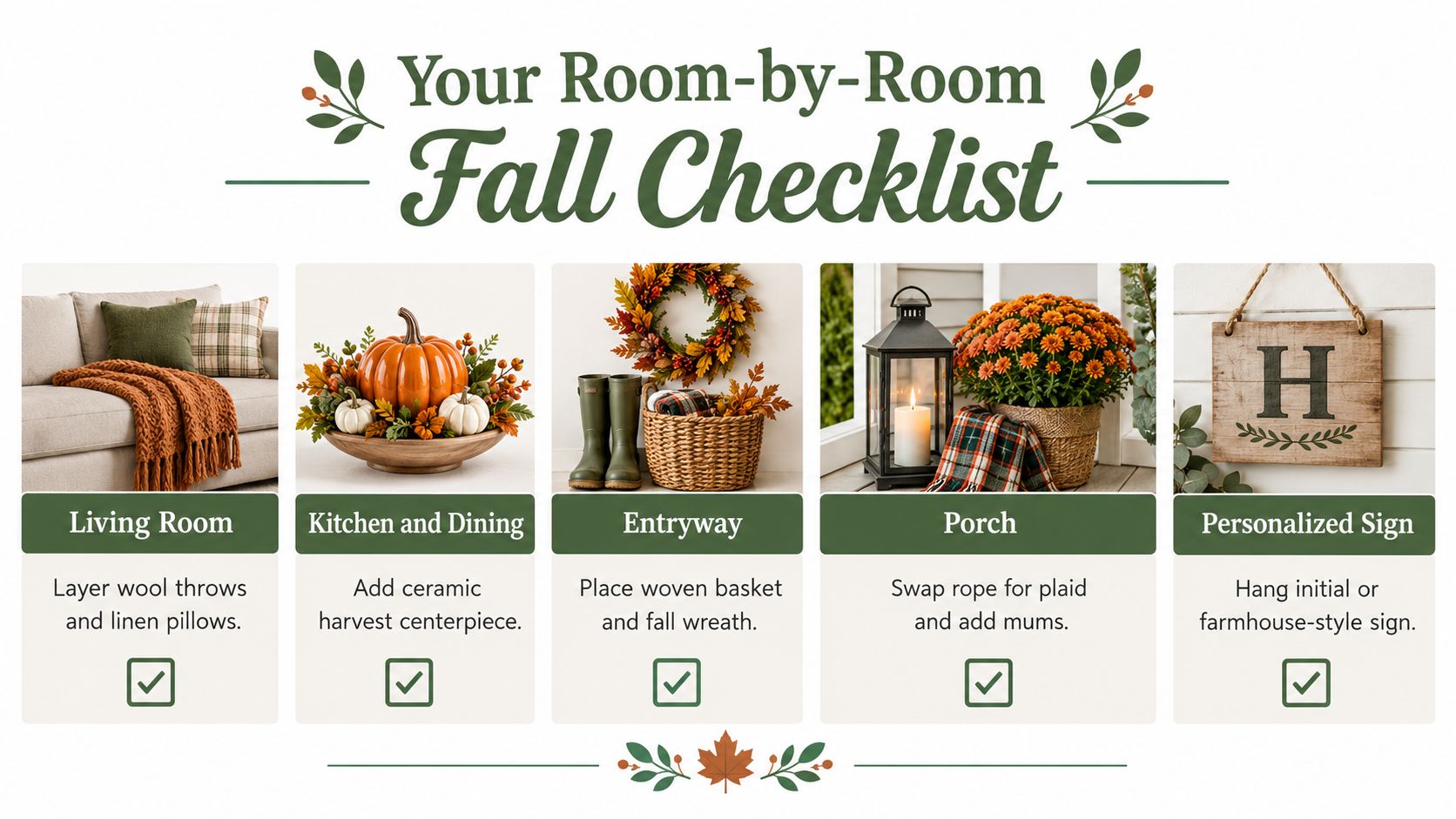
Use this as a working list, not decoration theory. If a room feels unfinished, check the five pieces below before buying anything new.
Living room
- Anchor textile: swap in wool or linen pillows.
- Focal accent: use one mantel arrangement with a sign above it.
- Lighting layer: add bronze tapers or a single candle.
- Natural element: bring in pinecones, birch logs, or an olive branch.
- Personalized piece: hang one family-name sign.
Kitchen and dining
- Anchor textile: use a striped or grain-sack runner.
- Focal accent: keep one dough bowl centerpiece.
- Lighting layer: use one beeswax taper, not a cluster of candles.
- Natural element: dried wheat or eucalyptus is enough.
- Personalized piece: mount a small pantry sign.
Entryway
- Anchor textile: add a bench throw or a narrow rug.
- Focal accent: one wall sign opposite the door.
- Lighting layer: warm white bulb only.
- Natural element: one basket, one bundle, or one wreath.
- Personalized piece: choose a name or welcome sign.
Porch
- Anchor textile: coir or plaid runner.
- Focal accent: address or family-name sign at eye level.
- Lighting layer: 2700K bulb.
- Natural element: mums, eucalyptus, or bittersweet.
- Personalized piece: matte black or raw steel sign.
Personalized sign zones
- Mantel: larger horizontal sign.
- Mudroom: square monogram.
- Bedroom: small name piece.
- Laundry room: single-word sign.
- Bathroom: usually skip it.
If you want a clean visual way to organize the pieces you already own, the authentic natural decorating ideas guide is a good reference for natural materials and restrained seasonal layering.
A simple fall timeline
- Early September: wheat stalks, muted linens, light jute.
- Mid-October: pumpkins, candles, layered throws.
- Late November: pinecones, copper, and a few transitional harvest pieces.
Take a photo of your current living room corner tonight, then add one throw, one candle, and one metal sign before sunset. Tape this checklist inside a cabinet door and use it the next time a room starts to feel flat. If you want more farmhouse-style wall art, personalized signs, and rustic accents that fit the rooms in this guide, visit Farmhouse World and pick the piece that gives your space its fall backbone.


