

It's a rainy evening, and three people arrive home carrying backpacks, groceries, and a dripping dog leash. Someone kicks off muddy boots behind the door. Someone else drops a bag on the bench, leaving nowhere to sit. The entry looks welcoming until everyone uses it.
That's the difference between decorating a mudroom and making it work. The best farmhouse mudroom decor ideas give wet gear somewhere to dry, keep daily essentials within reach, and add warmth without blocking traffic. Weathered wood and black metal can help create that look, but neither replaces usable storage.
Storage deserves priority. A 2024 Harris Poll survey of 1,330 U.S. homeowners found that 55% lacked sufficient storage solutions, including cabinets, benches, shelves, or racks.
Decor earns its place in a mudroom when it helps someone put something away, protects a surface, or adds warmth without getting in the way.
Start with the route from the door to the rest of the house. Notice where people stop, what they drop, and which surfaces stay wet. Then consider these eight ideas through practical questions: Can you mount it safely? How much cleaning will it need? Who will use it? You don't need a dedicated room or custom cabinetry, just a clear place to hang, sit, drop, and store.
Table of Contents
- 1. Shiplap or Board-and-Batten Accent Wall
- 2. Built-In Cubby Storage with Bench Seating
- 3. Galvanized Metal Bins and Baskets
- 4. Personalized Family Name Metal Sign
- 5. Decorative Vintage Ladder for Hanging Items
- 6. Rustic Iron or Wood Wall Hooks and Coat Rack
- 7. Washable Farmhouse Entry Rug and Runner
- 8. Potted Greenery, Seasonal Garlands, and Wood Shelf Display
- How the eight farmhouse mudroom ideas compare
- Build Your Mudroom Around How Your Family Actually Enters
1. Shiplap or Board-and-Batten Accent Wall
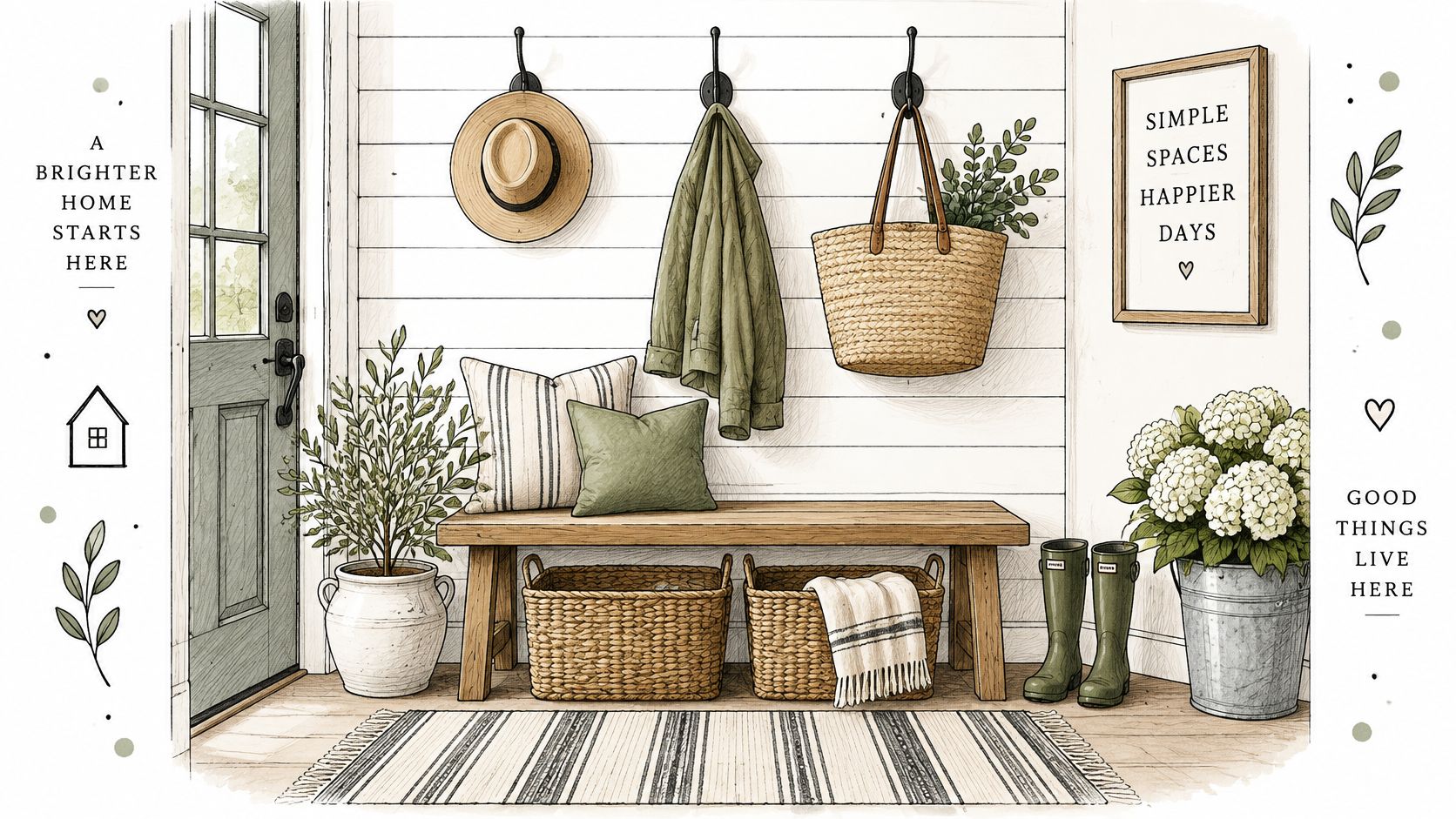
A painted accent wall can protect the busiest part of the entry while adding farmhouse character. White shiplap gives the wall horizontal lines; board-and-batten adds a vertical rhythm. Place the treatment behind the main storage zone instead of covering every wall, which limits the grooves and ledges that collect dust.
For a narrow garage entrance, painted board-and-batten behind the coat rail may be enough. Keep the finish simple where several people pass with bags, boots, and wet coats.
Build the Backdrop Around Daily Wear
Choose washable satin or semi-gloss paint where hands and coats rub against the wall. Fill fastener holes, seal exposed cut edges appropriately, and use trim with smooth edges near seated children.
Fasten a loaded coat rail into studs or suitable installed blocking, not thin paneling or decorative boards alone. Keep projecting trim clear of backpacks and shoulder bags, and choose shallow profiles that are easier to wipe clean.
For renters, a painted freestanding hall tree or removable decorative treatment may suit the space, subject to the lease and surface compatibility.
Mudrooms can share space with a hallway. Inman's coverage of the Better Homes and Gardens Real Estate trends report discusses hybrid spaces, a useful approach for an entry that serves more than one purpose.
Browse these rustic accent wall ideas for finish inspiration. Keep artwork above the splash zone, and let the wall treatment support the storage rather than compete with it.
2. Built-In Cubby Storage with Bench Seating
A bench gives everyone a place to sit while removing muddy boots. Keep the seat clear enough for that daily task, and assign each person a spot for the gear they use most.
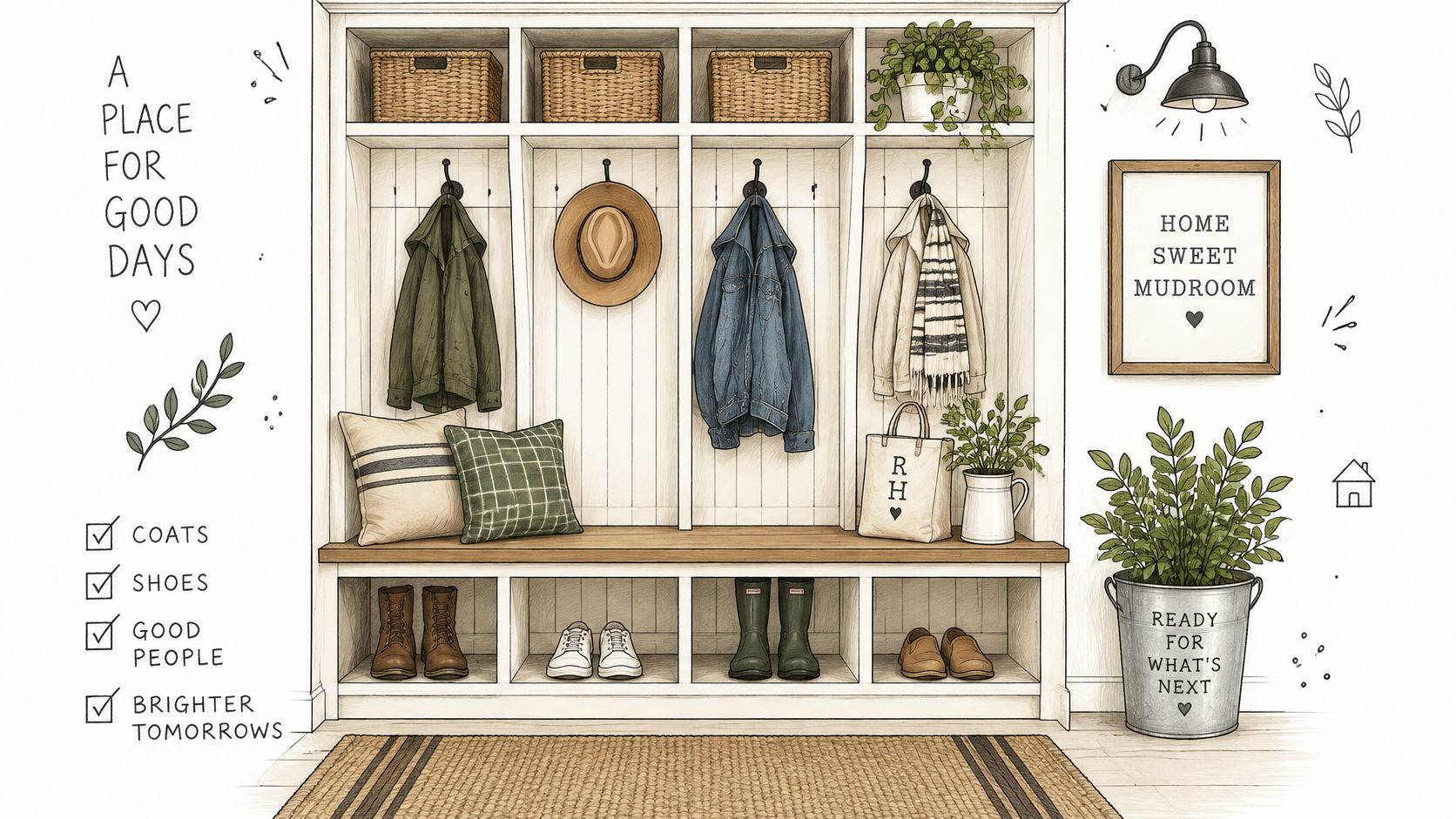
Measure the passage with someone seated on the bench. Align Lending's mudroom planning guide recommends roughly 36 inches of clear passage, with 48 inches or more improving comfort when someone needs to walk past a seated person.
Separate Dry Storage From Wet Storage
When schoolchildren and an adult who works outdoors share an entry, give backpacks labeled compartments and set muddy boots on a removable tray beneath an open cubby. Wet footwear needs airflow and a tray that can be lifted out for cleaning.
Open cubbies make everyday items easy to reach; closed fronts hide visual clutter. A mix can suit households with different routines. When comparing construction approaches, browse base cabinet storage options with attention to access, removable interiors, and the space occupied by open doors.
The video offers another visual reference for planning the storage area.
Anchor tall storage to suitable wall structure. For the bench, fasten it to studs or appropriate blocking, then check that it supports a seated adult's weight before anyone uses it. A loose board resting on a cabinet does not pass that test.
Choose a sealed seat, removable boot trays, and baskets that lift out completely. A thick upholstered cushion may be comfortable, but it is harder to clean if wet coats land on it.
3. Galvanized Metal Bins and Baskets
A galvanized bin is useful for dog towels. A woven basket suits dry hats and scarves. Swap their jobs, and you may spend more time cleaning the containers than organizing the entry.
Choose the container for its contents first, then coordinate the finish. Metal adds an industrial farmhouse accent and can be wiped clean, while woven fibers soften a wall of cabinetry. Neither should become a permanent holding area for damp, muddy equipment.
For a household with a dog, place a washable towel bin near the leash hook and a separate basket for clean walking accessories. Store treats in a suitable closed container rather than loose in an open decorative basket.
Make Each Container Easy to Empty
Look inside before buying. Tight corners, rough seams, and elaborate handles can make a charming bin awkward to clean or unpleasant for children to carry.
- Wet-weather supplies: Choose a smooth, removable container and dry it after cleaning.
- Dry accessories: Use a woven basket with a washable liner for gloves and scarves.
- Small essentials: Put keys and sunglasses in a shallow tray away from dripping coats.
- Pet equipment: Keep leashes accessible, but store anything chewable beyond a pet's reach.
Place heavy containers low. If bins sit above the bench, make sure the shelf and brackets can support the loaded weight, and avoid arrangements that require someone to pull a heavy basket over their head.
For households that keep emergency supplies near an exit, the ideas in storm-prep storage for Gulf Coast families offer a related organizing perspective. Keep emergency equipment distinct from everyday hats and shopping bags.
Labels should describe a stable purpose. Dog towels is more useful than miscellaneous, and a picture label can help a child who doesn't yet read independently.
4. Personalized Family Name Metal Sign
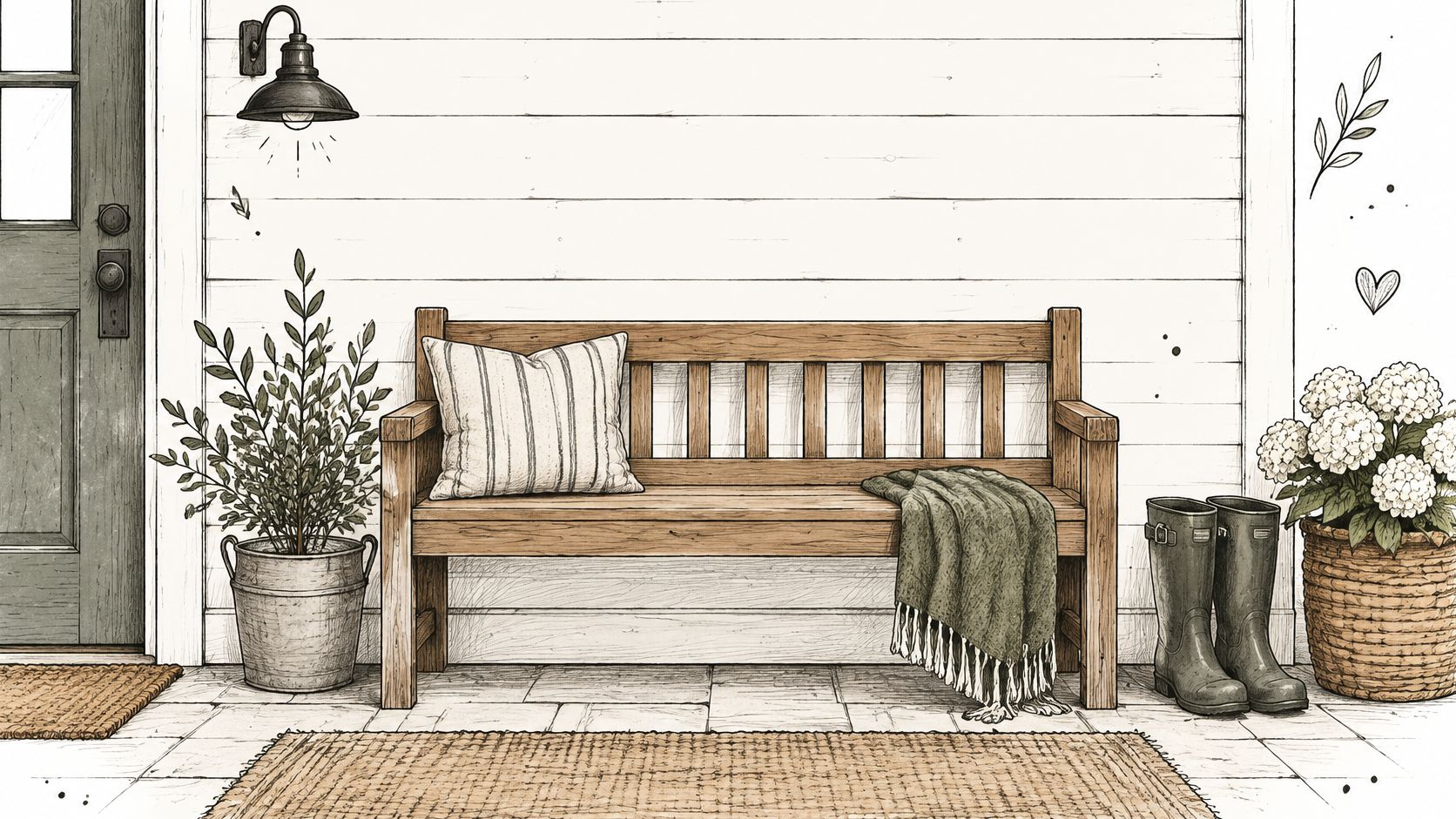
A personalized family name sign can identify the household without taking up bench or floor space. In a busy entry, place it above the hook rail where the names stay visible, but clear of swinging coats and bags.
Before ordering, tape up a paper template and hang the bulkiest coats below it. Check that the wording remains visible and that the sign does not crowd trim or block access to the hooks. A smaller format may work better on a narrow storage wall.
Farmhouse World sells custom metal signs and personalized gifts, including the Personalized Family Name Address Metal Sign with custom monogram and house number. For ideas on choosing wording and placement, see these last-name sign ideas for the home.
Mounting priority: Choose fixings suited to the wall material and sign weight. A sign above a bench should stay secure through daily traffic.
Keep the sign out of the path of swinging bags and away from children's reach. A design with cutout details may take more effort to dust, so leave enough clearance to clean around it without unloading the hooks.
5. Decorative Vintage Ladder for Hanging Items
A decorative ladder can hold dry scarves or a lightweight towel without the visual bulk of a cabinet. It cannot replace a properly mounted coat rack for loaded backpacks and wet winter clothing.
The distinction matters most in narrow entries. A leaning ladder still occupies floor space, and its feet can catch a shoe or vacuum head. A wall-mounted version may suit a compact layout better, provided it's mounted for its intended load.
Say you enter through a laundry room and need somewhere to keep a dry dog towel. A securely mounted rustic ladder beside the utility area gives that towel a visible home without sacrificing the main coat hooks.
Treat It as Light-Duty Storage
Inspect reclaimed ladders for splinters, loose joints, protruding nails, and flaking finishes. Don't assume an old working ladder or decorative reproduction is suitable for climbing, hanging heavy items, or supporting a shelf.
- Secure the frame: Restrain a leaning ladder against slipping and tipping with suitable wall attachment.
- Keep loads light: Use it for dry scarves, lightweight textiles, or an empty fabric bag.
- Protect circulation: Keep its feet and hanging fabric outside the walking route.
- Avoid overhead objects: Don't balance a planter or lantern on a narrow rung.
Wet coats belong on separate hooks with room around them. Draping soaked fabric over unfinished wood makes both the textile and ladder harder to maintain.
Dust the rungs when you remove the textiles for washing, and check the attachments whenever the ladder shifts. For renters who can't make a secure attachment, skip the leaning ladder in a busy entrance and choose a stable, purpose-built freestanding organizer instead.
This idea serves a light-use adult entry or laundry-mudroom combination better than a crowded family doorway. Rustic character isn't worth introducing a climbing temptation for young children.
6. Rustic Iron or Wood Wall Hooks and Coat Rack
The best hook is the one someone can reach while holding a bag. A handsome rail mounted beyond a child's reach won't keep their coat off the floor.
Begin with the actual items you need to hang. Bulky coats need space around them, backpack straps need a suitable hook opening, and dog leashes benefit from a dedicated spot near the door. Match black iron or aged metal to nearby hardware, but choose the shape for comfortable use.
For a family entry, mount children's hooks where the children can use them independently. Keep adult coats elsewhere so they don't cover the lower hooks.
Mount for the Loaded Bag
A coat rail is a load-bearing installation. Locate studs with a stud finder, confirm the fixing positions, and use fasteners suited to the wall assembly and expected load. Where studs don't align, select anchors appropriate to that substrate rather than relying on small general-purpose plugs.
A wood mounting board can help organize the layout, but only if the board itself is securely attached. Check for concealed wiring and plumbing before drilling.
- For children: Choose rounded hook ends and test reach with the child present.
- For pet owners: Separate leashes from coats so a hurried walk doesn't involve untangling sleeves.
- For heavy bags: Use hardware explicitly suited to the load, with support appropriate to the wall.
- For renters: Reserve removable adhesive hooks for compatible surfaces and light loads within their stated limits.
Leave wet coats spread out instead of stacking them on a shared hook. If the entry lacks capacity, move out-of-season coats elsewhere rather than adding layers until nothing dries.
Wipe hooks and the wall behind them during routine cleaning. Repeated movement, loose screws, or cracking around an anchor means the installation needs attention, not another coat.
7. Washable Farmhouse Entry Rug and Runner
A muddy arrival leaves a cleaning decision: choose a rug you can wash as directed, or reserve a spot-clean-only style for a drier area. Stripes, faded plaid, and small repeating patterns suit a farmhouse entry, but the care instructions determine whether the rug can handle daily traffic.
A low-profile runner works well on a garage-to-kitchen route because it is less likely to catch boots or interfere with a door. Check the full door swing with the rug and pad in place, especially when several people use the entry at once.
Separate the Boot Landing From the Runner
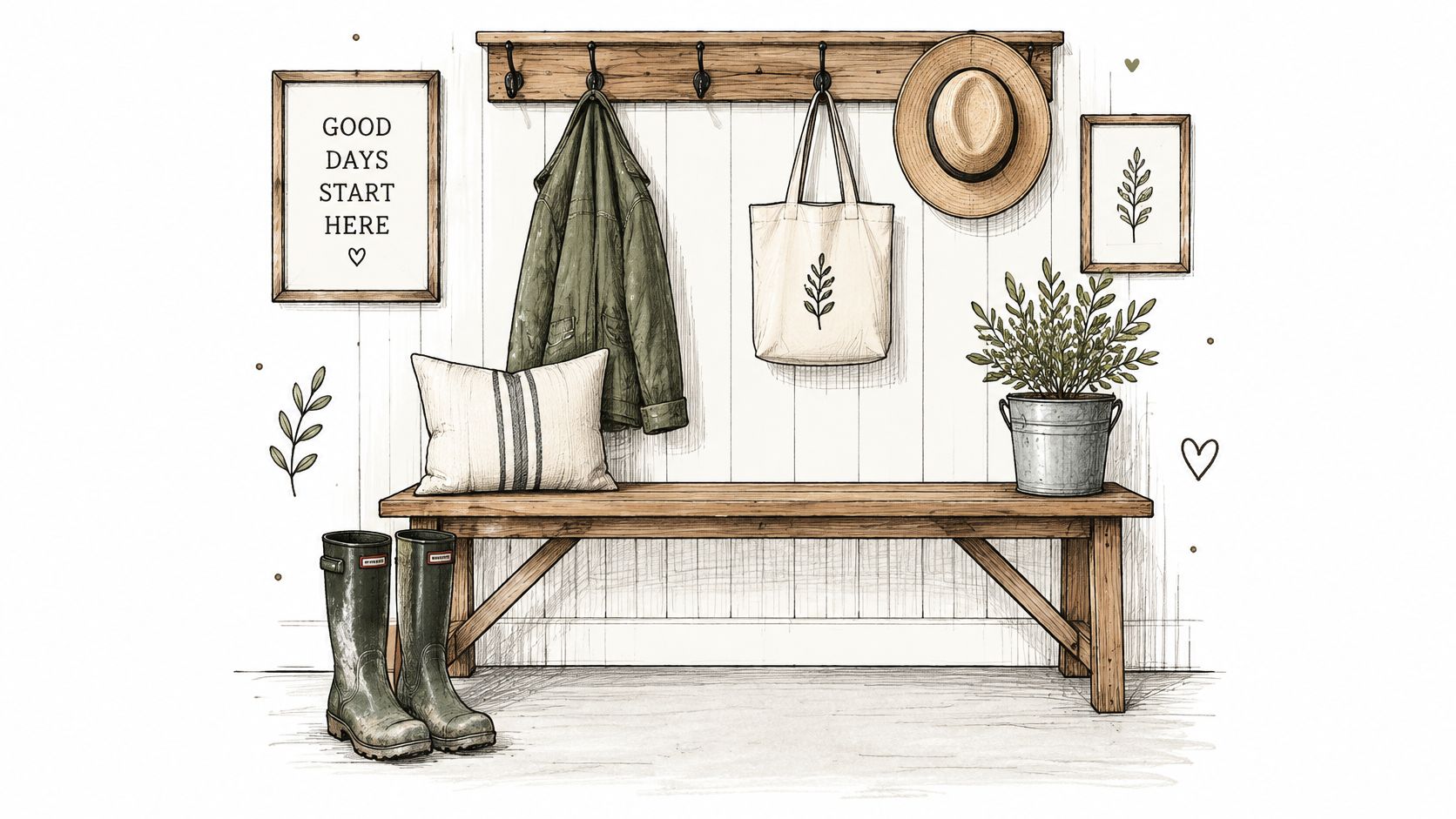
Park wet boots on a tray at the door, then let the runner handle the onward route. Containing mud at the stopping point means less grit reaches the walking path and less washing for the runner.
Natural-fiber rugs can suit farmhouse interiors, but check the label before buying. If a rug is spot-clean only, place it away from dripping coats and wet footwear. Review these area rug considerations for wood floors to check the rug, pad, and floor finish together.
Choose a suitable nonslip pad or backing, and flatten curled edges so rushing feet and boots don't shift the rug. Before settling on a washable style, confirm it fits your washing equipment and can be dried as directed.
Vacuum or shake out loose debris before washing. Lift the rug during routine floor cleaning, and let both rug and floor dry completely before replacing it. Keep a spare washable mat available during prolonged wet weather.
8. Potted Greenery, Seasonal Garlands, and Wood Shelf Display
Greenery belongs where it won't be knocked over by a backpack. A small plant on a securely mounted shelf can soften a storage wall; a floor planter beside the boot tray can turn routine cleaning into furniture moving.
For a bright entry, choose a plant suited to the actual light and temperature. If the room stays dark or the exterior door brings frequent cold drafts, a washable faux stem may be the more practical choice.
A useful arrangement is a shallow wood shelf above a utility cabinet, with a contained plant and a small seasonal accent. Leave the bench below free for people and bags.
Keep the Display Outside the Working Zone
Attach shelf brackets to appropriate structure or suitable anchors, accounting for the shelf, containers, and watered plants. Use a waterproof saucer or liner, and remove the plant for watering rather than letting runoff reach the wood.
Check plant safety if children or pets can reach the display. Don't assume a familiar houseplant is harmless, and keep trailing stems away from hooks where they can tangle with clothing.
- For busy households: Choose a simple faux arrangement that can be lifted down and dusted.
- For seasonal decorating: Attach garlands securely, away from the door latch, coat hooks, and walking route.
- For useful display space: Reserve an accessible section for a small return tray or outgoing essentials.
Leave enough empty shelf space to lift each object without moving the entire display.
Avoid loose dried arrangements directly above wet gear, where shedding pieces add to the cleanup. Skip dangling decorations at face height and anything fragile within a child's reach.
Seasonal styling should remain the easiest part of the room to change. If replacing a garland means unloading the coat rack, simplify the arrangement rather than working around it.
How the eight farmhouse mudroom ideas compare
| Item | Best For | Floor or Wall Footprint | Maintenance Level | Key Trade-Off |
|---|---|---|---|---|
| Shiplap or Board-and-Batten Accent Wall | Adding farmhouse texture and character | Wall space; no floor space | Moderate; dust gaps and touch up paint | Carpentry effort and upkeep for a distinctive finish |
| Built-In Cubby Storage with Bench Seating | Organizing family gear and providing a place to sit | Wall and floor space | Moderate; open cubbies need regular tidying | High storage value, but built-ins require fitting and installation |
| Galvanized Metal Bins and Baskets | Flexible storage for small gear and accessories | Shelf, bench, or floor space | Low; wipe clean as needed | Durable and portable, but bins can dent or look cluttered |
| Personalized Family Name Metal Sign | Creating a personal entryway focal point | Wall space; no floor space | Low | Adds personality, but custom designs take time and are harder to change |
| Decorative Vintage Ladder for Hanging Items | Displaying lightweight throws, scarves, or bags | Minimal floor space or wall-mounted | Low; occasional dusting and safety checks | Adds height while saving space, but has limited capacity and needs securing |
| Rustic Iron or Wood Wall Hooks and Coat Rack | Keeping coats, bags, and leashes off the floor | Wall space; minimal floor space | Low; occasional checks on mounting and finish | Simple, practical storage, but can look cluttered when overloaded |
| Washable Farmhouse Entry Rug and Runner | Protecting floors and adding warmth or pattern | Floor space | Moderate to high; shake, vacuum, and wash regularly | Helps trap dirt and moisture, but can slide, stain, or show dirt |
| Potted Greenery, Seasonal Garlands, and Wood Shelf Display | Softening the space with greenery and seasonal accents | Wall space for shelf; small surface or floor space for plants | Low to moderate; live plants need care | Adds warmth and flexible decor, but accessories can collect dust or look cluttered |
Build Your Mudroom Around How Your Family Actually Enters
Return to that rainy evening. The door opens, everyone needs somewhere to stop, and nobody wants a complicated organizing routine while carrying groceries. A successful farmhouse mudroom gives each person an obvious next move: put wet boots on the tray, hang the coat, park the bag, and leave the walking route clear.
Start with the clutter that causes the biggest daily problem. If shoes block the door, address footwear before buying wall art. If bags occupy the bench, install appropriate hooks or create accessible bag storage so the seat becomes usable again.
Make the Practical Changes First
Choose a storage element that solves the recurring problem. That might be a bench with open footwear storage, a securely mounted coat rail, or labeled containers for gloves and pet supplies. A renter can often achieve the same separation with stable freestanding furniture rather than built-ins.
Next, add a durable wall or floor layer where the wear happens. Washable paint behind hanging coats and an easy-care runner along the entry route may be more useful than covering the whole room in decorative finishes.
- Test the route: Open the door fully and walk through while someone sits to remove boots.
- Test the storage: Put your bulkiest everyday gear in place before finalizing labels or decorative placement.
- Test the cleanup: Make sure trays, baskets, and rugs can come out without dismantling the arrangement.
Live with the functional layout before adding seasonal pieces. You'll notice whether a shelf is needed for keys, whether children can reach their hooks, and whether the dog towel belongs closer to the door.
Finish Without Refilling the Clear Space
Once the room works, add warmth with coordinated wood, metal, and textiles. Choose a focal point rather than filling every available surface, and keep the bench primarily for sitting.
For a seasonal detail at the entrance, these dream entryway wreath design ideas can help you consider the doorway separately from the working storage wall. Keep wreaths and garlands clear of moving hardware and hanging gear.
Anchoring, clear labels, and washable surfaces matter more than any single farmhouse finish. A modest entry with secure hooks and a sensible boot tray will serve your household better than elaborate cabinetry nobody uses correctly. Aim for a room that still feels welcoming after everyone has come inside, not only before they arrive.
We offer personalized metal signs, rustic wall art, and farmhouse home accents to finish an entry once its storage and traffic flow are working. Visit Farmhouse World to choose a personal focal point or coordinating accent that complements your mudroom without taking over its useful space.


