

You've found a personalized metal sign that would look perfect above the mantel, beside the front door, or at the entrance to the chicken coop. Then reality intervenes. The porch gets full sun, the driveway sign faces driving rain, and the coastal air leaves ordinary finishes looking tired. A beautiful design means little if the lettering fades, the edges chip, or the substrate starts corroding after a few seasons.
The right metal signs custom purchase balances personality with engineering. Material, coating, mounting, placement, and proofing all affect whether your sign feels like a lasting part of the property or a short-lived decoration. For farmhouse homes, ranches, homesteads, and personalized gifts, choose the sign as functional art, not as a size-and-color selection alone.
Table of Contents
- Introduction to Farmhouse Metal Signage
- Material Choices for Outdoor Durability
- The Impact of Finish and Coatings
- Sizing and Placement Strategies
- Customization and Design Trends
- Market Context and Pricing Overview
- The Ordering and Proofing Workflow
- Installation, Care, and Frequently Asked Questions
Introduction to Farmhouse Metal Signage
A farmhouse sign often begins with an emotional idea. You might want the family name over the entryway, an address plaque that makes the driveway easier to identify, or a ranch sign that gives the gate a sense of arrival. The finished piece should feel personal enough for your home while remaining strong enough for the environment where it will live.
That distinction matters because farmhouse signage has moved beyond simple decoration. A well-designed sign can define the character of a porch, organize an outdoor space, identify a coop, or turn a quiet entrance into a memorable focal point. The sign's job is both visual and practical. It needs readable lettering, an appropriate scale, and a finish that can tolerate the conditions around it.
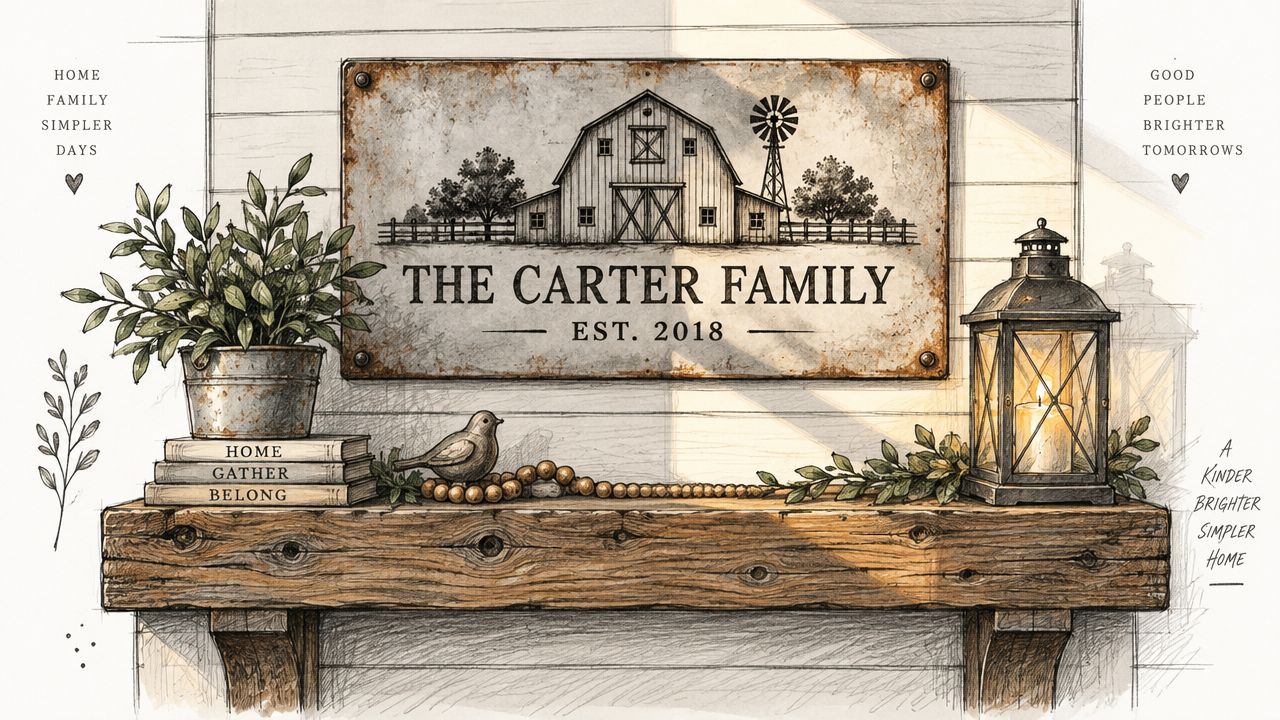
Start with the setting
An indoor family-name sign has different demands from a plaque mounted beside a gate. Interior pieces can prioritize texture, silhouette, and coordination with nearby furniture. Outdoor signs must also account for ultraviolet exposure, humidity, salt, rain, temperature changes, and the distance from which people need to read them.
I advise clients to decide the sign's location before choosing its design. A copper-toned monogram may suit a sheltered porch, while a powder-coated aluminum address plaque is a more sensible choice for an exposed driveway. The strongest farmhouse style comes from matching the material and finish to the architecture, rather than forcing the same treatment into every room.
Decorator's rule: Personalize the message freely, but be uncompromising about the substrate and finish when the sign will live outdoors.
This guide focuses on the decisions that determine long-term value: choosing the right metal, evaluating coatings, sizing the artwork, selecting a design that won't feel dated, and checking the proof before production. Rustic charm should remain, but it should be supported by weather resistance and sound installation.
Material Choices for Outdoor Durability
A sign beside an exposed driveway faces a different test from one under a covered porch. Rain, humidity, salt, ultraviolet light, temperature swings, and impact all affect the substrate. Choose the metal for the location first, then select a finish that supports the look you want.
For most exposed farmhouse signs, powder-coated aluminum is the safest default. Aluminum does not rust like steel and develops a natural oxide layer that helps protect the material beneath it. Its low weight also makes installation easier on siding, wood, masonry, and gates.
Standard outdoor aluminum signs generally serve for roughly 5 to 10 years. Premium laminates or high-quality coatings can maintain appearance and weather resistance toward 10 or more years, according to sign-industry guidance on weather-resistant outdoor signs. In practice, the visible finish often deteriorates before the aluminum does. Give priority to color stability, edge treatment, and coating quality rather than choosing by metal name alone.
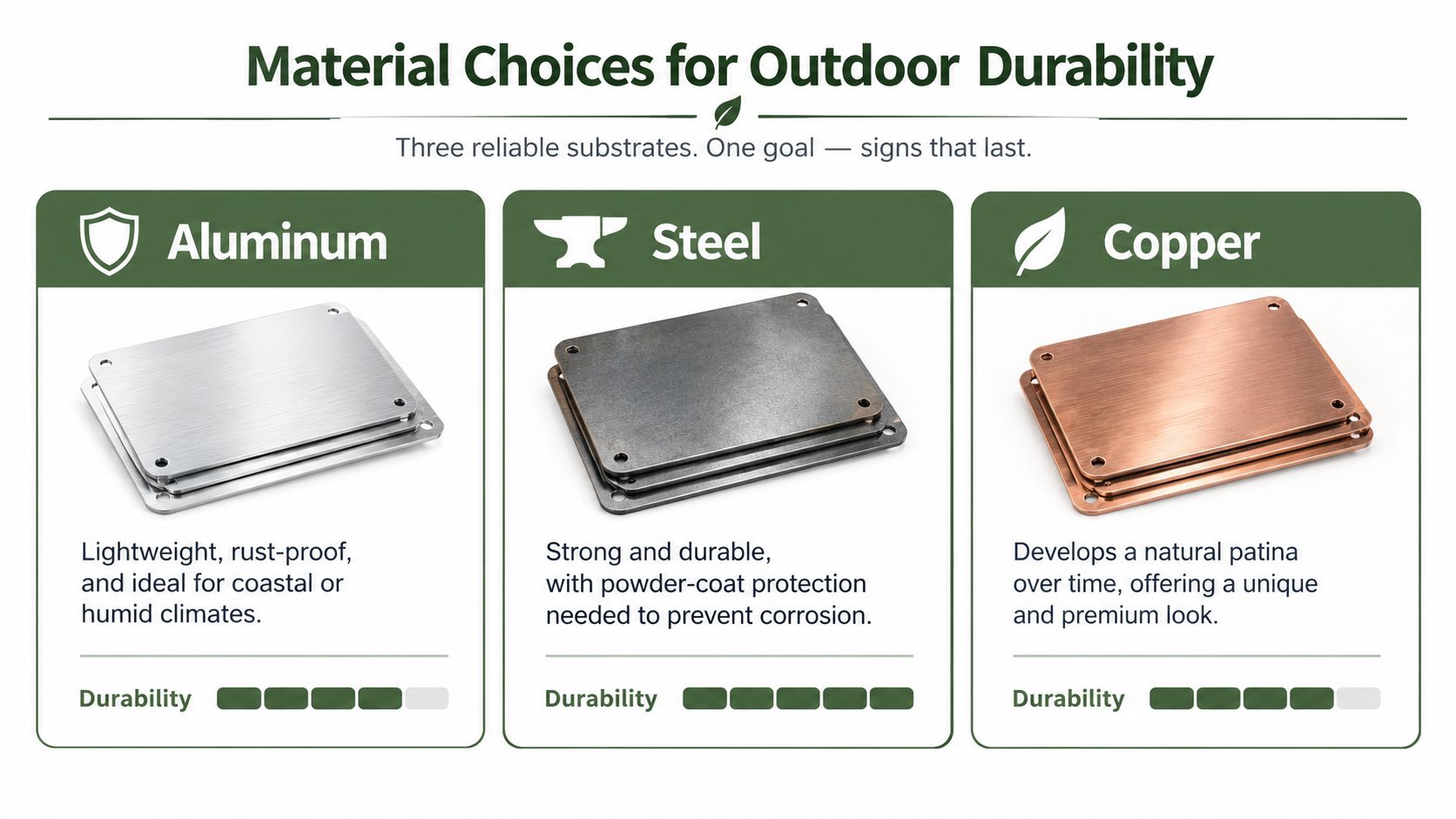
Compare the main substrates
| Material | Best quality | Main concern | My recommendation |
|---|---|---|---|
| Aluminum | Rust resistance and low weight | Dents or finish wear if poorly protected | Choose it for most exposed home signs |
| Steel | Strength and a substantial feel | Corrosion if the coating or edge is damaged | Use it when impact resistance matters and protection is robust |
| Stainless steel | Strong corrosion resistance and a refined appearance | Higher material and fabrication cost | Reserve it for premium architectural applications |
| Copper | Warm color and natural patina | Appearance changes over time | Choose it deliberately, not accidentally |
Steel suits barns, workshops, and gates where a substantial feel or impact resistance matters. It demands careful protection, though. A scratch, drilled edge, or poorly sealed fastener can expose the substrate to moisture. Road salt, coastal air, and persistent dampness make edge coverage and attachment details particularly important.
Stainless steel gives an exterior sign a clean, architectural character and strong corrosion resistance. Copper makes a different promise. Its patina changes over time, so choose it for an intentionally aged appearance, not for a finish expected to remain unchanged.
Before ordering, review guidance on protecting metal from rust. Ask the seller how the sign's cut edges, mounting holes, and attachment points are sealed. Those construction details often determine whether the piece ages gracefully for decades or looks tired after a few seasons.
The Impact of Finish and Coatings
A farmhouse sign can look perfect at installation and still fail after repeated sun, rain, and salt exposure. Finish technology decides whether the lettering stays crisp, the color keeps its character, and the edges resist moisture. For an outdoor plaque, choose a simpler design on well-protected aluminum over an elaborate design with inadequate protection.
Powder coating forms a dry-film barrier that limits the metal's contact with moisture, oxygen, and salt. Proper application helps reduce corrosion risk and delays fading, chipping, and scratching on aluminum and steel signs exposed to demanding conditions. High-quality powder-coated aluminum signs are commonly positioned for 10 to 20 or more years of outdoor use, according to technical guidance on powder-coated signage.
Why the finish changes the buying decision
Liquid paint can produce a beautiful surface, but mechanical wear and weather may affect it sooner. Powder coating typically creates a more even, durable layer when the fabricator prepares the metal correctly and cures the coating properly. Ask about thickness, surface preparation, color quality, edge coverage, and fabrication standards. These details separate a sign built for decades from one that only looks good at delivery.
Dark colors give farmhouse signage a grounded, custom appearance. They also make fading or chalking easier to see once the finish loses saturation. For a sign in direct sun, ask whether the design includes a UV-protective laminate, a durable exterior coating, or another documented protection system.
Ask these finish questions
- What protects the artwork? Confirm whether the lettering is printed, applied as a decal, cut through the sheet, or layered onto the surface.
- How are edges treated? Unprotected edges and mounting holes can admit moisture, especially in wet environments.
- Is the coating suitable for the location? A sheltered porch has different demands from a gate exposed to wind, rain, and salt air.
- Can the finish be cleaned safely? Get approved cleaning products and methods before installation.
Choose the finish before you finalize the color chart. A premium sign depends on the material, artwork, and protective layer working together, not on gloss alone. Specify edge sealing and attachment protection, then select a coating rated for the sign's actual exposure. This approach keeps a custom metal sign looking intentional long after seasonal décor has been replaced.
Sizing and Placement Strategies
A sign can be beautifully made and still look wrong if it's too small, too dominant, or mounted at the wrong height. Start by measuring the actual space, then consider the viewing distance and the visual weight of nearby architecture. A narrow plaque beside a door should support the entryway, while a driveway or gate sign needs a stronger silhouette and clearer lettering.
Match the sign to its job
- For a front door, choose a proportion that leaves breathing room around the frame. A family name or monogram should read quickly without competing with the door hardware.
- For a porch wall, use the surrounding furniture as a scale reference. A sign above a bench can act as the anchor, but it shouldn't crowd sconces, windows, or hanging plants.
- For a driveway or gate, prioritize legibility first. Select a bold typeface, strong contrast, and a shape that remains visible against trees, fencing, or masonry.
- For a coop or barn, let the sign be more expressive. Animal motifs, family names, and playful lettering can work well, provided the sign remains easy to clean and securely mounted.
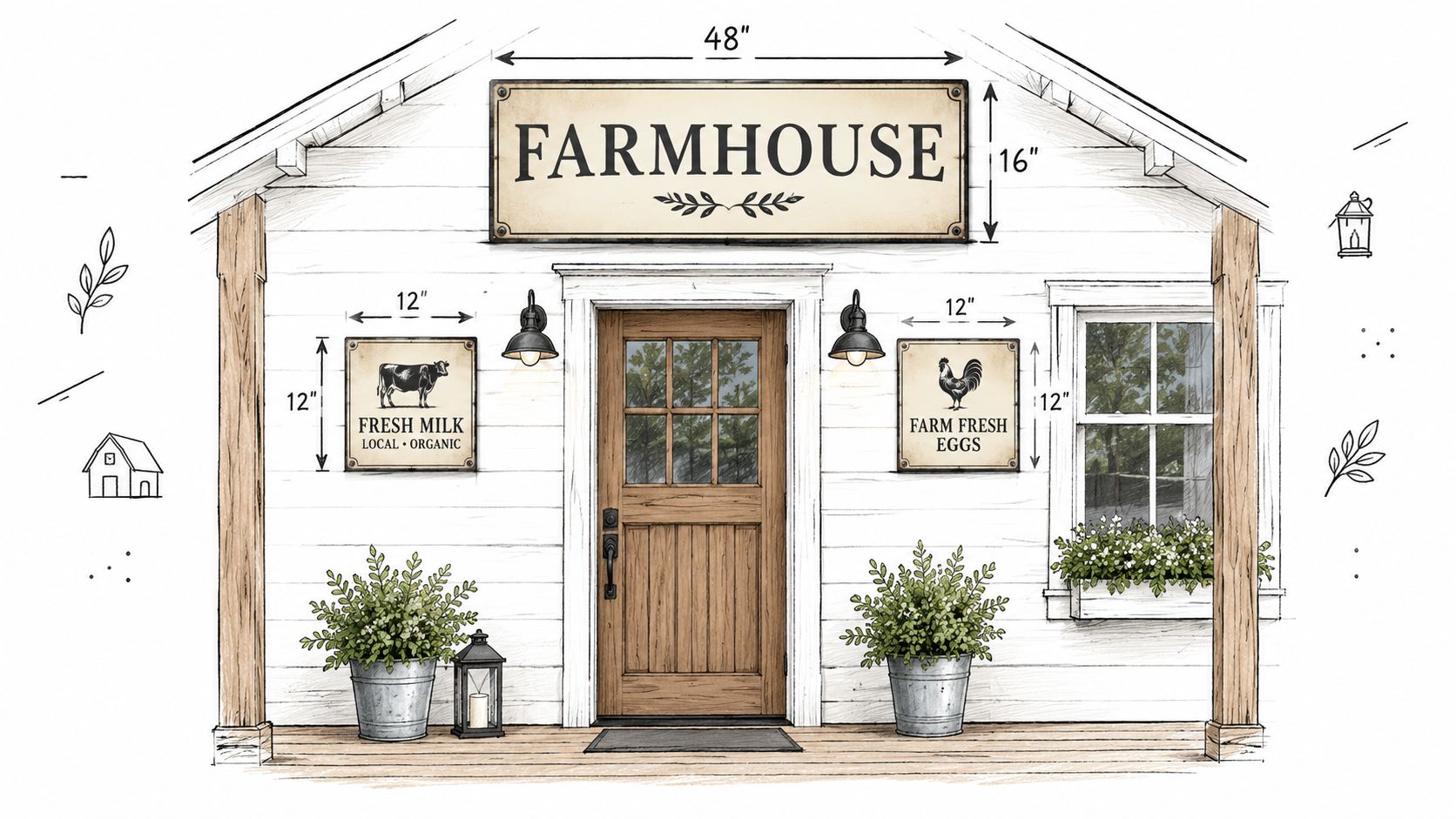
Protect the visual hierarchy
Don't place every personalized piece at the same visual level. One sign should lead. Supporting elements, such as a smaller plaque, planter, wreath, or lantern, should frame it rather than compete with it. This is especially important on compact porches, where several small signs can create clutter faster than one substantial piece.
For more ideas on arranging farmhouse pieces, use this guide to modern farmhouse wall decor ideas. Before you finalize the order, mock the sign's approximate dimensions on the wall with painter's tape or cardboard. Stand where visitors will stand, not only where you'll view it from inside the house.
Customization and Design Trends
Personalization changes a sign from a decorative object into a record of place. A family name identifies the home, an address plaque improves arrival, and a ranch or coop sign can mark the work and character of the property. The strongest designs don't add every available option. They choose one primary message and give it enough space to be read and appreciated.
A name can stand alone when the lettering has a confident silhouette. A monogram works well for a quieter entryway. Dates, coordinates, animal motifs, and botanical details can add meaning, but they should support the main identity rather than turn the sign into a crowded collage.
Choose a style with staying power
Current decor commentary points toward warm minimalism, tactile materials, sculptural forms, and nature-inspired shapes rather than sterile, overly polished minimalism. That shift suits farmhouse homes because organic silhouettes, leaves, branches, animals, and warm metallic tones can feel personal without appearing overly formal. Coverage of metal home decor trends also discusses interest in durable materials, personalized pieces, and recycled aluminum in eco-conscious positioning.
Consider these combinations:
- Family name plus a simple botanical outline for a refined porch sign.
- House number plus an understated border for a practical address plaque.
- Ranch name plus an animal silhouette when the property's identity is central to the design.
- Monogram plus a restrained frame for an interior wall where the sign needs to coordinate with existing art.
Avoid trend-chasing through excessive distressing, crowded typography, or decorative elements that don't relate to your home. A sign should look intentional beside wood, stone, brick, or painted siding. Warm finishes and organic outlines can modernize rustic style, but the personalization should remain the emotional center.
The right question isn't whether a sign can be customized. It's whether the chosen customization will still feel connected to your family and property after the novelty fades. Favor clear lettering, meaningful motifs, and a finish that complements the architecture.
Market Context and Pricing Overview
Custom metal signage sits in two overlapping markets. The smaller personalized home-decor category is growing steadily, while the broader metal advertising sign trade shows that metal signage also operates at meaningful industrial scale. That context helps explain why material quality, fabrication, and finishing can create substantial differences between inexpensive decorative pieces and professionally made outdoor signs.
One market estimate places the global metal sign market at about USD 0.15 billion in 2025/2026, with a projection of roughly USD 0.21 billion by 2035 and an estimated compound annual growth rate of around 4.8%, according to the metal sign market breakdown. The same breakdown estimates North America at about 47% of global share, with aluminum signs at 44%, stainless steel at 27%, copper at 18%, and tin at 11%.
What you're actually paying for
Price usually reflects more than the sheet of metal. The specification may include:
- Substrate quality, including aluminum, steel, stainless steel, or copper.
- Cutting and shaping, especially for custom silhouettes and detailed edges.
- Artwork preparation, including layout, typography, and personalized revisions.
- Protective finish, such as powder coating or UV-protective lamination.
- Mounting hardware, edge treatment, packaging, and delivery.
The broader trade data reinforces that metal signage has pricing power beyond decorative retail. In 2024, the United States consumed about 226 thousand tons of metal advertising signs, China consumed 163 thousand tons, and Brazil consumed 46 thousand tons. The global average export price was $21,173 per ton, down 6% from the prior year but still up at an average annual rate of 1.7% over the previous 12 years, according to the global metal advertising sign market analysis.
For a homeowner, the lesson is straightforward. Don't compare signs by dimensions alone. Compare the material, finish, proofing process, hardware, and expected environment. A lower upfront price can become poor value if the sign needs replacement when the coating fails.
The Ordering and Proofing Workflow
A reliable ordering process removes avoidable mistakes before fabrication begins. Start with the location and purpose, then give the maker the information needed to build a sign that reads correctly at the intended distance.
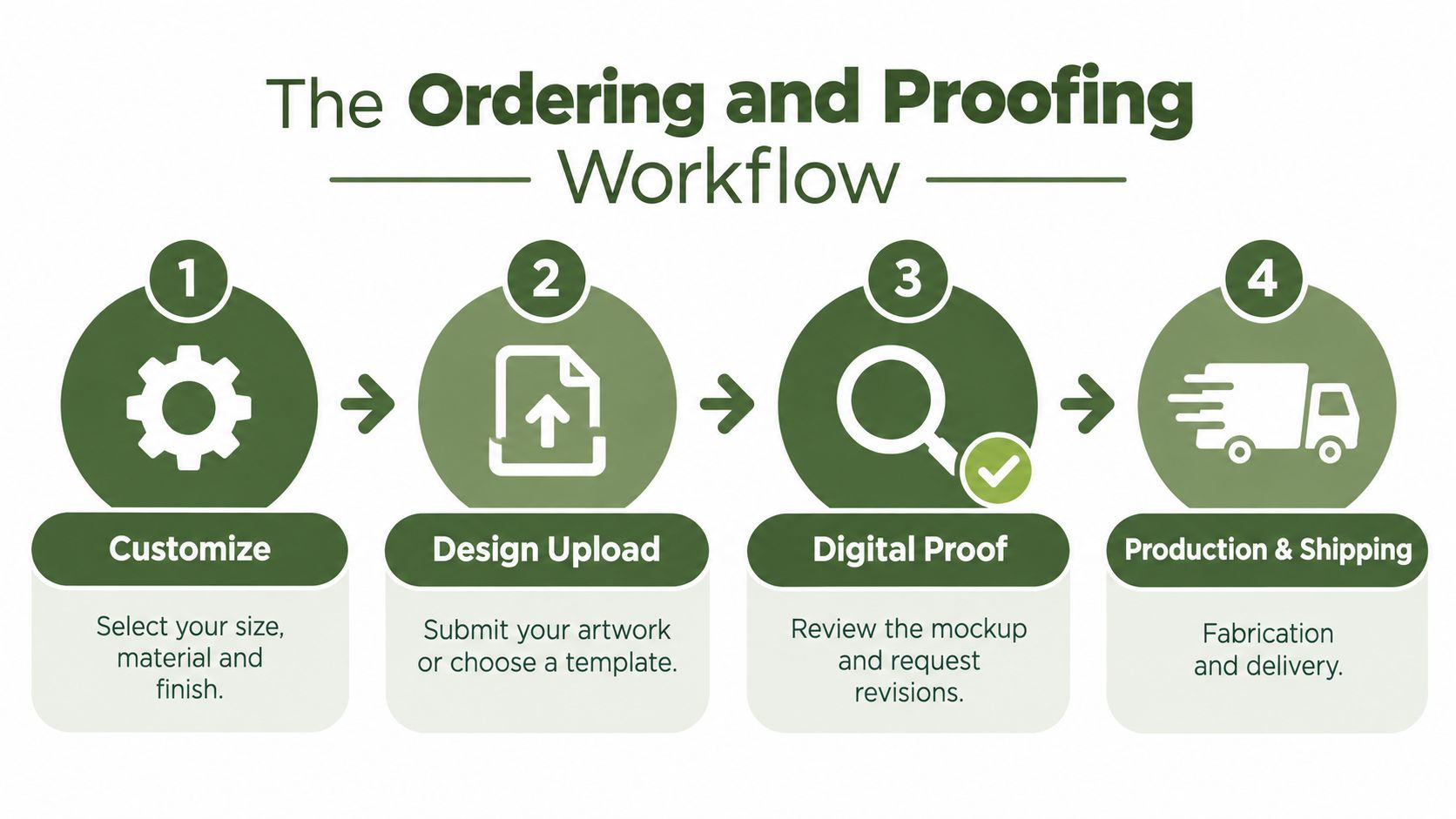
Follow a deliberate sequence
- Customize the specification. Select the shape, dimensions, substrate, color, finish, wording, and mounting approach. Keep the primary message short enough to preserve strong lettering.
- Submit artwork or choose a template. If you're supplying a logo, use the cleanest file available and explain which elements must remain recognizable. If you choose a template, ask whether the lettering and border can be adjusted.
- Review the digital proof. Check every letter, number, apostrophe, capitalization choice, spacing decision, and line break. Inspect the design at full size if possible, because details that look balanced on a small screen may feel crowded on the finished sign.
- Approve production and shipping. Confirm the final material, finish, hardware, delivery address, and any special instructions before approval.
Treat the proof as a design appointment
The proof isn't a formality. It's the point where you can catch a surname error, an address mistake, an awkward crop, or a motif that competes with the lettering. Ask to see the actual orientation and confirm how the sign will hang. A horizontal sign can look balanced in a product preview but feel too compressed over a narrow door.
A ranch entrance sign deserves its own review because it usually has to work from farther away and against a more visually complex background. Use this resource on ranch entrance signs in metal for context on the role of wording, scale, and placement.
Before approving, compare the proof with the intended wall, fence, gate, or porch. Check whether the chosen color will contrast with that surface. Then save the approved version for your records.
Installation, Care, and Frequently Asked Questions
Installation determines how well a custom metal sign holds up outdoors. Match the hardware to the mounting surface, support the sign evenly, and prevent water from collecting behind or around it. Use exterior-rated fasteners on wood. For masonry, choose anchors rated for that surface instead of relying on generic screws.
Leave clearance for cleaning and drainage, especially on gates, fences, and exterior walls. Inspect drilled holes, edges, and mounting points periodically. A loose fastener lets the sign move, and repeated movement can wear the finish or enlarge the mounting hole.
For expected service life by material and coating tier, see Material Choices for Outdoor Durability and The Impact of Finish and Coatings. Care and installation determine whether that finish stays presentable.
Care questions answered
How long should an outdoor aluminum sign last? Standard aluminum signs commonly provide practical outdoor service for 5 to 10 years, while premium protective laminates or high-quality coatings can extend visible appearance and weather resistance toward 10 or more years, based on outdoor sign durability guidance. Powder-coated aluminum may be positioned for 10 to 20 or more years of outdoor use when the coating and installation are high quality, as discussed in powder-coating guidance for signage. Treat these figures as finish expectations, not guarantees for every climate or product.
What's the best cleaning method? Use a soft cloth, clean water, and mild soap when needed. Rinse away residue and dry the surface. Avoid abrasive pads, harsh solvents, and aggressive pressure washing. Follow the maker's instructions when the sign has a specialty coating, printed layer, or applied lettering.
Should I choose steel for a gate or barn? Choose steel when its extra weight and strength serve a clear purpose. Confirm that the coating covers the substrate and edges thoroughly. For many exposed residential signs, aluminum is easier to mount and will not rust, making it the more practical choice.
Can a personalized sign ship internationally? Availability, packaging, duties, and delivery conditions vary by seller and destination. Confirm the address, production timeline, customs responsibility, and packaging method before ordering. The finish should be protected from abrasion during transit.
What should I do if the proof looks crowded? Remove secondary details before shrinking the lettering. A shorter message with generous spacing will read more clearly and look more deliberate.
Where can I buy coordinated farmhouse pieces? Farmhouse World offers personalized metal signs with options for names, dates, monograms, designs, sizes, and colors, along with farmhouse wall decor and related home accents. Review the proof carefully, then match the material and finish to the sign's location.
Choose the message first. Then select a substrate, finish, and mounting method suited to the weather the sign will face. Farmhouse World offers personalized metal signs for family names, addresses, ranches, and coops. Visit Farmhouse World to compare designs and begin a sign made for your space.


