

You're probably standing in the backyard looking at a shed that already does the hard work. It stores tools, seed trays, hoses, potting soil, and all the bits that make a garden run. What it doesn't have yet is the finishing touch that makes it feel intentional.
That's where a garden shed sign comes in. The catch is that outdoor signs can disappoint fast. A sign may look perfect on a product page or craft table, then start fading, warping, or rusting once it faces sun, rain, and winter swings on a real shed wall.
I've seen the same pattern over and over. People start by choosing a style, but the smarter order is the opposite. Choose for outdoor survival first, then dress it in the rustic look you want. That's how you get a sign that still feels charming after more than one season.
Table of Contents
- Finding the Right Garden Shed Sign Style for Your Space
- Garden Shed Sign Ideas You Can Personalize
- Choosing Materials and Finishes That Survive Outdoors
- How to Create Your Garden Shed Sign at Home or Order Custom
- Mounting Options That Keep Your Sign Secure
- Personalization Tips and Final Care for Lasting Charm
Finding the Right Garden Shed Sign Style for Your Space
A good shed sign starts with the job it needs to do. Some signs are there to welcome visitors down a garden path. Others label a potting shed, mark a tool shed, add a funny line over the door, or show a family name that ties the outbuilding to the house.
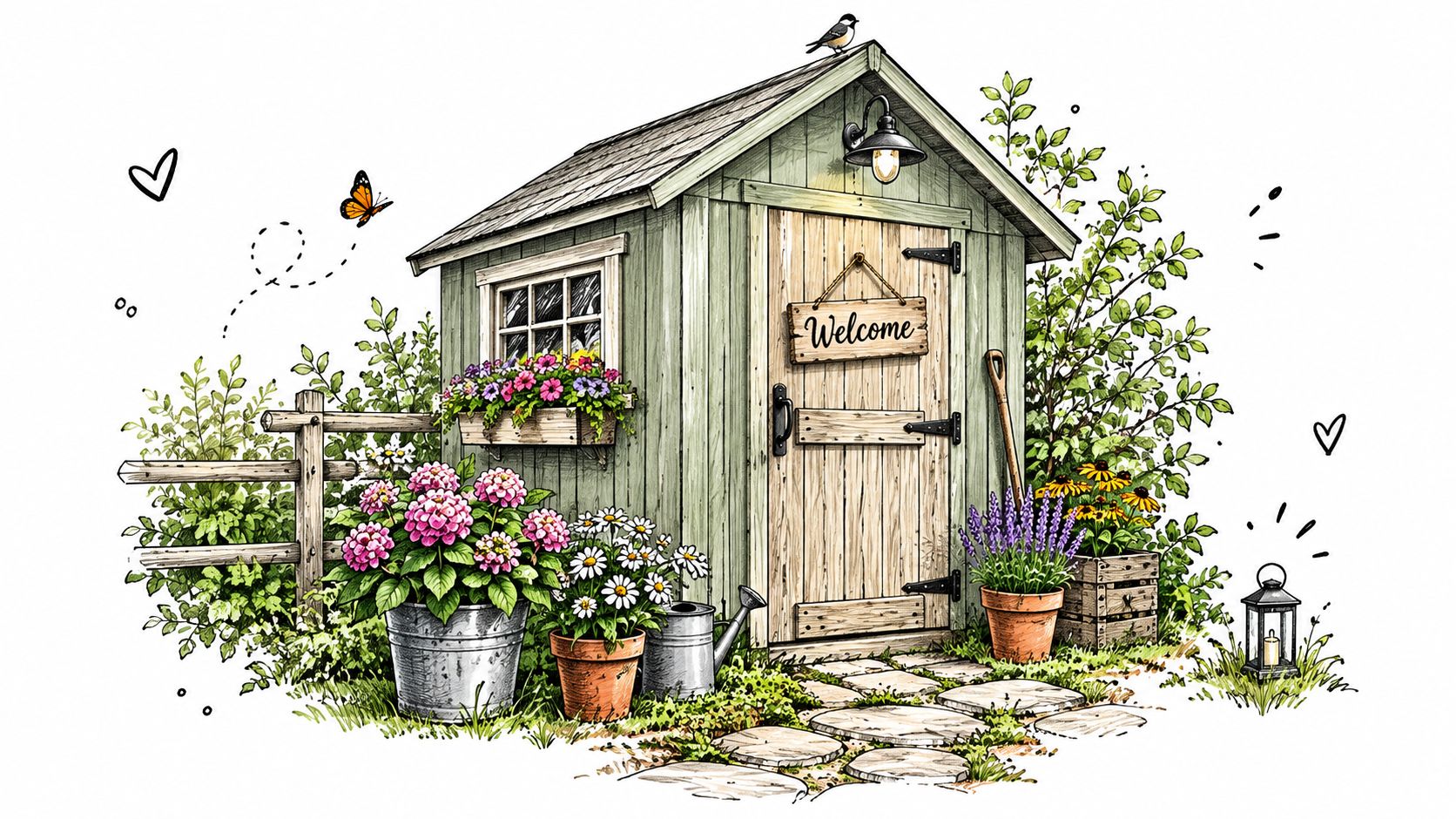
Match the tone to the shed
A white cottage-style shed can carry something soft and classic like “Potting Shed” or a garden name. A darker stained outbuilding often looks better with stronger contrast and simpler lettering. If your shed sits near a fence, coop, greenhouse, or side gate, the sign should feel like part of that whole corner, not like a random add-on.
I usually narrow style choices by asking three simple questions:
- Who needs to read it: Just your family, or guests walking up from a distance?
- Where will it hang: On the door, above the trim, beside a window, or on the wall facing the yard?
- What mood fits the space: Formal, playful, farmhouse, coastal, or weathered and vintage?
A lot of people make the sign too small for the spot. That's the most common visual mistake. A tiny plaque gets lost on a broad wall, while a large sign can crowd a narrow shed door and make the whole front look top-heavy.
Think about placement before wording
Door-mounted signs usually need fewer words and bolder shapes. Wall-mounted signs can handle a family name, established date, or a decorative motif like herbs, watering cans, or garden tools. If you're trying to judge size and proportion, the same visual thinking used for storefront and wayfinding pieces can help. This guide to business signs is useful because it gets into readability and placement logic that applies just as well to backyard structures.
Practical rule: If you can't read the main word from the path where people first see the shed, the layout needs to get simpler or larger.
Timeless signs tend to age better than joke-heavy ones. Humor can work, but the funniest line on day one sometimes feels dated long before the shed itself does.
Garden Shed Sign Ideas You Can Personalize
Once the style direction is clear, personalization changes the sign from nice decor into something that belongs to your place. The best ideas usually fall into a handful of categories, and each one creates a different mood.
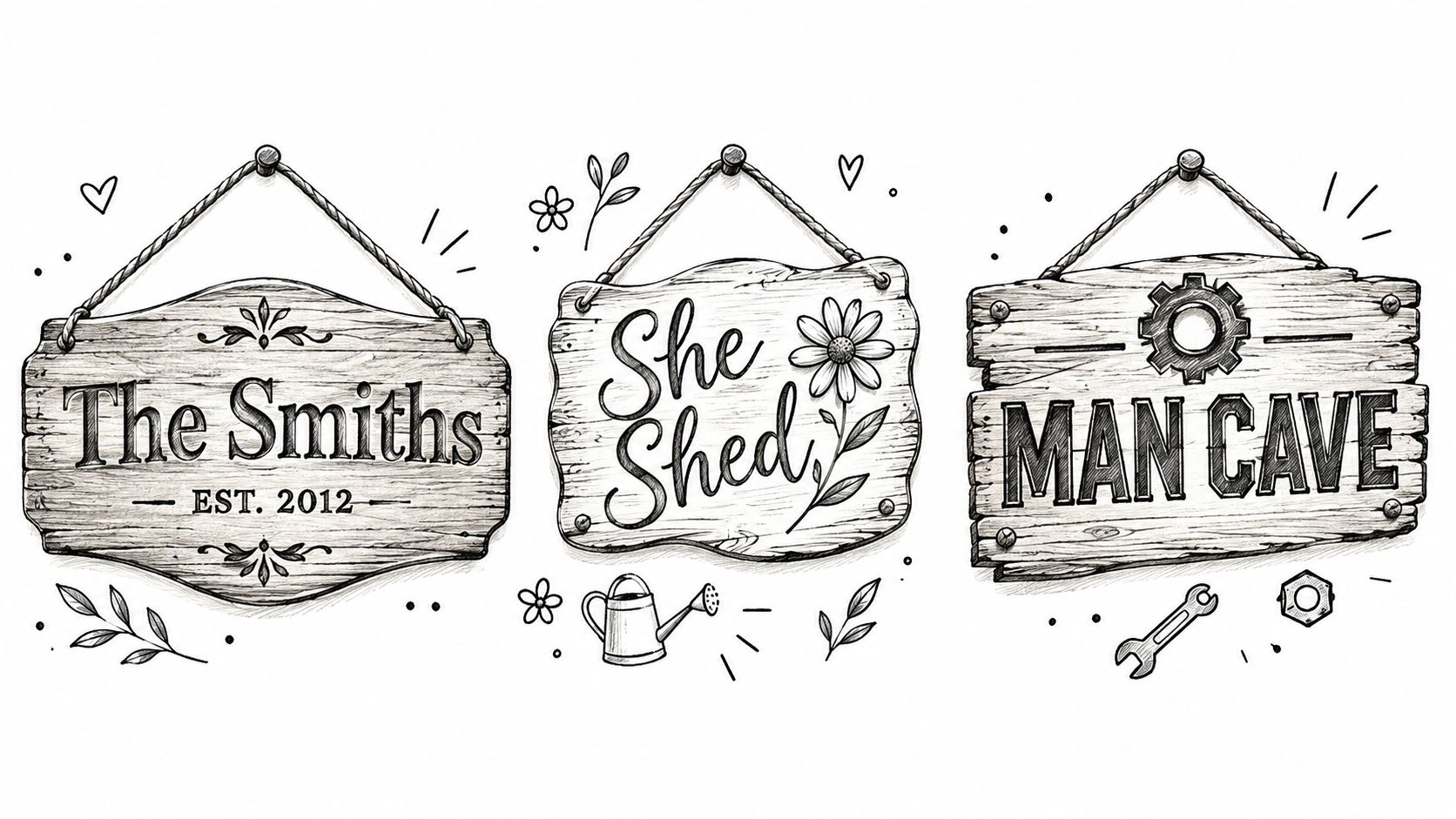
Classic names and established details
These have the longest shelf life. Think “The Miller Potting Shed,” “Rosebank Garden,” or a simple family name with an established year. They look grounded and work especially well on farmhouse, cottage, and traditional garden sheds.
A serif font or clean script usually suits this style. I'd keep the decorative flourishes light. Heavy swashes and extra ornaments can disappear outdoors.
Playful and lighthearted wording
Funny signs can be great on relaxed backyard spaces, especially if the shed doubles as a retreat or hobby zone. Short lines work better than long quotes. “Shed Happens” or “Plant Lady at Work” reads faster than a full sentence.
This category needs restraint. If the phrase is already playful, keep the graphics simple. Don't pile on bees, tools, florals, vines, and distressed textures all at once.
Botanical and tool-themed designs
These are ideal when you want the sign to feel decorative even if the wording stays simple. Lavender, wildflower silhouettes, seed packet styling, hand rake motifs, and watering cans all fit naturally.
A quick side-by-side view helps:
| Style | Best for | What reads well outdoors |
|---|---|---|
| Family name sign | Front-facing shed, visible from yard | Bold main word, small secondary line |
| Funny garden phrase | Casual backyard or she shed | Short wording, high contrast |
| Botanical motif | Decorative potting shed | Simple silhouettes, limited colors |
| Tool-inspired layout | Working storage shed | Block letters, straightforward layout |
Rustic farmhouse lettering
This look is still popular, but it works best when it's edited. A rustic sign doesn't need every edge to look chipped and every letter to look aged. Too much faux distressing reduces legibility once the sign is outside in real light.
Keep the hierarchy obvious. One main line should lead, and everything else should support it.
If you're personalizing for a specific use, let the purpose guide the wording. A potting shed can lean pretty. A tool shed usually looks better with cleaner type. A she shed can carry more personality without feeling off.
Choosing Materials and Finishes That Survive Outdoors
Style gets attention, but material decides whether your garden shed sign still looks good next year. For year-round outdoor use, there's a real durability gap between decorative craft materials and sign materials that can take weather.
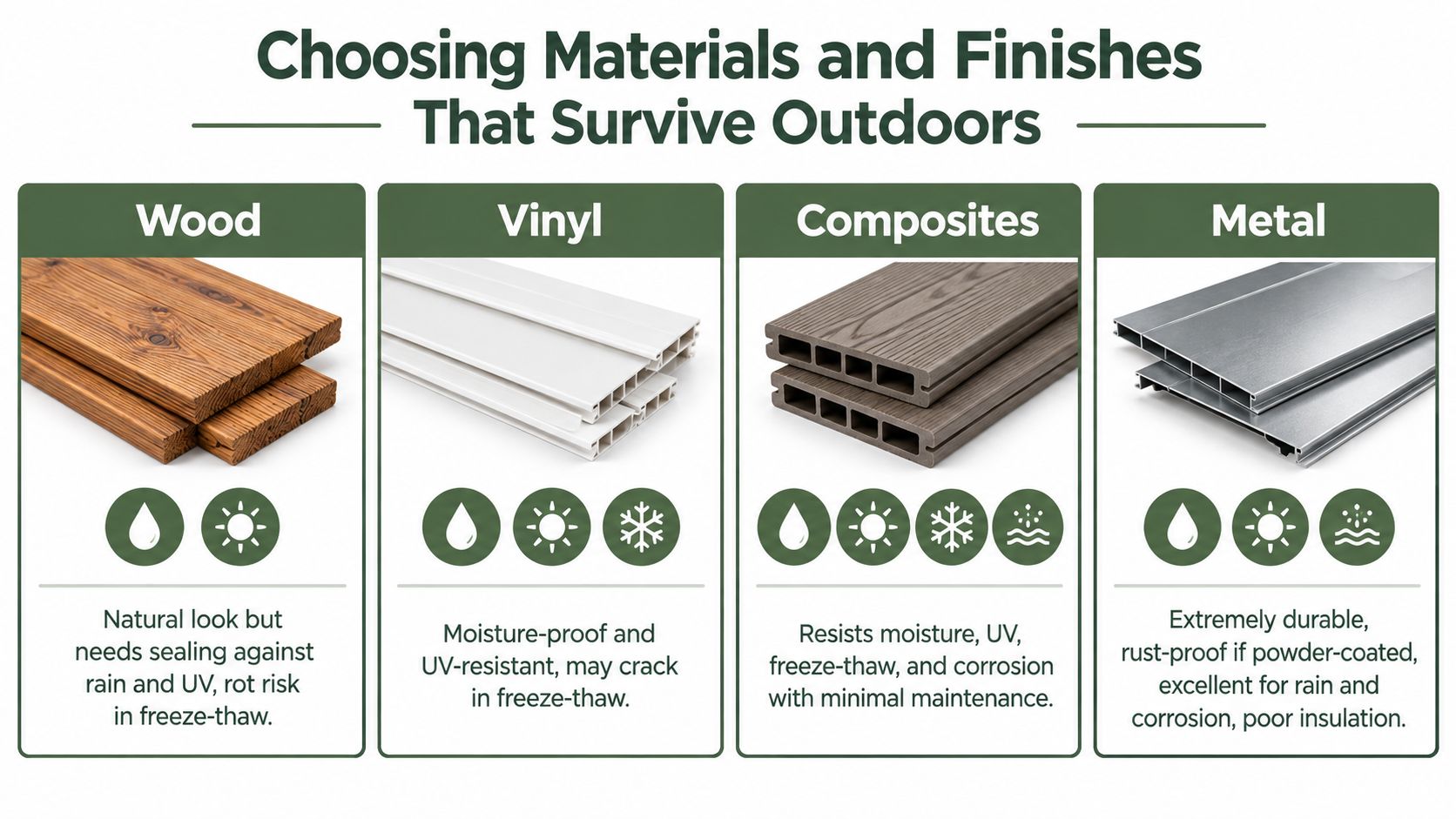
What tends to hold up and what tends to fail
Independent sign guidance consistently points to aluminum and high-grade composites outperforming wood and vinyl for rain, UV, freeze-thaw, and corrosion resistance, with aluminum often lasting about 10 to 15 years or more outdoors and wood usually needing much more maintenance, according to weatherproof outdoor sign guidance.
That lines up with what shows up in actual backyards. Raw or lightly sealed wood can look beautiful at first, but it's the material most likely to swell, split, or need frequent touch-ups. Vinyl resists moisture, but it isn't my first choice where temperatures swing hard or where the sign gets constant direct sun on an exposed wall.
Why powder-coated aluminum is such a practical choice
For an aluminum shed sign, powder-coated finishes are the most practical high-durability option. The coating acts as a barrier against moisture, salt, and UV exposure, and outdoor life is commonly cited at about 10 to 20 years or more when prep and application are done correctly, with better performance in moderate climates and shorter life in harsh coastal or industrial settings, based on powder coating guidance for signage.
That last part matters. People hear “metal” and think cold, industrial, or too modern for a farmhouse yard. In practice, a metal sign with a rustic finish often gives you the exact visual warmth you want without the upkeep that real wood demands in rough weather.
In coastal or wet climates, “rustic” is a look, not a material requirement.
If you want more background on outdoor structures in damp conditions, this Cork garden shed buyer's advice is useful for thinking through exposure, maintenance, and climate fit.
Details that matter more than buyers expect
With powder-coated aluminum, the finish is only as good as the process. Best practice starts with the aluminum substrate, then thorough surface prep and pretreatment, a UV-resistant powder system, controlled film thickness, and full coverage on edges and the backside. Weak pretreatment, thin coverage at edges and mounting holes, and lower-grade resins are common failure points in outdoor signage, as noted in the powder coating guidance above.
If your shed area stays damp or salty, it also helps to understand broader metal-care habits. Farmhouse-style outdoor pieces last longer when the finish stays intact and moisture doesn't get a foothold, which is why this guide on how to protect metal from rust is worth a read before you buy or hang anything metal outdoors.
How to Create Your Garden Shed Sign at Home or Order Custom
There are really two good paths. Make it yourself if you enjoy painting, sanding, and fussing over layout. Order custom if you want a cleaner finish, tighter lettering, or a material that's already built for weather.
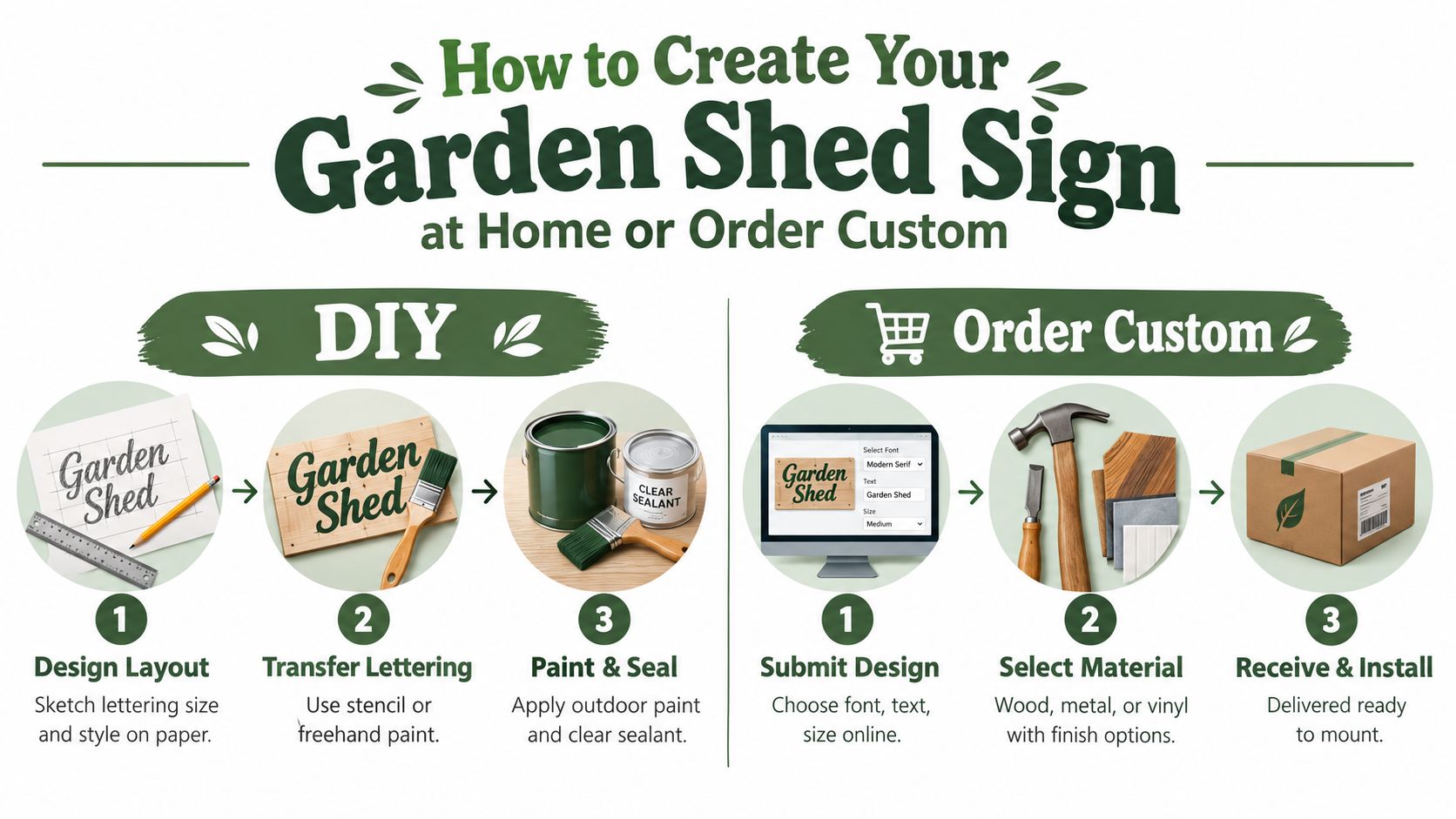
The DIY route
A homemade sign works best when the design is simple. I'd sketch the wording on paper first, then tape the paper roughly to the shed or fence area to judge scale before touching the final board or panel. That one habit saves a lot of regret.
For the actual build, keep the process clean:
- Choose the base carefully: If you love wood, use a stable exterior-grade piece and accept that it will need upkeep. If you want less maintenance, start with a metal blank or outdoor-rated panel.
- Transfer lettering with control: Stencils help if your handwriting drifts. Chalk transfer paper is handy for centered names and curved text.
- Use outdoor-rated paint: Craft paint alone usually won't cut it for exposed outdoor use.
- Seal vulnerable areas: Edges, drilled holes, and the back are where outdoor damage often starts.
A lot of DIY signs fail at the perimeter, not the face. The painted front may look fine while moisture sneaks in at the edges or around hardware.
Workshop note: If you drill first, seal the inside of the holes before final mounting. That's where wear starts on many handmade signs.
Let painted coats cure fully before hanging. Rushing that part leaves the finish soft, and soft finishes scratch fast during installation.
The custom-order route
Custom ordering makes sense when you want sharper typography, precise cutouts, or a finish that's harder to achieve in a home setup. It's also easier when the sign needs to match other outdoor decor, like metal wall art, address markers, or coop signs.
For most shed setups, people usually choose a size somewhere from 12 to 36 inches, depending on door width, wall space, and viewing distance. Keep the wording short if the sign sits near eye level on a narrow door. A wider wall gives you room for a family name plus a smaller secondary line.
When ordering, ask for specifics instead of assuming “outdoor” means fully protected:
- Confirm the finish: Ask for a UV-resistant powder-coated finish if you're choosing aluminum.
- Ask about backside coverage: This matters more than many buyers realize.
- Check edge treatment: Especially on cut shapes and decorative silhouettes.
- Review the proof in context: Picture the sign on the actual shed color, not a white screen background.
If you want a ready-made custom option in the farmhouse style, Farmhouse World's custom metal sign collection shows the kind of personalized metal approach that fits sheds, coops, and backyard outbuildings.
Which path makes more sense
DIY is the better path when you want the handmade charm and don't mind occasional maintenance. Custom is the better path when you want a more exact finish or when your climate is tough on exposed decor.
A quick comparison makes the choice easier:
| Path | Best when | Main trade-off |
|---|---|---|
| DIY sign | You enjoy making and touching up decor | More upkeep and more room for finish mistakes |
| Custom sign | You want crisp results and easier outdoor performance | Less hands-on character during the making process |
Mounting Options That Keep Your Sign Secure
A durable sign can still fail if it's hung poorly. I've seen sturdy signs twist in the wind, rub paint off siding, or pull loose because the mounting method didn't match the shed surface.
Match the hardware to the shed
On wood siding or trim, screws are usually the safest choice for a standard wall sign. Pre-drill carefully, keep the holes clean, and don't over-tighten. Over-tightening can crack finishes around the fastener or pinch a sign so tightly that water sits against the surface.
Heavier metal signs benefit from more support. A French cleat is tidy and strong for flatter wall placements, especially if you want the sign to sit level without visible chains. For over-door placement, brackets or short hanging chains can look good, but they need enough clearance so the sign doesn't slap the shed in the wind.
If you're dealing with posts, gateways, or freestanding placement near the shed, some of the same stability ideas used in u channel post installation tips are helpful for thinking about anchoring and alignment.
Think about movement, not just weight
Sheds move a little with weather. Wood swells, contracts, and shifts seasonally. Metal sheds can heat up hard in summer sun. That means a mounting setup should allow a bit of breathing room instead of locking the sign down so rigidly that the finish gets stressed around the holes.
A short checklist helps before you drill:
- Check the exposure: Windy corner, sheltered wall, or under an overhang.
- Check the substrate: Wood, sheet metal, composite panel, or trim board.
- Check the sign shape: Flat rectangle mounts differently than an ornate cutout.
- Check finish protection: Use washers or spacers if needed so metal hardware doesn't grind at the coating.
Don't let the sign sit flush against a damp wall if water tends to collect there. A little air gap can help the finish stay cleaner and drier.
Good-looking mounting is part of the design
I always try to line the sign up with something already on the shed, such as trim boards, door rails, or window tops. That keeps it from looking like it floated onto the wall by accident.
If you're mixing your shed sign with lanterns, planters, or other decor, this collection of outdoor metal wall art ideas can help you think through spacing and grouping without crowding the facade.
Personalization Tips and Final Care for Lasting Charm
The nicest garden shed sign doesn't just have pretty wording. It fits the shed, reads clearly, and still feels at home with the rest of the yard. That comes down to a few finishing decisions.
Keep the design readable
Choose one font that does the heavy lifting. If you add a second font, let it play a supporting role. Strong contrast matters more outdoors than tiny decorative details, especially when the sign is viewed across a path or garden bed.
For the final check, I like this simple list:
- Stand back and read it: If the main word disappears, simplify.
- Balance text and graphics: One botanical accent often looks better than several.
- Clean gently: Use mild soap and water, not harsh chemicals.
- Inspect once in a while: Look at edges, mounting points, and finish wear before small issues spread.
A sign keeps its charm longer when it relates to the whole space. If your shed has galvanized planters, black hardware, or faded terracotta pots, echo those tones in the sign instead of forcing a finish that belongs somewhere else.
A durable sign still benefits from attention. Wipe off grime, touch up small damage early, and keep wet debris from sitting against it.
A rustic look doesn't have to mean fragile. The best garden shed sign is the one that still looks right after rain, sun, pollen season, and a busy year of actual garden use.
If you want a shed sign that already fits farmhouse style, Farmhouse World offers personalized metal signs, rustic wall art, and outdoor-friendly decor that work well on sheds, coops, and backyard outbuildings. For custom looks that don't give up durability for charm, visit Farmhouse World and browse options that can be made to fit your space.


