

You've found the perfect sign for the porch, but one practical question keeps getting in the way: will it still look good after months of sun, rain, wind, and seasonal moisture? A charming farmhouse rooster, ranch name plaque, or family address sign can transform an exterior, yet the design is only half the decision.
The dependable choice comes from matching four layers: base metal, protective finish, placement, and mounting hardware. This guide will help you understand those choices in plain language, so you can select outdoor metal wall art that suits your climate, wall surface, style, and willingness to maintain it.
Table of Contents
- Why Outdoor Metal Wall Art Works on Real Exteriors
- What Outdoor Metal Wall Art Actually Is
- Base Metals and How They Behave Outside
- Finishes, Coatings, and What Weatherproof Really Means
- Style Families From Farmhouse to Coastal and Western
- Sizing and Placement That Actually Looks Right
- Mounting Safely on Brick, Siding, Fences, and Coops
- Care, Customization, and Pairing With Other Farmhouse Accents
Why Outdoor Metal Wall Art Works on Real Exteriors
A covered porch often needs one strong focal point rather than several small decorations. A metal sunburst above the door, a family name sign beside the entry, or a rooster silhouette near the garden can give the wall shape and personality without making the space feel crowded.
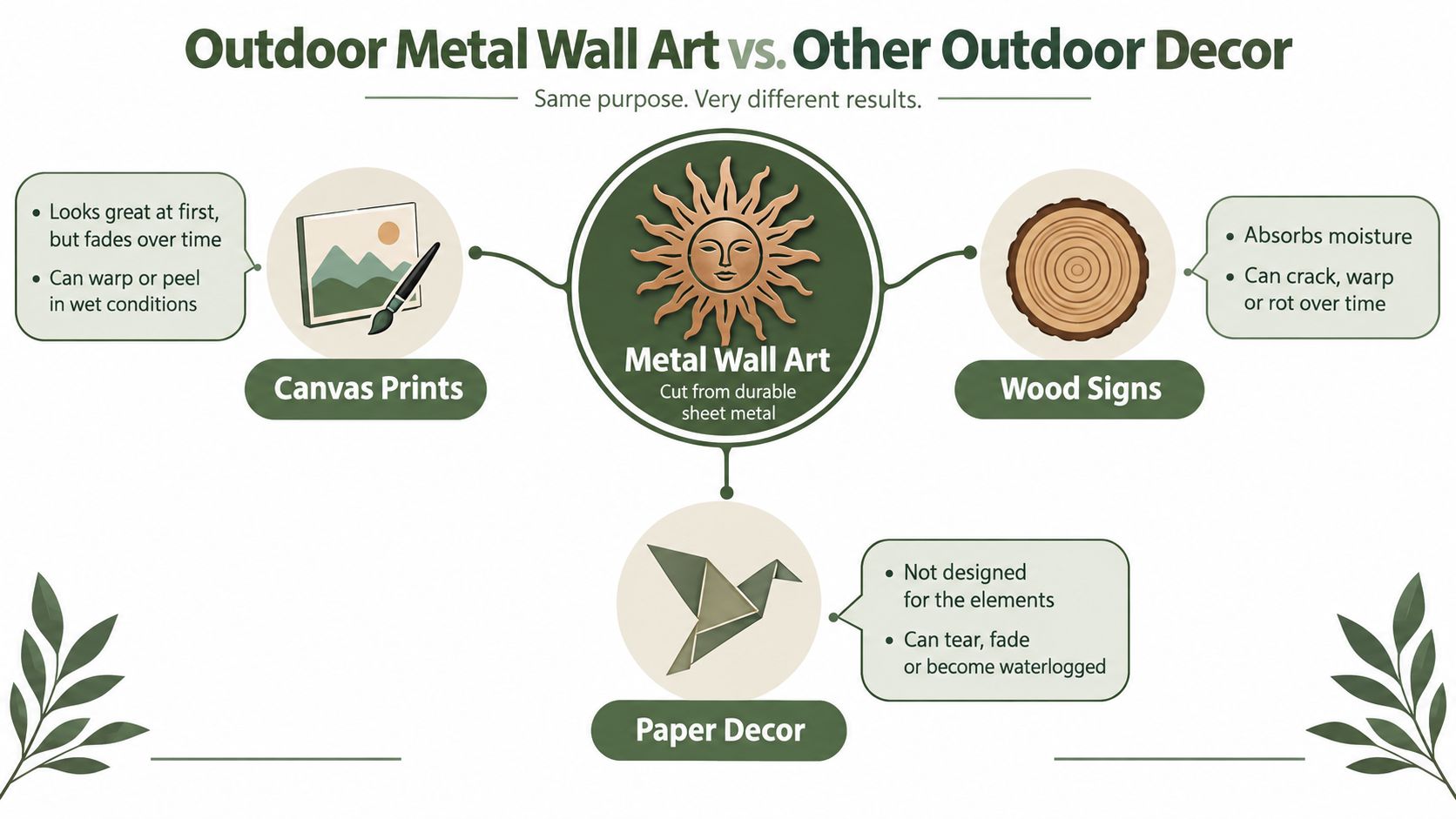
Metal works especially well outdoors because it adds dimension and visual weight. Cutout designs create shadows that change throughout the day, while raised or layered details give a flat wall more depth. Canvas can soften, wood can swell or split, and paper-based decorations aren't made for sustained exposure to the elements. A properly finished metal piece gives you a sturdier starting point for an exterior display.
The key word is properly finished. Metal isn't automatically weatherproof just because it feels strong in your hand. The underlying material, coating chemistry, cut edges, weld points, fasteners, and wall connection all affect how well the piece performs outside.
Practical rule: Choose outdoor metal wall art as a complete system, not just as a shape or color.
Four decisions shape the result
- Material: Aluminum keeps a large panel light, while galvanized, stainless, or coated steel can offer a more substantial presence.
- Finish: Powder coatings and UV-stable systems help protect color, gloss, and the metal beneath.
- Style family: Farmhouse, rustic, coastal, and Western designs create different relationships with porches, fences, gardens, and ranch entries.
- Placement: Size the piece against the door, window, fence panel, or wall section below it, then choose hardware for that specific surface.
A covered entry and an exposed coastal wall don't ask the same thing of a sign. Once you account for sun, salt, rain, wind, and substrate, the attractive choice and the practical choice can be the same piece.
What Outdoor Metal Wall Art Actually Is
Outdoor metal wall art is a decorative panel, cutout, silhouette, sign, or sculptural design made to hang on an exterior wall or structure. Many pieces begin as sheet metal that is cut, shaped, and finished with paint or a protective coating. The design might be a geometric pattern, a farm animal, a botanical form, a monogram, or a personalized address display.
That construction separates metal wall art from many softer outdoor decorations. Canvas uses a fabric surface that can absorb moisture, wood can respond to humidity and water, and paper decor generally isn't designed for direct exposure. Metal gives the design a firm, dimensional surface, but it still needs the right protective treatment to resist corrosion and finish deterioration.
Indoor and outdoor pieces aren't interchangeable
An indoor metal panel may have a decorative paint layer that looks beautiful in a hallway but isn't intended for continuous ultraviolet exposure or wet conditions. A purpose-built exterior piece should provide clearer information about its base metal, coating, intended exposure, and mounting method.
Look for these cues on a product page:
- Base metal disclosure: The listing should identify aluminum, steel, galvanized steel, stainless steel, or another material.
- Outdoor-use language: “Indoor and outdoor” is more useful when paired with finish information.
- Coating details: Powder coating, a UV-stable polyester system, or a fluoropolymer finish gives you more to evaluate than the word “weatherproof” alone.
- Mounting information: Holes, tabs, brackets, or included hardware should match the wall or structure where you plan to hang the piece.
The decision tree is simple. First identify the climate and exposure. Then choose the metal and coating. After that, select a style and size that suit the setting, and finish with hardware that can safely connect the art to the surface.
Base Metals and How They Behave Outside
The metal underneath the finish determines how the piece responds when moisture reaches a scratch, edge, weld, or fastener hole. Aluminum, galvanized or stainless steel, and mild steel are common families to compare, but they don't behave alike.
Aluminum is light and naturally more resistant to atmospheric corrosion than unalloyed steel. That makes it useful for larger decorative panels, address plaques, and fence pieces where you want a broad visual presence without placing unnecessary load on the mounting surface. Aluminum is often a sensible choice for an exposed wall, although a coating still matters if you want the color and gloss to remain attractive.
Galvanized steel uses a zinc layer that provides sacrificial protection. In practical terms, the zinc helps protect the steel when the surface is exposed, and atmospheric data show that galvanized zinc layers can reduce corrosion rates by orders of magnitude compared with bare steel in the same environment. Atmospheric corrosion data from the American Galvanizers Association provides useful context for understanding why galvanized steel behaves differently from unprotected steel.
Stainless steel relies on its alloy composition to resist corrosion, while mild steel depends much more heavily on its coating system. Bare or poorly protected steel can rust within months outdoors, especially where moisture remains trapped. A coated steel sign can still be an excellent choice when the coating is properly applied and the edges, welds, and mounting points receive attention.
Match the material to the setting
A covered porch may give a coated steel sign some shelter from direct rain. An exposed coastal wall introduces salt, wind-driven moisture, and stronger demands on every vulnerable point. For a large sign, weight also matters because the wall or fence must carry the panel and the hardware together.
When you're comparing a metal railing or other exterior aluminum feature, this guide to installing aluminum railings at home offers helpful background on why aluminum is valued for outdoor construction. For decorative pieces, the same general principle applies: low weight and corrosion resistance can simplify exterior placement.
For a style-focused comparison of iron designs, see Farmhouse World's iron wall art collection. Treat iron as a design category first, then confirm the actual base metal and protective treatment before placing it in a demanding environment.
Finishes, Coatings, and What Weatherproof Really Means
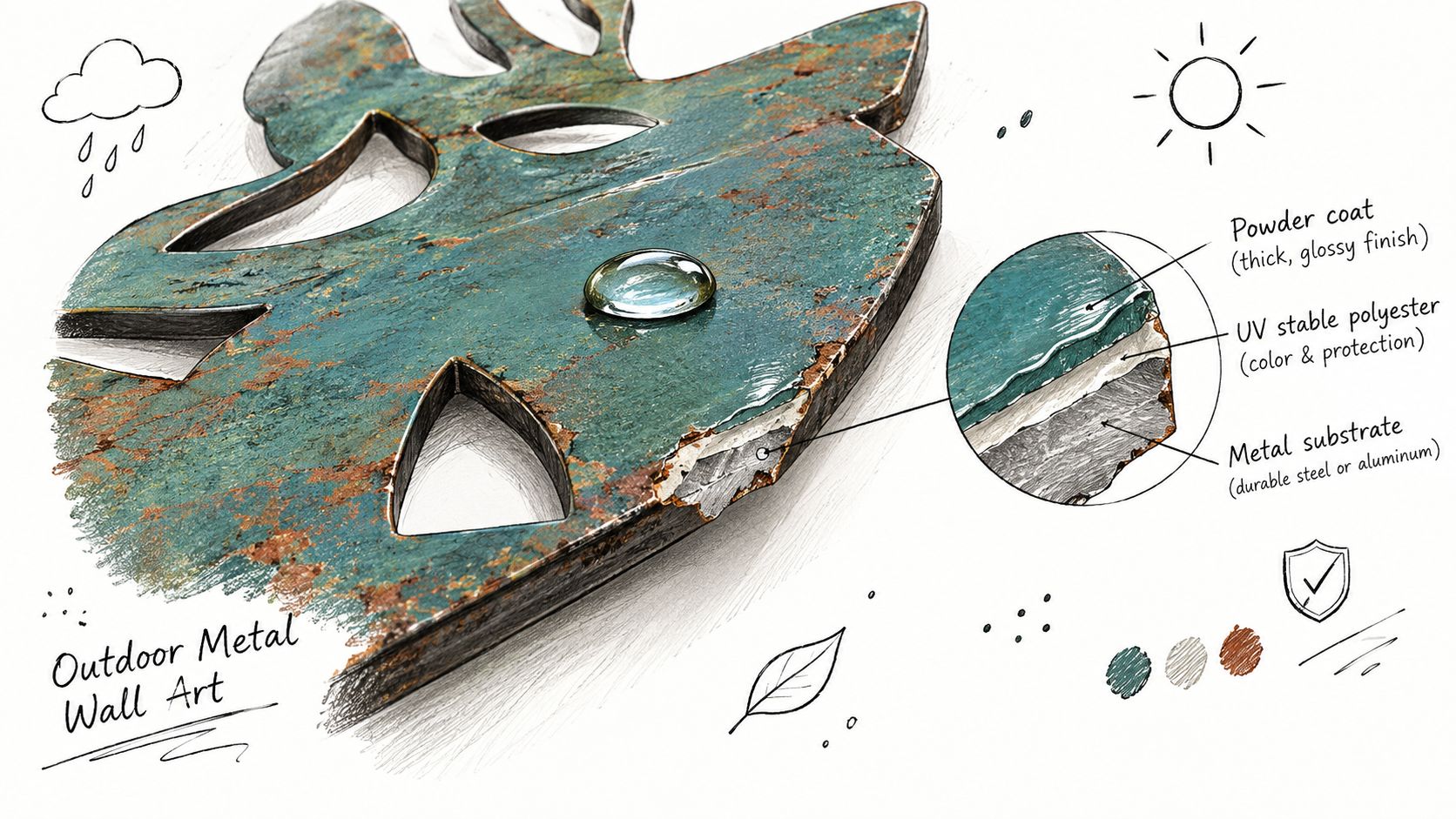
The finish is often the most important protective layer between outdoor metal wall art and the weather. Ultraviolet exposure drives gloss loss and color fade, while rain and humidity create pathways for corrosion when the coating is chipped, porous, or poorly bonded.
A powder coat is applied as a dry coating and cured onto the metal. Within that broad category, chemistry matters. Industry guidance identifies UV-stable polyester systems as commonly specified for 5 to 8 years of excellent outdoor appearance retention, while fluoropolymer coatings are selected when long-term color and gloss stability is especially important in high-sun or architectural installations. Metallic art powder-coating guidance explains why coating selection should follow the exposure rather than the color alone.
Inspect the whole finish system
Pretreatment is not a minor factory detail. Degreasing, conversion coating, primer, and topcoat help the finish adhere and slow underfilm corrosion, particularly in coastal or industrial surroundings where salts and pollutants accelerate failure. This overview of primers and prep for metal surfaces is useful if you want to understand why cleaning and surface preparation affect the final result.
Pay special attention to:
- Cut edges: Exposed edges can admit moisture if they aren't coated or sealed.
- Weld points: Welds may become vulnerable when they aren't cleaned and protected consistently.
- Mounting holes: Hardware openings can expose the base metal and collect water.
- Clear coats: A clear protective layer may need renewal when sunlight gradually affects pigments and gloss.
A covered porch and a fully exposed south-facing wall deserve different expectations. Ask whether the piece is intended for full sun, partial shelter, or general outdoor use. If the listing only says “weatherproof,” request information about the base metal, coating type, edge treatment, and recommended maintenance. You can also review guidance on protecting metal from rust before choosing a piece for a wet or salty location.
Style Families From Farmhouse to Coastal and Western
Style affects more than the motif. It also influences the finish, contrast, visual density, and the surroundings where the piece will feel natural. A farmhouse rooster sign and a coastal wave panel may both be made from metal, but they create very different impressions on the same porch.
Farmhouse designs tend to use familiar, uncomplicated forms. Stars, roosters, wheat stalks, barns, and family names work well beside front doors, garden sheds, and chicken coops. Matte black, white, and sage green support a quiet country palette, while a personalized name or address gives the piece a practical role.
Rustic metal art usually leans into texture and character. Trees, axes, wildlife, distressed lettering, and weathered finishes suit cabins, workshops, timber porches, and garden walls. Warm copper, dark brown, black, and aged-looking finishes can echo wood siding without competing with it.
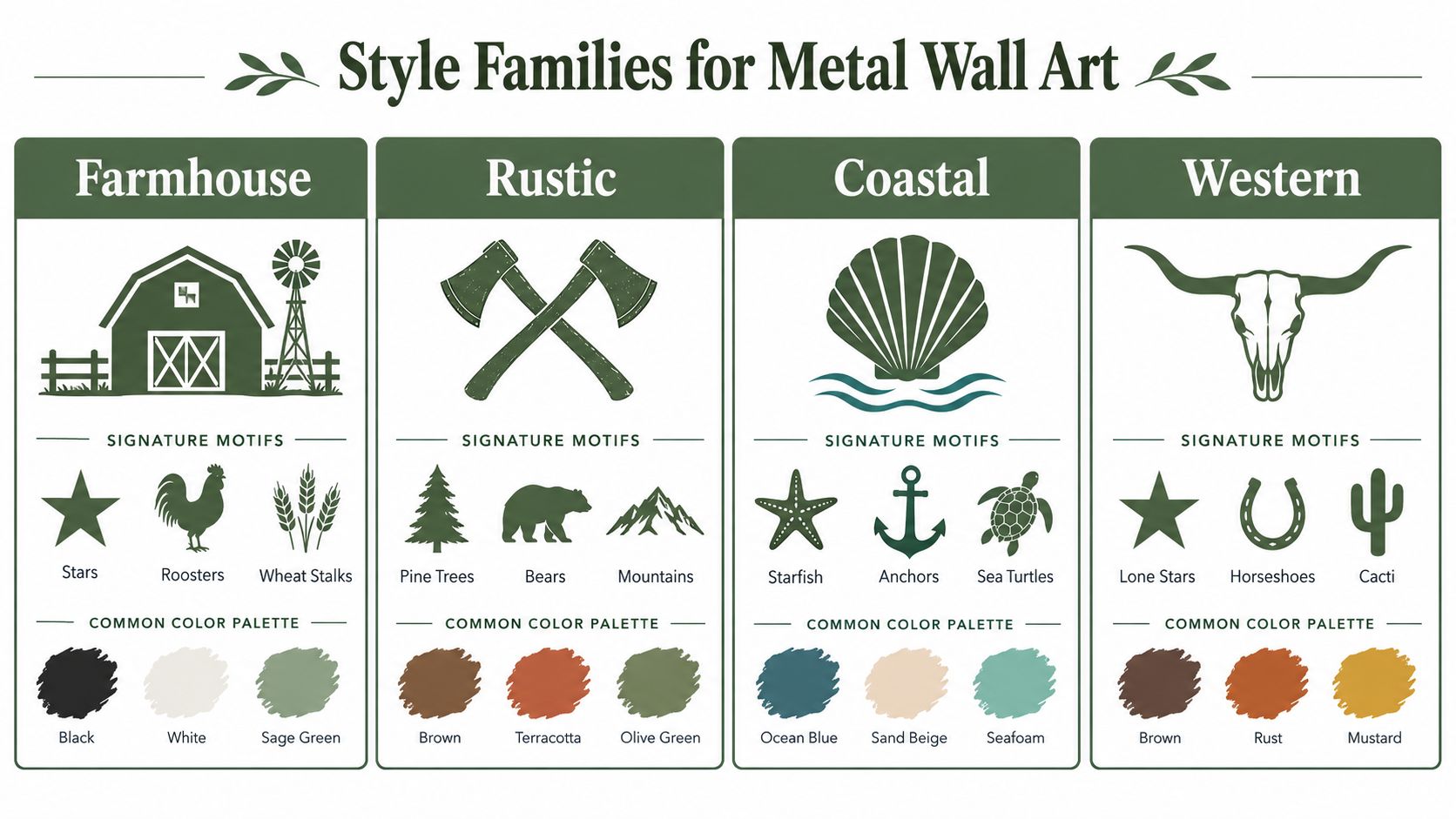
Coastal pieces often use shells, sea life, compass forms, waves, and open linework. White, blue, silver, and soft aqua can work beautifully near a patio or beach-style entry, but a pale finish may show dirt and fading more readily on a highly exposed wall. The finish rating matters as much as the seaside motif.
Western art brings stronger silhouettes and a clear sense of place. Longhorns, horses, cowboy boots, ranch names, and brand-inspired shapes belong on fence entries, barns, ranch homes, and large porches. Black, copper, bronze, red, and warm metallic tones can stand out against timber or painted siding.
Watch the style presentation before you buy:
- Motif density: Open cutouts look lighter and cast sharper shadows.
- Color contrast: A dark sign reads clearly against light siding, while copper and gold can warm a wood backdrop.
- Exposure fit: A distressed look should be an intentional finish, not evidence of active corrosion.
Use the video below for another visual look at metal art and placement ideas.
Sizing and Placement That Actually Looks Right
A sign can be beautifully made and still look awkward if it's too small for the wall or too large for the opening beneath it. Start with the specific architectural feature you want to complement, such as a door, window, fence panel, or coop entrance, rather than measuring the entire building.
For a sign above a door or window, a useful visual rule is to choose a piece roughly one-half to two-thirds the width of the opening below it. This leaves breathing room at both sides while keeping the art connected to the feature it identifies. A purely decorative sunburst can sit higher, but a family name, ranch name, or address needs a readable position closer to eye level.
Use the setting as your measuring guide
| Setting | Typical Size Range | Placement Tip |
|---|---|---|
| Front door | 12 to 24 inches | Center the piece above or beside the door, keeping the lettering visible from the approach. |
| Covered porch | 18 to 36 inches | Relate the art to the seating area, door, or porch opening instead of the entire facade. |
| Patio wall | 18 to 36 inches | Use a bold silhouette or open design where changing shadows can add depth. |
| Fence panel | 12 to 24 inches | Keep the sign within the panel's strongest framing boards and avoid blocking gates. |
| Garden shed | 12 to 24 inches | Choose a motif that supports the shed's purpose, such as a botanical or farm design. |
| Chicken coop | 12 to 18 inches | Keep the sign clear of doors, latches, and areas where birds or tools may strike it. |
| Ranch or address display | 24 to 36 inches | Prioritize legibility, eye-level viewing, and a strong mounting surface. |
These size ranges reflect the common options offered for personalized farmhouse signs, not a requirement for every wall. A narrow fence section may need a smaller panel, while a broad ranch entry may need a larger design with generous lettering.
Stand several steps back before drilling. Use painter's tape to mark the proposed outline, then check the view from the driveway, walkway, or road. That simple test catches proportion problems before they become mounting problems.
Mounting Safely on Brick, Siding, Fences, and Coops
A durable panel can still fail if the hardware doesn't suit the wall. Mounting is part of outdoor durability, especially in high-wind areas where repeated movement can loosen screws, enlarge holes, or pull fasteners from weak siding.
Brick and masonry usually call for masonry screws or expansion anchors placed into the brick itself, not a fragile mortar joint. Stucco needs anchors suited to the structure behind the finish, while vinyl siding requires care because the siding panel isn't the same as a structural wall. For wood siding, fence boards, and coop walls, corrosion-resistant screws should enter sound wood and remain tight without crushing the panel.
Match the hardware to the surface
- Brick: Drill carefully and use masonry-rated anchors. Confirm the hole depth and keep the sign level as you tighten.
- Stucco: Locate the supporting structure when possible, then select an anchor that won't crack the finish.
- Vinyl siding: Avoid hanging a heavy piece from the siding alone. Use a mounting approach that transfers load to framing or a suitable siding accessory.
- Wood fences and coops: Choose exterior-rated screws and inspect for splitting, rot, and loosened boards before installation.
Lightweight aluminum can reduce the load on a substrate, but a large piece still catches wind. Heavier steel requires stronger anchoring and more frequent inspection. Use corrosion-resistant fasteners because ordinary hardware can become the weak, rusty link in an otherwise protected display.
For siding-specific concerns, Atlanta siding contractor guidance can help you understand why the cladding surface and the structure behind it aren't always the same thing. Renters can consider removable hooks rated for the actual load, freestanding hooks that hang over a fence, or a stable lean-against-the-wall arrangement where local rules allow it.
A seasonal check catches small problems early. Inspect hardware, movement, rust staining, and wall damage twice a year, and touch up exposed paint or coating where appropriate. For compatible hanging solutions, review Farmhouse World's magnetic hanging hardware, then confirm that the hardware suits the panel weight and location.
Care, Customization, and Pairing With Other Farmhouse Accents
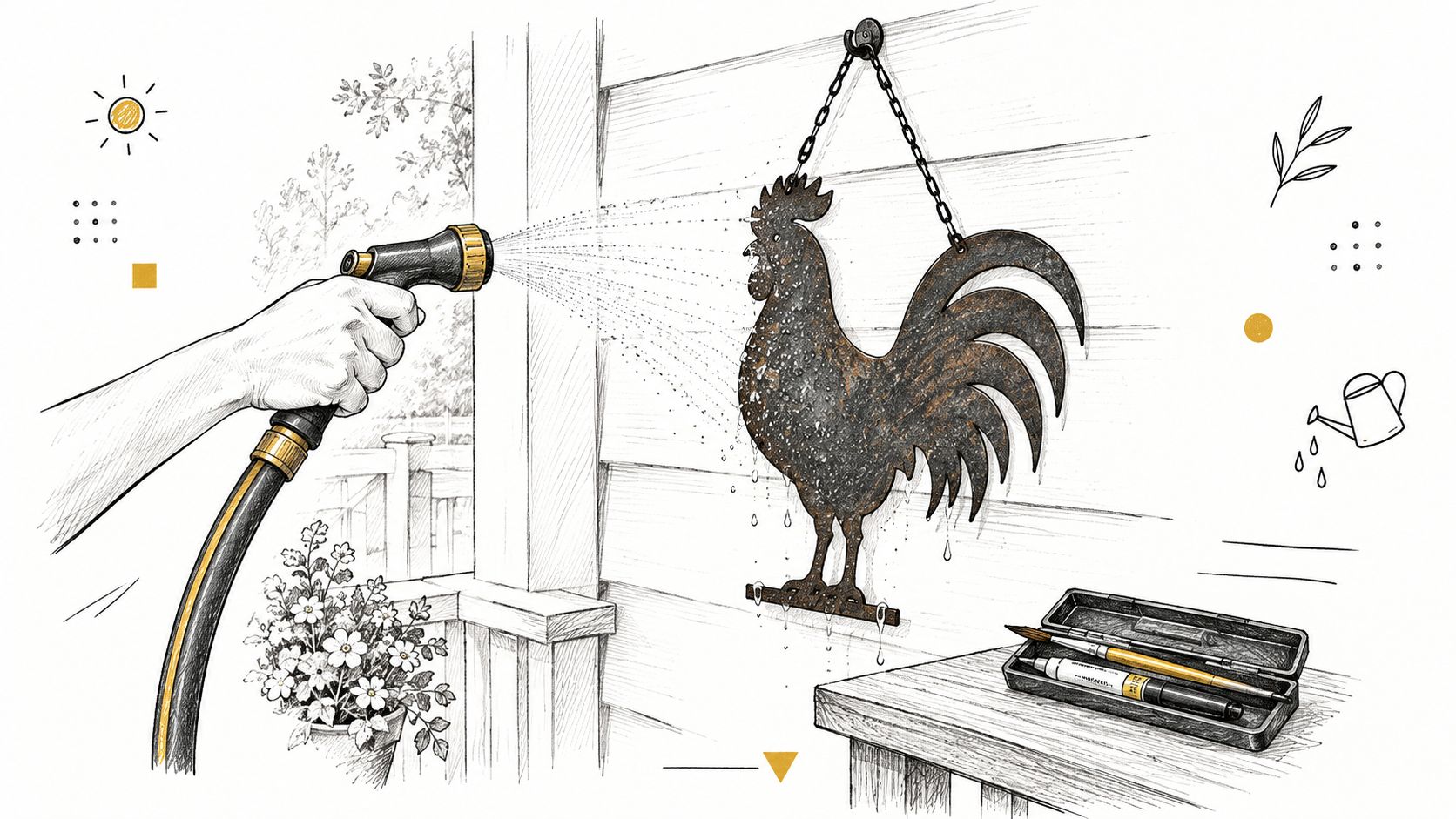
Outdoor metal wall art doesn't need a complicated maintenance routine. Rinse away dust and salt residue seasonally, allow the surface to dry, and look closely for chips, bubbling, lifting coating, rust staining, or loose hardware. A soft cloth or gentle brush is usually preferable to an abrasive tool that could scratch the protective layer.
Pay attention to places people often skip: the lower edge, the back of the panel, welded tabs, and screw heads. Outdoor conservation guidance explains that water and salt can significantly damage metal objects, that coatings need maintenance to prevent moisture ingress, and that ferrous metals need anti-corrosion primers or paints. The same guidance highlights copper, brass, stainless steel, and marine-grade aluminum as longer-lasting choices in demanding conditions, while noting that sunlight can fade pigments and protective clear coats may need periodic renewal. Read the Canadian Conservation Institute's guidance for outdoor objects when your sign will face coastal air or intense sun.
Make the design personal, then build around it
Personalization works especially well outdoors because the sign can identify the place, not merely decorate it. Consider a family name, address line, ranch name, monogram, date, or a short phrase that makes a porch, coop, or gate feel distinctly yours.
For a cohesive farmhouse exterior, pair one personalized metal sign with supporting accents rather than covering every surface. A black address plaque can echo a lantern or doormat, while copper-toned art can coordinate with planters, warm wood, or a weathered bench. A rooster or barn motif can connect naturally with a garden accent or kitchen-inspired textile near an outdoor entertaining area.
Farmhouse World offers personalized metal signs in multiple sizes and colors, with design validation before production on select items. Its broader assortment also includes farmhouse wall decor and complementary accents, making it possible to coordinate a sign with other pieces while keeping the exterior focused.
The lasting result comes from alignment: the metal suits the climate, the coating suits the sunlight, the size suits the wall, and the hardware suits the substrate. Style is the reward you see first, but those practical choices are what help the piece remain part of your home.
Browse Farmhouse World for personalized metal signs, farmhouse wall art, and coordinating accents for porches, coops, ranch entries, and garden spaces. Choose your motif first, then compare the available metal, finish, size, and mounting details so your new outdoor piece looks right and performs well where you plan to place it.


