

Most lake house wall decor advice still pushes the same tired formula, navy stripes, anchor motifs, and anything that looks like it came from a beach shop clearance rack. That look can work in a cottage, but it often feels generic in a lake home. The stronger direction now is warm minimalism, regional character, and pieces that feel like they belong to the place instead of shouting over it, which is why modern styling often borrows the quieter, more grounded ideas you'll see in resources like South Georgia farmhouse inspiration.
A good lake house wall has to do two jobs at once. It should feel relaxed enough for weekends and guests, but it also needs to survive humidity, turnover, and the visual clutter that comes from too many themed accents. That's where durable materials, restrained color, and personal pieces earn their place.
Table of Contents
- Redefining the Modern Lake House Aesthetic
- The Historical Roots of Rustic Wall Design
- Choosing Durable Materials and Finishes
- Sizing Rules and Secure Mounting Hardware
- Curating Calming Color Palettes and Textures
- Personalization and Seasonal Flexibility
- Maintenance and Assembly Best Practices
Redefining the Modern Lake House Aesthetic
The navy-and-anchor look is easy because it signals “lake” instantly. The problem is that instant recognition often reads as overworked decoration, especially in homes that already have beautiful water views, timber, or natural light. Modern lake house wall decor works better when it feels edited, not announced.
Why themed decor feels dated fast
Heavy-handed coastal symbols flatten a room. They crowd the wall with ideas that the architecture or setting is already communicating. In practice, that means the decor starts competing with the view, which is usually the most important feature in a lake property.
A calmer approach leans into regional craftsmanship, natural surfaces, and a more restrained silhouette. That's consistent with the broader 2026 shift in lake-house-specific coverage toward warm neutrals, clay reds, ochres, russets, moss greens, and browned wood tones in place of the usual blue-white formula. It also fits the wider preference for simpler wall art and personal, photography-based pieces, which aligns with the way many owners use these spaces, as gathering places rather than showrooms.
Practical rule: If a wall feels themed from ten feet away, it probably needs less symbolism and more texture.
A better test is whether the decor could still work in a winter cabin, a year-round family retreat, or a quiet rental suite. If the answer is yes, you're closer to the right balance.
What modern lake homes respond to
Look for pieces that carry a sense of place without spelling it out. Framed shoreline photography, wood-framed prints, subtle views, and hand-finished signs usually age better than graphic novelty art. Even when the room borrows from farmhouse or cottage styling, the final composition should stay calm and open.
That's the shift. The best wall decor for a lake house doesn't scream “lake house.” It feels like the people who use the home care about materials, memory, and comfort more than a theme.
The Historical Roots of Rustic Wall Design
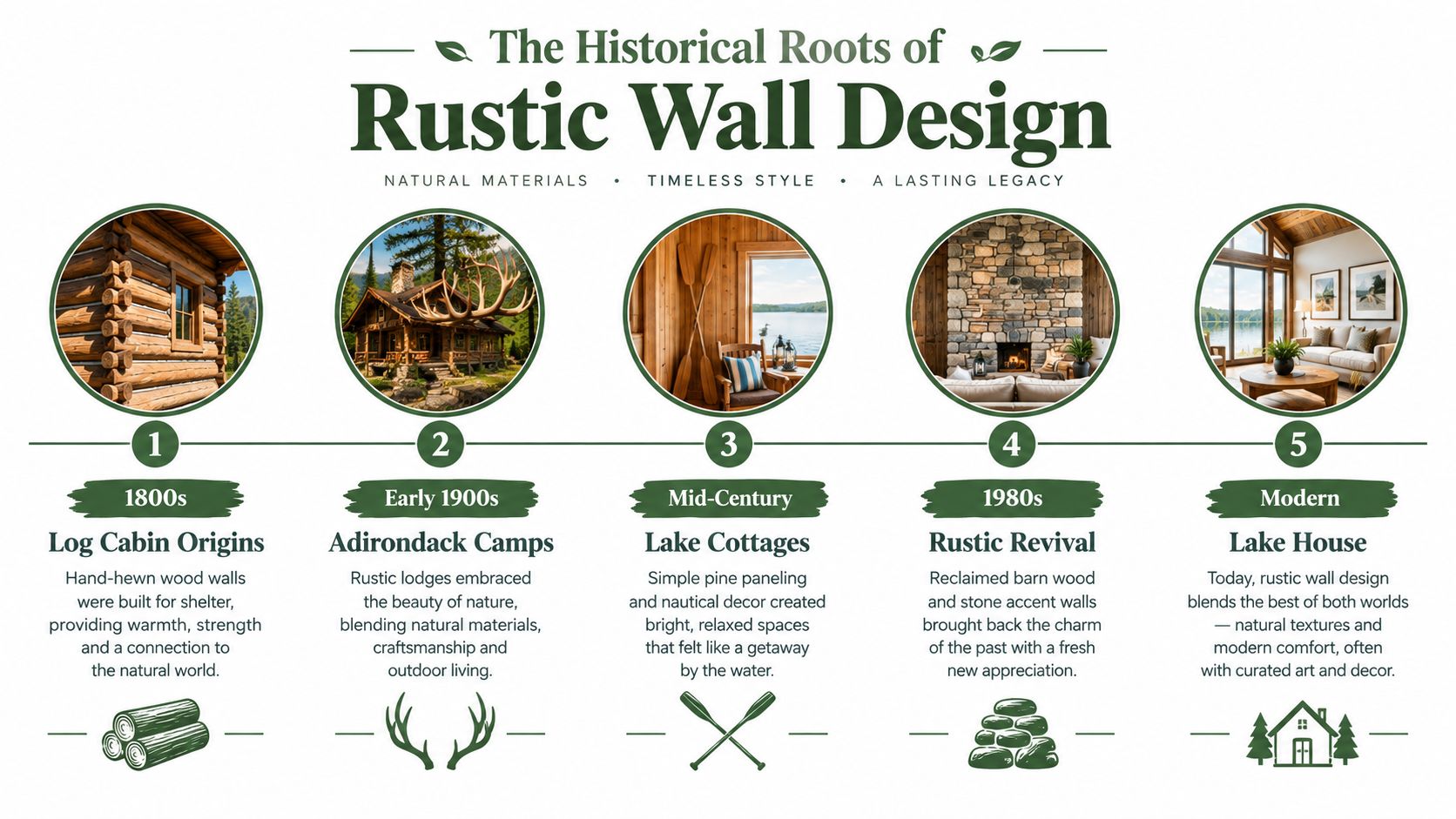
Rustic wall style isn't a new category at all. Its lineage reaches back to 19th-century homesteaders in North America, with related rustic furniture histories also pointing to earlier forms in Europe and China, according to the historical overview at My History Fix. That matters because today's lake-house look still relies on the same visual language, wood, stone, natural textures, and relaxed composition.
Why the material language still works
Lake homes need decor that feels connected to the outdoors without looking raw or unfinished. Rustic design solved that long ago by using materials people already associated with shelter and retreat. Wood brought warmth, stone added permanence, and tactile surfaces softened the transition between interior comfort and the natural world outside.
By the mid-20th century, rustic style had already evolved into Rustic Modern, which blended traditional materials with cleaner lines. That evolution is the reason today's lake-house walls so often mix weathered wood signs, framed prints, and simpler silhouettes. The style doesn't rely on ornament for impact, it relies on proportion, texture, and restraint.
How history shows up in modern choices
That long arc explains why the category feels stable rather than trendy. The strongest lake-house walls usually borrow from several eras at once, maybe a reclaimed frame, a simple black metal sign, and a quiet print. The combination feels current because it's rooted in a design tradition that has already proven it can adapt.
Here's the core lesson. If a piece depends entirely on a seasonal motif, it may age out quickly. If it draws from rustic materials and balanced composition, it's far more likely to stay relevant from one year to the next.
Choosing Durable Materials and Finishes

Lake houses are rougher on wall decor than people expect. Humidity shifts, door slams, HVAC vibration, and frequent guest turnover all put stress on finishes and fasteners. If a piece looks good only in a dry, low-traffic room, it's the wrong material for a waterfront property.
Wood, canvas, and metal side by side
Reclaimed wood has immediate warmth and a strong rustic presence, but it usually needs sealing and more careful maintenance in moist air. Canvas is lightweight and easy to hang, which makes it convenient, but it's also the type of surface that can look tired if the room gets damp or if the fabric sags over time. Framed glass art looks polished, yet it adds breakability and demands more secure mounting and attention to moisture behind the frame.
Metal handles lake-house conditions with far less fuss. It's less likely to warp, and it brings a crisp profile that works well in rooms where you want visual order. That's why custom metal signs have become such a strong option in vacation homes, especially where the wall needs a durable focal point that won't demand constant attention.
For practical comparison, wood and metal wall combinations often work better than all-wood arrangements in active homes. A mixed-material piece gives you warmth without putting every detail at risk from humidity.
Durability note: In a lake house, the finish matters almost as much as the image. Matte and powder-coated surfaces usually feel more forgiving than glossy ones when light changes throughout the day.
The internal comparison at wood and metal wall decor is useful if you're deciding between a warmer rustic look and a cleaner, more resilient profile.
Where Farmhouse World fits
A custom sign from Farmhouse World can serve as one durable wall anchor among other decor, especially if you want something personalized without building an entire room around one theme. The same logic applies to similar metal pieces from other makers, the point is choosing a material that can handle the environment, not just the photograph.
For rooms that need extra character without extra maintenance, metal usually wins the trade-off. It's stable, readable from a distance, and less vulnerable to the kind of wear that shows up fast in second homes.
Sizing Rules and Secure Mounting Hardware
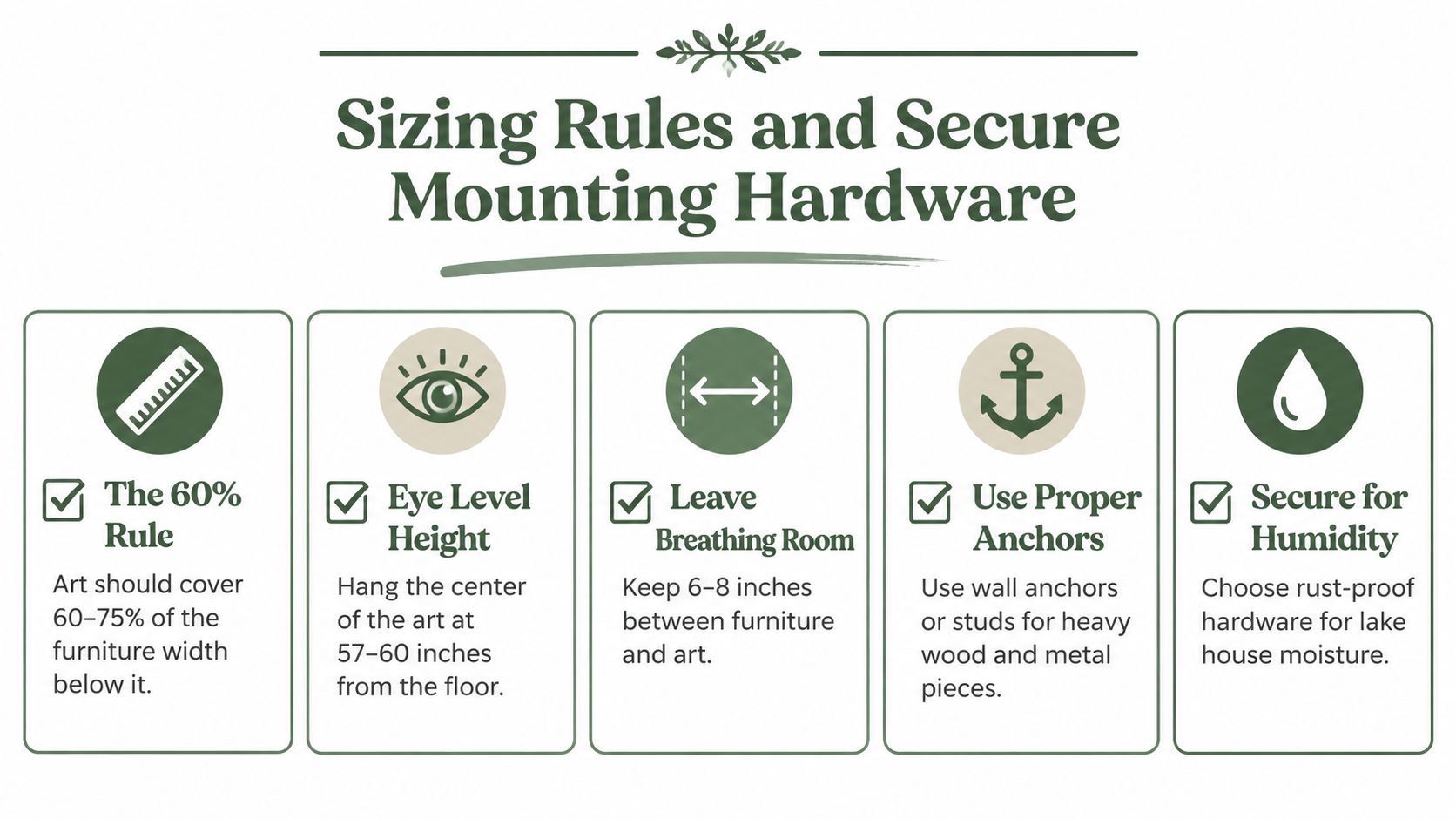
A beautiful piece still fails if it's the wrong size or the wrong hardware. In lake houses, that failure happens more often because movement and moisture loosen mediocre fasteners faster than people expect. Good mounting is less about guesswork and more about matching the wall, the weight, and the risk.
Size the piece to the furniture below it
Art above a sofa, console, or bed should feel related to the furniture, not floating away from it. If the piece is too small, the wall looks accidental. If it's too large, the room can feel crowded, especially in a compact lake cabin where visual breathing room already matters.
This is also where a flexible piece can help. A larger mirror or sign can ground a seating area, while a smaller framed piece may be better in a hallway or over a narrow shelf. For guests and renters, the most successful walls usually read clearly from a few steps away without forcing attention.
Choose hardware for the actual load
Here's the practical hierarchy.
- Simple nails or basic hooks: generally limited to about 5 to 10 lb.
- Plastic wall anchors: typically suitable for roughly 10 to 25 lb.
- Molly bolts or toggle bolts: the better choice for heavier decor, around 25 to 50 lb or more.
- Wall studs: the strongest anchor point when the layout allows it.
Those weight ranges matter because lake-house conditions add extra stress. Seasonal humidity and normal vibration from doors, HVAC, and foot traffic can loosen a weak hanger over time. Choosing hardware with a safety margin of at least 2× the decor's actual weight helps reduce pull-out and shock-load failures, according to Engineer Fix.
A heavy mirror doesn't fail because it was beautiful. It fails because the anchor was sized for the frame, not the wall.
If you're hanging something substantial, read the product weight first, then choose the fastener, then confirm the wall material. That order prevents most accidents.
For a useful example of how sturdy wall-mounted pieces are handled in tight spaces, the guidance on display oversized quilt rack shows why support and spacing matter before aesthetics do.
The metal wall planter is another good reference point if you're combining vertical decor with practical mounting in a smaller room.
Curating Calming Color Palettes and Textures
The strongest lake-house rooms usually rely on a limited palette. Independent trend coverage reported that blue hues appeared in 38% of coastal remodels in 2026, with soft sand neutrals and seafoam greens close behind, which explains why water-inspired color families still dominate wall and finish choices in the broader market. Those hues work because they echo the setting without creating visual noise, as reported in beach house wall decor trend coverage.
Color needs texture to stay interesting
A wall of pale blue art can feel flat if every surface is smooth. That's where texture does the heavy lifting. Woven accents, distressed wood frames, matte metal, and lightly aged finishes all help the palette feel layered instead of washed out.
Muted greens and browns are especially useful in lake homes that sit among trees or marshland rather than open sand. They bridge the gap between exterior scenery and interior calm. White still has a place, but it works best as a counterbalance, not the whole story.
Keep the palette narrow
Too many competing tones make a retreat feel busy. A restrained combination of lake blues, muted greens, whites, and natural wood finishes reads more intentional, and it also makes seasonal decor easier to swap in and out. When the base palette is calm, a pillow, garland, or framed seasonal print can change the room without requiring a redesign.
Design rule: Build the room from the wall outward. If the wall palette is settled, the rest of the decor can stay lighter.
That's why tactile materials matter so much in this category. A matte sign, a woven basket, and a driftwood-toned frame can do more than a bright, graphic print ever will. They give the room depth while preserving the quiet mood people want near the water.
Personalization and Seasonal Flexibility
A lake house feels more memorable when it carries names, dates, or place-specific details, but those details need to work across seasons and guest stays. Recent wall-art trend coverage points toward more personalization, nature-inspired imagery, and tactile or mixed-material pieces, along with a broader surge in wall-art searches and interest in gallery walls and statement pieces. That makes the case for decor that can stay in place while smaller accents change around it, as noted in wall art trends 2025 to 2026.

A rental-friendly way to think about permanence
A family name plaque or custom address display works best as the stable center of the wall. Then the surrounding pieces can change with the season, a holiday week, or the personality of a rental guest experience. That keeps the room from feeling stripped down when the seasonal accents come out.
A practical setup might include one durable focal piece, a framed scenic, and one or two lightweight accents that can be swapped without rehanging the whole wall. This is especially useful in homes that shift between personal use and short-term rental mode. The wall stays coherent even when the soft goods change.
Personal detail without overcustomizing
The goal isn't to put every family reference on the wall. Too many names, dates, and novelty lines make the room look busy. One clear personalized piece does more work than a cluster of small themed signs.
Farmhouse World offers a lake house sign format that fits this approach well, because a single sign can serve as the anchor while pillows, garlands, and tabletop accents rotate through the year. That logic keeps the wall grounded and lets the room change around it.
The best seasonal systems are simple. Keep the base piece permanent, store the swap items together, and make sure each seasonal layer still respects the room's overall palette. That way, the house feels fresh without losing its identity.
Maintenance and Assembly Best Practices
A lake house wall stays attractive only if it's easy to maintain. Dust, humid air, and holiday turnovers all leave marks faster in waterfront homes than in dry city apartments. Cleaning should protect the finish first, then the look.
Clean by material, not by habit
Metal signs usually need the gentlest routine, a soft microfiber cloth and a dry or lightly damp wipe, never an abrasive pad that can scratch the coating. Canvas should be dusted lightly rather than scrubbed. Wood accents need the most caution if they've been sealed, because excess moisture can dull the surface or raise grain edges over time.
For framed pieces, check the backing and hangers during routine cleaning. A quick touch test can reveal whether the frame has shifted or if the fastener is loosening. In a lake house, that small habit catches problems before they become repair jobs.
Assembly matters in compact spaces
Vertical decor pieces, such as planter stands and decorative ladders, should be assembled exactly as directed. Tight spaces tempt people to skip a step, but that's usually how wobble starts. If a piece sits near a walkway or a door swing, stability matters more than style notes.
Use this short checklist.
- Inspect hardware before assembly: Confirm that screws, brackets, and anchors match the finish and the wall type.
- Level before tightening fully: Small alignment errors become obvious once the piece is loaded.
- Keep moisture away from unfinished backs: This matters most for wood and composite pieces.
- Recheck fasteners after seasonal turnover: Guest traffic and cleaning can loosen connections.
- Store spare hangers and screws together: The next adjustment is easier when the parts are already matched.
The main idea is simple. A wall display that's easy to clean and easy to resecure will outlast a more fragile, fancier setup.
If you're ready to upgrade a lake house wall with pieces that feel personal, durable, and calm, browse Farmhouse World for custom metal signs, rustic wall art, and complementary accents that fit vacation homes, rentals, and year-round retreats. You'll find options that work with the room you already have, not against it, and that's what makes a lake house feel finished.


