

You're standing by the front door, trying to make three candles look effortlessly arranged. A squat pillar sits beside a mercury-glass votive, while a stubby taper leans into a distressed holder. You shift them across the weathered oak console until the heights feel balanced. The wood scratches softly beneath the glass, the flames cast a warm pool of light, and a faint vanilla-and-tobacco fragrance settles into the hallway.
Then the doubt arrives. Why does one grouping feel instantly farmhouse while another looks flat, overly polished, or just old-fashioned? The answer isn't candle size alone. Rustic candles get their character from materials, surface finishes, vessels, scent, and the way they relate to the room around them. Once you know what to look for, you can choose pieces that feel collected rather than decorated all at once.
Table of Contents
- Setting the Scene with Rustic Candles in Your Home
- What Makes a Candle Truly Rustic
- The Building Blocks of Farmhouse Candle Styling
- Choosing the Right Wax for Rustic Candles
- Where to Place Rustic Candles in Every Room
- Scent or Style Which Should Come First
- DIY Rustic Candles and Gift Ideas
- Caring for Rustic Candles So They Last
Setting the Scene with Rustic Candles in Your Home
Rustic candles work because they soften the hard edges of a room. A rough wooden console, iron mirror, woven basket, or painted cabinet already carries visual history. A candle with a glossy surface and a flawless, brightly colored container may sit safely on that furniture, but it won't necessarily belong there. A matte pillar with an uneven rim, an amber jar with tiny bubbles, or a beeswax taper in a worn brass holder creates a more convincing relationship with the setting.
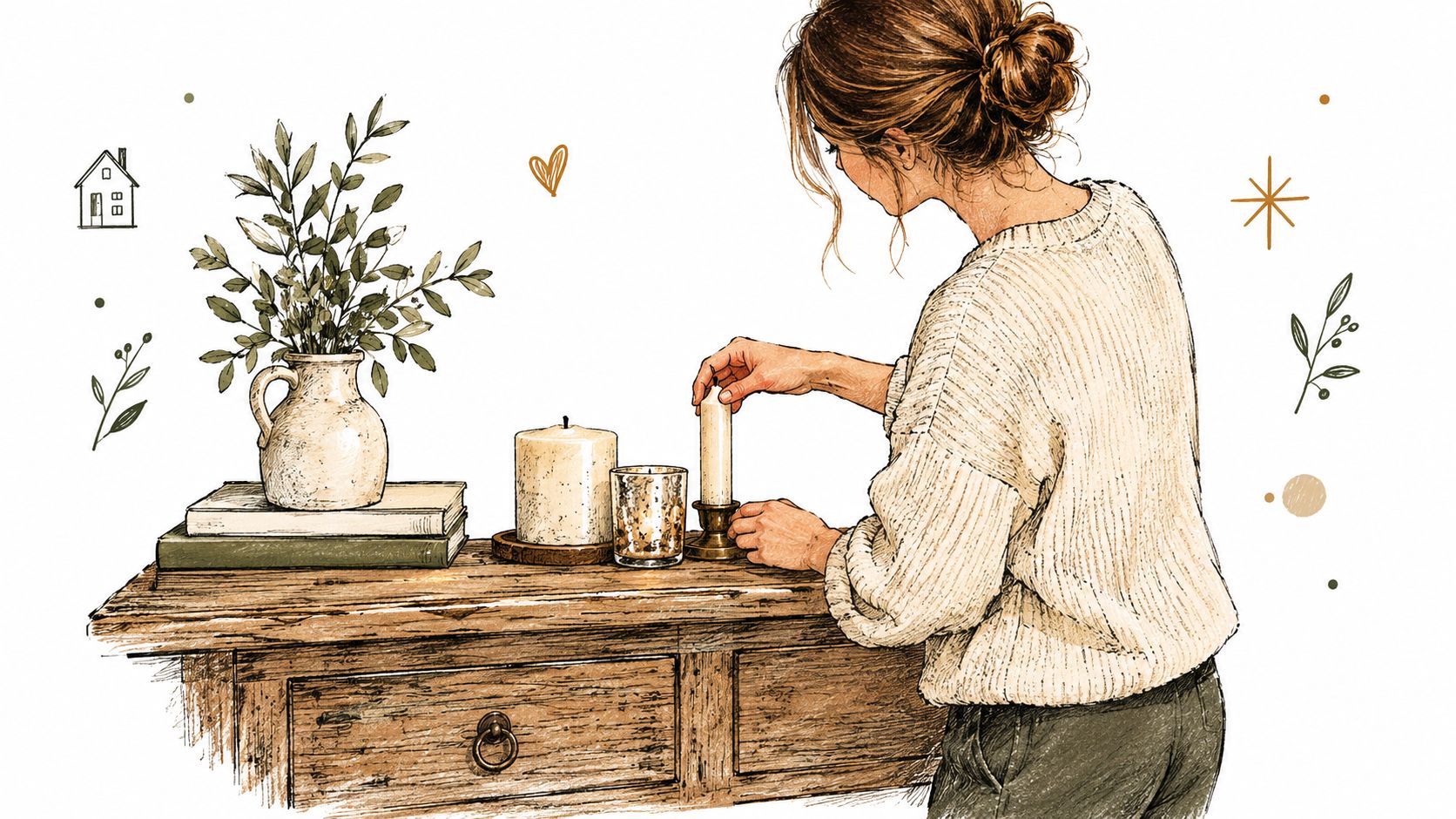
Start with the arrangement, not the flame. Place the tallest object toward the back, give the broadest candle a stable middle position, and let the smallest votive fill the open space rather than competing with the other pieces. A shallow wooden tray can gather the group, while a single loose taper may look more natural on a nearby stack of books or beside a ceramic bowl.
Scent should support the mood without taking over the entryway. Warm notes such as vanilla, cedar, tobacco, spice, or soft amber generally sit comfortably beside wood and aged metal. If fragrance names leave you guessing, this guide to fragrance families explained can help you distinguish woody, gourmand, floral, and fresh profiles before you buy.
The wider candle category has deep roots. Historical evidence places early manufactured candles about 5,000 years ago, and the ancient Romans are often credited with developing a traditional candle form, as described in this brief history of candles. Rustic styling feels familiar partly because it borrows from that older visual language, natural wax tones, handmade marks, simple silhouettes, and materials that look better with a little irregularity.
What Makes a Candle Truly Rustic
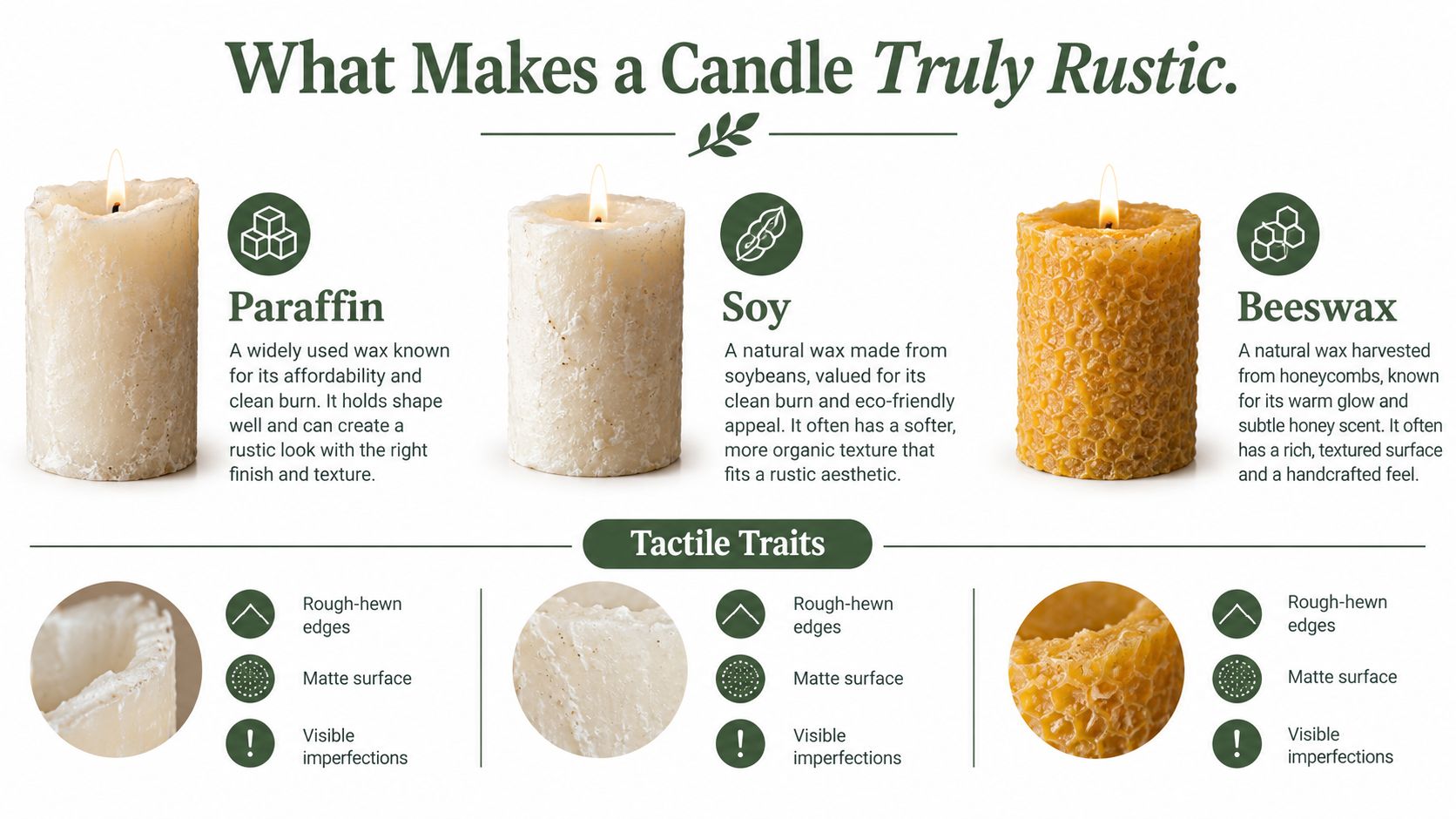
A rustic candle isn't defined by a printed farmhouse label or a brown container. Look for three connected qualities: a tactile surface, an earthy material story, and evidence of the making process.
The exterior may be matte, lightly rough, mottled, or uneven around the edge. A pillar with a hand-poured ridge feels rustic because its surface invites touch. A smooth candle can still work in a farmhouse room, but it usually needs a vessel or holder with enough character to balance its polish.
Wax changes the impression immediately. Soy often has a creamy, subdued finish, especially when it's left lightly colored. Beeswax naturally brings a warm honey tone and subtle variation. Paraffin can be molded into convincing weathered or textured forms, though its smoother, more manufactured appearance may need support from a distressed vessel or imperfect finish.
Read the finish before the label
Vessels often communicate rustic character more clearly than wax. Consider a hand-thrown stoneware crock, raw tin cup, recycled glass with an amber cast, or a small container with visible bubbles. A reclaimed wood sleeve can also make a clean-lined jar feel more at home beside a farmhouse table.
Compare these two pairings:
- A glossy white jar with a perfectly printed label, bright citrus wax, and a flawless lid reads contemporary.
- A softly uneven cream pillar in a stoneware cup, with a simple paper label and muted coloring, reads rustic.
The distinction isn't about whether one item is attractive. It's about refinement versus restraint. Vintage styling may rely on an antique label, nostalgic color, or an aged object. Country styling can be cheerful and decorative. Rustic styling usually depends more on unrefined surfaces, earthy pigments, visible grain, and artisan marks.
That difference also prevents a common mistake. A heavily textured candle isn't automatically rustic if the texture looks machine-perfect or the color is overly artificial. Judge the whole object, including the wax, vessel, label, lid, and holder. The most believable pieces allow one or two elements to remain simple.
The Building Blocks of Farmhouse Candle Styling
A cohesive candle display usually depends on four decisions: material, silhouette, scent profile, and vessel. You don't need every candle to match, but the four choices should speak the same visual language.
Material establishes the foundation. A pale soy candle with a creamy surface works beside linen, unfinished oak, and whitewashed cabinetry. A naturally golden beeswax taper connects more easily with warm brass, leather, and woven rush. Dye matters too. Muted cream, clay, olive, charcoal, and tobacco tones tend to blend into farmhouse palettes more smoothly than vivid jewel colors.
Silhouette controls rhythm. Combine a broad pillar, a narrow taper, and a low votive to create height variation without making the arrangement feel busy. Odd-number groupings often look relaxed because the eye moves between different shapes rather than searching for a rigid pair.
Scent adds atmosphere, but it also occupies the air. Oakmoss, smoked cedar, cinnamon, vanilla, and gentle spice reinforce a grounded room. Bright citrus and sharp florals can still be beautiful, especially in a kitchen or spring arrangement, but they create a fresher mood than the traditional farmhouse palette.
Vessel is the anchor. Stoneware echoes pottery and kitchenware, tin suits utility rooms and porches, wood repeats furniture finishes, and amber glass adds warmth without demanding attention. For placement and flame protection, consult a safe candle holder guide, then compare rustic shapes with wood candle holders when you want the holder itself to contribute texture.
| Pillar | Rustic Characteristics | Example Application |
|---|---|---|
| Material | Matte wax, earthy pigment, natural variation | Soy pillars on a linen-covered mantel |
| Silhouette | Mixed heights and simple, sturdy forms | Pillar, taper, and votive grouped on a console |
| Scent profile | Woody, warm, smoky, spiced, or softly gourmand | Cedar and vanilla near an entryway |
| Vessel | Stoneware, tin, amber glass, or reclaimed wood | Tin jars on a kitchen shelf beside enamelware |
Use the table as a filter, not a strict recipe. A modern glass jar can still belong in a rustic room if its color and finish connect with the surrounding materials.
Choosing the Right Wax for Rustic Candles
A candle beside a worn oak bench should feel connected to the room, not just placed there. Wax helps create that relationship through its texture, color, fragrance behavior, soot visibility, and response to the wick.
Paraffin suits molded pillars, carved edges, and other textured finishes because it is easy to shape and often gives a strong fragrance experience. Its soot can appear darker and more visible than soy, so wick and container testing matter. CandleScience's technical guidance on paraffin wax notes that containers around 3.3 inches, or 8.4 centimeters, in diameter may need double wicks to keep the melt pool balanced. In a rustic room, pair this wax with distressed metal or a dark vessel, where its smooth or sculpted surface feels intentional.
Soy has a creamy, muted appearance that works with pale farmhouse colors, linen, and light wood. A well-formulated blend carries fragrance effectively, while frosting or an uneven top can add the handmade variation associated with rustic finishes. For a ready-made comparison, browse farmhouse soy candles. Look at the container, wick, and fragrance description together, since the wax alone does not determine how the candle will perform.
Beeswax brings the clearest natural link to rustic interiors. Its golden color and gentle honey character can provide enough atmosphere for a bedside table or dining setting without competing with food or other scents. It may cost more, and its restrained fragrance makes it less suited to dramatic scent combinations.
| Wax Type | Appearance | Scent Throw | Soot Level | Best Farmhouse Pairing |
|---|---|---|---|---|
| Paraffin | Smooth or moldable, easy to texture | Often strong | More visible, especially when poorly wicked | Distressed metal or dark vessels |
| Soy | Creamy, matte, sometimes softly frosted | Moderate to good when well formulated | Less visible than paraffin | Pale stoneware, linen, and light wood |
| Beeswax | Naturally golden and variable | Gentle honey character | Depends on wick and burn conditions | Brass, oak, pottery, and simple tapers |
Wick choice must match the wax, fragrance load, and container. More than 1 ounce, about 28 grams, of fragrance oil per pound of wax may call for moving up one or two wick sizes, while low-fragrance or uncolored blends may need a smaller wick, according to container candle wicking guidance. Test each formula before gifting or styling it in a treasured vessel. A rustic finish should suggest relaxed imperfection, while the burn remains controlled.
Where to Place Rustic Candles in Every Room
A candle should look intentional before it's lit and remain safe once the flame is burning. Choose the format according to sightlines, airflow, surface material, and how people use the room.
Entryways
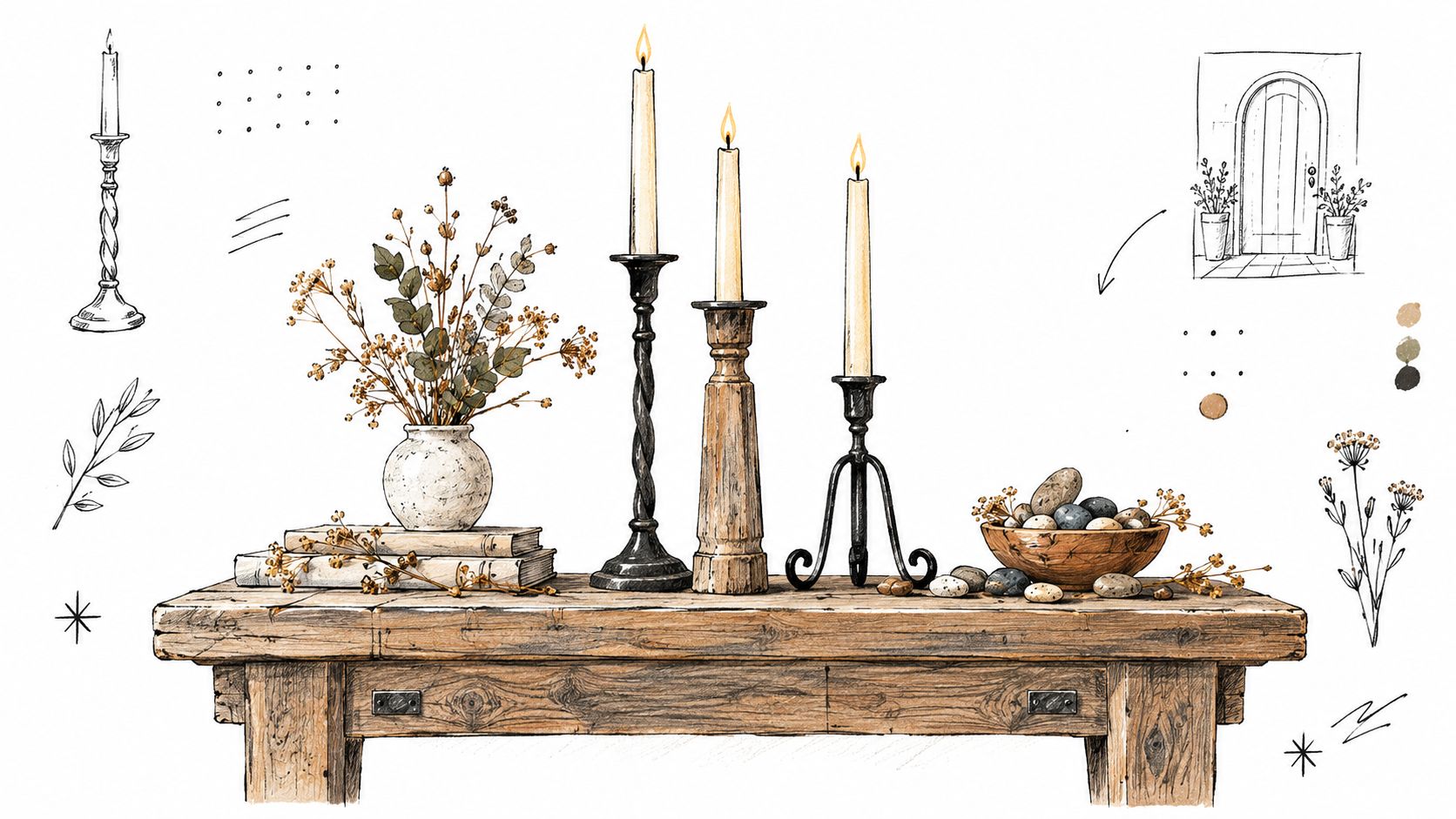
An entry console can handle tall tapers in wrought iron or distressed wood holders. Set them beside a dough bowl, shallow basket, or small ceramic dish so the display has both height and weight. Keep the candles away from coats, paper, dried stems, and anything that could brush the flame when someone passes.
Dining rooms
Choose low pillars or clustered votives so guests can see across the table. Mercury glass adds a softened sparkle, while stoneware keeps the arrangement quieter. Unscented candles are often the safest social choice when food already provides the main aroma.
Mantels and living rooms
Chunky pillars in lanterns or broad ceramic vessels suit a mantel because their visual weight can balance artwork and greenery. Reclaimed wood, woven baskets, and a few evergreen branches create a natural frame, but combustible greenery must never sit close enough to catch heat.
For a larger flame protected from moving air, explore large hurricane candle holder ideas. A hurricane vessel can work on a porch, hearth, or substantial coffee table when its base is stable and the glass remains clear of decorative debris.
Bedrooms benefit from restraint. A single beeswax pillar on a ceramic saucer can warm a bedside surface without filling the room with fragrance. In kitchens, small soy candles in mason jars or enamelware work well on open shelving, provided they're positioned away from towels, wooden utensils, and cooking splashes.
Outdoor spaces need heavier containers. Ceramic or metal vessels are less likely to shift than lightweight glass, and citronella blends may suit a porch or patio. Wind still changes flame behavior, so extinguish the candle whenever you leave the area.
A quick visual demonstration can help you judge proportion, grouping, and surface balance before rearranging your own room.
Safety rule: Keep every burning candle on a stable, heat-resistant surface, away from drafts, children, pets, greenery, textiles, and unattended traffic.
Scent or Style Which Should Come First
Choose fragrance first when the room is busy, practical, or already full of competing smells. Kitchens need a candle that can sit comfortably beside bread, coffee, herbs, and cooking aromas. Bathrooms may benefit from clean wood, soft eucalyptus, or restrained herbal notes, but fragrance-sensitive households may prefer an unscented option.
Choose style first when the candle acts as a visual anchor. A mantel, entry console, dining table, or open shelf often needs the right vessel and silhouette more than a powerful scent. A sculptural pillar in a rough ceramic holder can complete the arrangement even when it has no fragrance at all.
In an open-plan home, fragrance travels farther than expected. One strong candle near the kitchen can compete with a dining experience or overwhelm a small sitting area. Use one noticeable scent in a connected zone and keep neighboring candles neutral or very subtle.
Seasonal rotation can also solve the conflict. Woody, amber, and spice notes suit autumn and winter arrangements, while lighter herbs or gentle florals can refresh a spring display. For a seasonal farmhouse mood, browse ideas such as these fall farmhouse candles, then adapt the palette to your room rather than copying an entire display.
Use this decision check before buying:
- Room function: Does the space already have strong food, cleaning, or personal-care aromas?
- Visual job: Is the candle filling an empty spot, creating a centerpiece, or providing usable light?
- Household comfort: Will anyone find fragrance irritating or distracting?
- Container quality: Does the vessel support the room even when the candle isn't lit?
- Seasonal flexibility: Can the scent work beyond one holiday or decorating moment?
A decor-first candle is not a compromise. In many farmhouse rooms, an unscented pillar provides the calm visual anchor that lets textiles, greenery, and food remain the focus.
DIY Rustic Candles and Gift Ideas
A rustic candle project doesn't need a dedicated studio. One quiet weekend afternoon can produce a simple handmade object with more personality than a perfectly uniform store-bought piece.
Start with beeswax sheets and cotton wicks. Cut the sheet to the desired height, place the wick along one edge, and roll it firmly into a taper. The finished candle shows the honeycomb pattern and has a naturally warm color, making it suitable for a dinner setting or a small hostess gift. No dye is needed.
For a jar candle, melt soy wax according to the wax supplier's instructions and pour it into a clean, heat-safe mason jar with a centered cotton wick. Dried lavender or rosemary can suggest a rustic garden theme, but keep decorative material well away from the wick and flame. A plain jar with a kraft-paper label is often safer and visually calmer than one crowded with botanicals.
A third project uses a reclaimed wood block as a votive holder. Sand rough splinters, drill a properly sized cavity, and place a contained tealight inside. Test the holder for stability, keep the flame below the wood's rim, and never treat reclaimed timber as automatically fireproof.
Handmade doesn't mean unfinished. Clean edges, a centered wick, and a stable base make a rustic candle feel deliberate.
Gifts can follow the same material logic. Bundle a trio of small jar candles with matches and a handwritten scent card for a housewarming. Pair beeswax tapers with a brass snuffer for a wedding or anniversary. A monogrammed soy candle suits a hostess gift when you know the recipient's preferred color or initial but not their exact decorating style.
Handmade and purchased candles can share one gift drawer. A handmade taper carries the maker's touch, while a coordinated jar candle provides convenience and a more predictable fragrance experience. Choose between them based on the relationship, occasion, and how much care the recipient enjoys giving to home objects.
Caring for Rustic Candles So They Last
A farmhouse display can look settled and still damage a tabletop if the candle burns unevenly. Set each candle on a level, heat-resistant surface before lighting it. During the first burn, let the top layer melt evenly toward the vessel's sides. Extinguishing the flame too early can leave a ring of unused wax, creating a tunnel during later burns.
Trim the wick to about one-quarter inch before every use. A long or mushroomed wick can produce a larger flame, flicker, and soot. Drafts from doors, fans, and open windows also disturb the flame, sending heat toward nearby walls or furniture. A quiet flame is easier on both the candle and the room.
A practical troubleshooting list
- Frosting on soy: Pale crystalline patches are a common surface effect, not automatically a defect. Store soy candles away from sharp temperature changes, and do not scrape the surface.
- Wet spots in glass: Wax may pull away from a jar and leave translucent patches. The appearance can shift with temperature, but the candle still needs a centered wick and a controlled burn.
- Soot on the vessel: Check the wick length, drafts, fragrance load, and wax quality. Soot appears when the flame receives more fuel than it can burn cleanly. Wipe the cooled vessel, then correct the likely cause before lighting it again.
- Uneven melting: Confirm that the candle is level and the wick is centered. If a wide container still tunnels after a full burn, switch to a double-wick design or a smaller vessel rather than trimming the wick further.
- Fading fragrance: Keep candles away from direct sun, heat, and strong household odors. Replace the lid on jar candles whenever they are not in use.
Porous farmhouse materials need protection. Soot can settle into reclaimed wood, limewash, unfinished stone, and woven textiles. Use cotton wicks, place candles on a tray or saucer, and wipe smooth holders after they cool. Keep live flames away from dry greenery and wooden arrangements. For a display containing combustible materials, choose a glass-contained or electric candle.
Store soy candles wrapped in kraft paper in a cool, stable cupboard. Beeswax tapers can lie flat in a drawer, protected from dust and heat. Rotate older candles forward, then inspect each wick and vessel before lighting it.
Farmhouse World offers farmhouse-style candles and holders alongside rustic wall decor, personalized metal signs, and other accents for entryways, living spaces, and outdoor areas. Visit Farmhouse World to pair a textured candle display with nearby materials, or to choose a personalized farmhouse gift with a warm, collected feel.


