

A long wooden table is waiting for supper, still showing the soft marks of family meals and seasonal gatherings. You place a block print table runner down the center, add a stoneware bowl of pears, and suddenly the room feels considered without becoming precious. The fabric brings warmth, rhythm, and a little human irregularity to the table.
That difference matters. A hand-printed runner isn't just a patterned strip of cloth. It carries the texture of a carved block, the pressure of an artisan's hand, and the quiet variation that machine printing is designed to eliminate. This guide looks at the craft behind the textile, the materials that affect its performance, and the practical ways to use one for everyday meals as well as more formal settings.
Table of Contents
- Setting the Scene With Handcrafted Textiles
- The Living History of the Craft
- Understanding Materials and Manufacturing
- Design Styles for Every Farmhouse Vibe
- Layering and Sizing for Practical Dining
- Caring for Your Block Print Runner
- Making Your Final Purchase Decision
Setting the Scene With Handcrafted Textiles
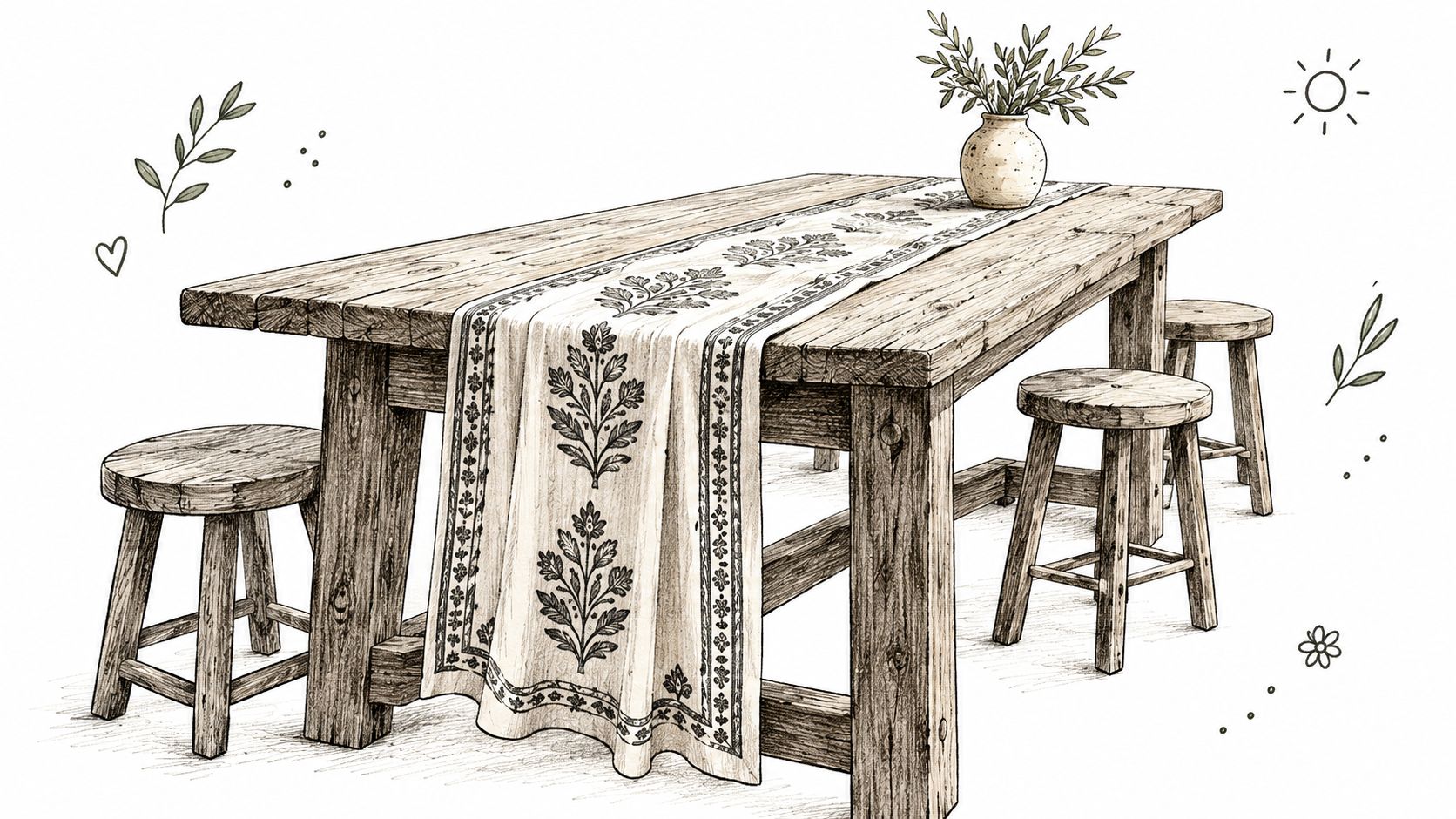
A block print table runner works best when it looks as though it belongs in the room, rather than having been placed there for a photograph. On a weathered pine table, a cotton runner with a softly repeated floral or geometric motif can bridge the gap between bare wood and the rest of the setting. Pair it with a bowl turned from wood, hand-thrown ceramics, or simple linen napkins, and the arrangement feels gathered rather than over-styled.
The visual appeal comes from the printing method. Artisans use hand-carved wooden blocks and press the design onto fabric one color at a time. Small shifts in alignment, slight changes in pressure, and variations in pigment create a surface with depth. Those marks aren't defects to be corrected. They're evidence that a person made the textile.
Why the surface feels different
Machine printing aims for repetition that looks identical from one end of a runner to the other. Hand block printing leaves room for a softer, more tactile result. A flower may sit a little higher than the one beside it, or a border may carry a faint change in density. Against reclaimed wood and aged metal, that irregularity feels especially natural.
The craft is widely described as one of India's oldest handcraft traditions, with roots traced back centuries. The combination of history and visible workmanship gives the runner a stronger presence than a disposable seasonal accent. It becomes part of the room's material story.
Practical rule: Let the runner provide the pattern, then keep the surrounding pieces quieter. Too many equally busy surfaces can hide the craftsmanship you're trying to show.
Before buying, measure the tabletop and consider how much overhang you want. A helpful reference for sizing rules for table runners can help you compare a centered, short-overhang arrangement with a more generous drape. For additional ideas on combining worn wood, useful textiles, and collected accessories, browse this guide to rustic home decor.
The Living History of the Craft
A block print runner carries more than pattern to the table. In Bagru and Jaipur, printers still work with teak blocks that are soaked in oil for days before carving, and the process varies by center, from mud-resist methods to direct-print traditions. Those workshop choices shape the look of the textile long before it reaches a dining room. Roopantaran's overview of block print runners places runners within that active artisanal chain.
The result is a craft that still behaves like a working practice, not a display piece. Regional methods, pigment choices, and carving styles keep the surface from feeling generic. That is one reason these runners fit so naturally into rooms that already rely on honest materials and visible age.
The market around them is active too. One source describes the wider printed-textile field and the role of Indian production hubs, which helps explain why hand block printing continues to show up in homes rather than sitting only in heritage collections. The market context for Indian block printing outlines that broader commercial setting. The point for a buyer is simple, the tradition survives because it still serves real interiors.
A working tradition, not a novelty
Hand block printing also supports the people who make it. The same market context cites an academic source noting that the broader block-printing ecosystem employs over 5,000 printers today. Buying with care does not turn a decorative choice into a moral badge, but it does help you recognize labor, skill, and the difference between a hand-printed cloth and a print that only copies the look.
That distinction matters in use. A carved-block runner may show slight shifts in registration or ink density, and those variations can add life to a table set with aged wood, woven baskets, or inherited serving pieces. A vintage-inspired approach to home decor works best when the room feels lived in, not overworked. Block printing fits that goal because its character comes from making, not imitation.
What the history changes for a buyer
A good runner should still be practical. Look for sound fabric, a print that feels intentional, and a seller who is clear about how the textile was made. Those basics matter more than chasing perfect symmetry across the whole length.
For everyday dining, that grounded quality keeps the table relaxed. For a more formal gathering, the same runner can feel composed if the rest of the setting stays quiet. Let the pattern do the talking, then keep dishes, glassware, and surrounding surfaces restrained so the texture and handwork stay visible.
Understanding Materials and Manufacturing
The pattern catches your eye first, but the fabric determines whether you'll enjoy living with the runner. For a table textile, pre-washed cotton or cotton canvas is a practical foundation. Washing the cloth before printing removes starch, oils, and other surface impurities, helping the dye absorb more evenly and reducing patchy coloration. This process guide to hand block printing explains why preparation affects the finished surface.
What happens before the pattern appears
The basic sequence matters:
- The fabric is prepared. Pre-washing gives the fibers a cleaner, more receptive surface.
- The dye bond is supported. Artisans often apply a mordant before printing. This helps strengthen the relationship between dye and fiber and can improve colorfastness after washing.
- The block is applied by color. Each color requires its own impression, so a multicolored pattern involves repeated placement and pressure.
- The cloth is fully dried and fixed. Depending on the process, the printed fabric is heat-set or sun-fixed before laundering.
This is why two runners with similar motifs can behave differently. A tightly woven cotton with careful preparation may hold a crisp border, while a poorly prepared textile can show uneven color or bleed more readily. Canvas brings welcome weight and structure, but its texture can make a print appear less perfectly uniform.
How to assess the textile in person
Run your hand across the surface. It should feel substantial enough to lie flat without becoming stiff, and the edges should look neatly finished. Look at the reverse side for excessive pigment transfer, then inspect the repeat for deliberate variation rather than muddy impressions.
A runner for daily meals also needs a pattern that can tolerate ordinary life. Mid-tone indigo, clay, olive, and softened black tend to be forgiving around crumbs and small spills, while a very pale ground may call for more frequent washing. The fabric and print should work together, not ask you to treat the table as a display case.
A good handcrafted runner has personality in the print and competence in the construction. You want both.
Design Styles for Every Farmhouse Vibe
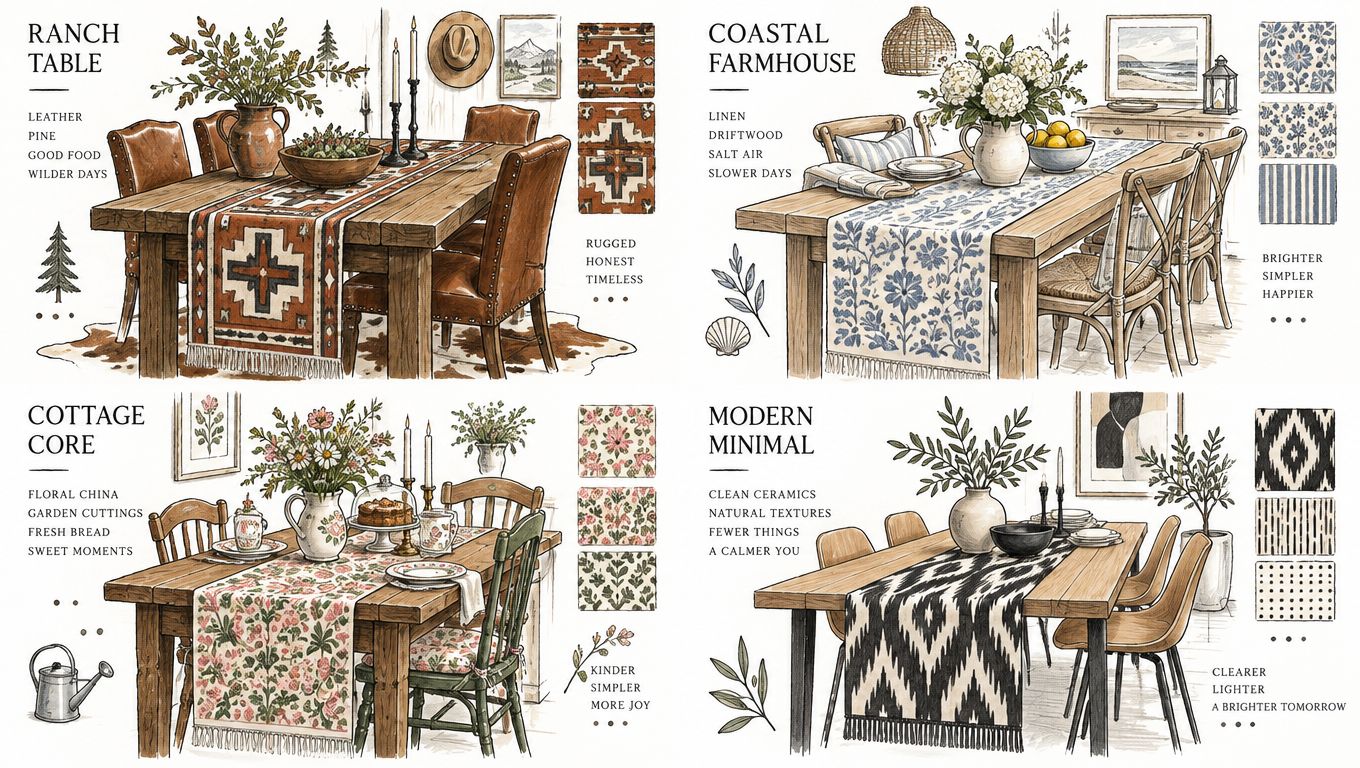
Farmhouse style can be sun-baked and ranch-like, pale and coastal, gathered and cottage-inspired, or restrained enough to sit comfortably beside contemporary furniture. A block print table runner can move between those rooms because the printing method creates pattern without the hard, glossy finish associated with some mass-produced textiles.
Match the motif to the room's weight
For a rugged farmhouse or ranch setting, look for indigo and white, dark botanical forms, or a border with enough contrast to hold its own beside black iron and substantial timber. These combinations feel crisp without looking sterile.
A warmer room can take terracotta, ochre, tobacco, muted green, and natural cotton. Botanical prints bring a garden quality to the table, especially when the room already includes wicker, rattan, dried grasses, or a stoneware collection. If your dining area has coastal farmhouse character, a washed blue pattern on a pale ground can echo the lightness of the space without introducing a literal nautical theme.
Intricate floral repeats create energy. They work well when the rest of the table is simple, but can compete with patterned wallpaper or a heavily decorated centerpiece. Geometric borders are calmer and often easier to coordinate with checked napkins, striped upholstery, or a patterned rug.
Build rhythm instead of repetition
The repeated block creates a visual beat. Use that rhythm to connect the runner with other materials, not to duplicate the same motif everywhere. A runner with small indigo flowers might sit comfortably with solid blue napkins, a cream platter, and a woven basket. It doesn't need matching floral plates.
Ceramic tableware, wrought iron candleholders, reclaimed wood, and washed linen all temper the regularity of the print. They give the eye places to rest and make the table feel collected over time.
For a visual look at how different arrangements can shift the mood of a dining space, this styling video offers a useful point of comparison:
Choose the runner after considering the room's existing colors and scale. A small table usually benefits from a simpler repeat, while a long farmhouse table can carry a bolder border or denser botanical pattern.
Layering and Sizing for Practical Dining
A runner earns its place in a working home when you can leave it on the table, clear it quickly, and wash it without worry. For everyday dining, it offers less coverage than a full tablecloth but also less visual and practical commitment. You can wipe the uncovered tabletop, move the runner aside for serving, and keep the table's wood visible.
A full tablecloth makes more sense when you want to protect the entire surface, soften a formal setting, or conceal a tabletop that isn't ready to show. It can also create a quieter base beneath a centerpiece. The trade-off is more fabric to launder and more care around spills, chair movement, and corners catching on clothing.
Decide by the meal
| Dining situation | Runner | Full tablecloth |
|---|---|---|
| Weeknight family meal | Keeps the table casual and shows the wood | Offers broader protection |
| Formal gathering | Defines the centerpiece without covering the table | Creates a dressed, unified foundation |
| Layered setting | Adds a focal stripe over cloth | Acts as the quiet base layer |
| Frequent washing | Uses less fabric and is easier to handle | Requires more space for washing and drying |
Layering works when the proportions are deliberate. If you place a block print runner over a tablecloth, choose a runner that is equal to or slightly shorter than the tablecloth. The cloth should remain visible around it, creating a frame rather than a competing border. Keep the runner centered and check that its ends don't interfere with place settings or serving dishes.
The right length depends on the table and the amount of overhang you prefer. A short runner can sit entirely on the surface for a tidy daily arrangement. A longer one can fall toward the ends for a more relaxed farmhouse look, but it shouldn't bunch beneath plates or create a tripping point when the table is used as a passage.
Everyday test: Sit in each chair before serving. If the runner catches your knees, crowds the place settings, or slides when someone reaches for a bowl, the styling needs adjusting.
If you're exploring pattern placement or handmade construction, a morning table runner pattern can provide useful visual inspiration, even when you're shopping for a finished textile. For more ideas on balancing function and display, see this guide to a modern farmhouse dining table.
Caring for Your Block Print Runner
A block print runner should be treated as a useful textile, not a fragile ornament. The printed fabric is generally dried fully and then heat-set or sun-fixed before laundering, but good care still protects the dye and keeps the design clear. This care guide for block print table linens recommends a gentle routine that suits regular household use.
A simple washing routine
- Shake out crumbs first: Remove food particles before they become damp and embedded in the weave.
- Use cool water: Cold or cool water is gentler on printed color than hot washing.
- Choose mild detergent: Strong formulas can be unnecessarily harsh on dyed fibers.
- Skip bleach: Bleach can disrupt the color and weaken the visual contrast of the print.
- Avoid prolonged soaking: Letting the runner sit in water for an extended period can encourage color movement.
- Dry in shade: Shade drying slows pigment fading better than prolonged direct sunlight.
Don't leave a damp runner folded in a laundry basket. Open it promptly, smooth the seams, and hang or lay it where air can circulate. If the runner arrives with creases, use an appropriate fabric setting and press from the reverse side when possible.
Small fading over time can become part of the textile's character, but harsh washing accelerates change unnecessarily. Gentle handling preserves the difference between a softened, lived-in print and a design that has lost its definition.
Making Your Final Purchase Decision
A confident purchase begins with more than a color choice. Look for a seller that identifies the fabric, describes the printing method, and gives clear washing instructions. If every runner is presented as perfectly identical, the description may not reflect the nature of hand block printing.
Use this buyer's checklist
- Inspect the foundation: Choose pre-washed cotton or cotton canvas when you want a runner with practical weight and a stable hand.
- Study the repeat: Slight shifts can be part of the craft, while blurred edges and muddy colors may indicate weak printing control.
- Consider your table first: Measure the surface, account for chairs and serving dishes, and decide whether you want a surface-only placement or an overhang.
- Choose a livable palette: A runner should relate to your wood tone, wall color, ceramics, and nearby rug, not exist as an isolated accent.
- Plan for washing: Confirm that the care routine fits your household before choosing a textile that will be used every day.
- Buy for the occasion: A restrained border may serve weekday meals and formal dinners, while a dense seasonal motif may be better for occasional entertaining.
Handmade doesn't mean careless. The best runner combines visible character with sound construction, a useful size, and a pattern that can settle into your home. If you make textiles yourself, resources such as these tools for squaring quilt blocks can also sharpen your eye for alignment and proportion, which are useful considerations when evaluating a finished runner.
The right choice should support the way you dine. It should make a wooden table feel welcoming, hold its own beside handmade dishes, and tolerate the small spills that come with a full house. That balance is what turns a decorative textile into a lasting part of a farmhouse room.
Farmhouse World offers rustic wall art, custom metal signs, table textiles, accent rugs, and other coordinating pieces for building a warm, collected home. Visit Farmhouse World to find complementary farmhouse accents that can carry the same handcrafted character from your dining table into the rest of your space.


