

You set six places, light the room, and place a tall lantern beside a stack of boards. From the doorway, the table looks styled. Once seated, diners find little room for plates, elbows bump the wood, and the person across the table disappears behind the centerpiece. On a six-seat table, that tall display can crowd both serving space and sightlines before the meal begins.
Farmhouse table decor works best when each piece is sized to the seats first, then chosen for its rustic look. Keep the diners' view and room to eat in mind as you style.
Table of Contents
- Table Size Sets the Limits for Your Decor
- Choosing Centerpieces by Height and Footprint
- How to Arrange Farmhouse Table Decor Step by Step
- Textiles That Hold Up to Daily Dining
- Seasonal Accents That Swap Without Clutter
- Small, Rented and Accessible Tables
- Farmhouse Table Decor FAQs
Table Size Sets the Limits for Your Decor
Say you have a six-seat rectangular table. A lantern and two raised boards fill the center before anyone has set a plate. The wood looks full. The diners don't have a lane for serving spoons, and conversation turns into a game of leaning sideways.
Decor is limited by usable space before it is limited by style.
A dining ergonomics article in Pendhapa places typical dining-table height near 73.7 to 76.2 cm and commonly references widths of about 91.4 to 121.9 cm, depending on how many people sit and how the room is laid out. Think of that top as a workbench with assigned stations. Each person needs a station, and the middle is shared storage, not a display shelf.
The Homestyler dining-room guide recommends about 22 to 24 inches of table width per diner, a minimum 36-inch clearance around the table, and 42 to 48 inches where people serve or walk through often. Twenty-two inches is roughly the width of a standard placemat plus a little elbow. Thirty-six inches is about the length of an adult arm from shoulder to fingertips, which is what you need to pull a chair out and still pass behind it.
A narrow runner down the length, plus low objects grouped in odd numbers, keeps the visual center busy without stealing those stations. On a rectangle, spread pieces along the long axis. On a round top, use one compact cluster so every arm reaches the same distance. Raise the height, widen the footprint, or add more objects, and you cut reach, sight, and serving access at the same time.
A modern farmhouse dining table only works as a daily surface when the seating plan, not the props, sets the centerpiece budget.
Centerpiece zone by seats
| Seats and shape | Centerpiece zone | Max centerpiece height | Walkway clearance |
|---|---|---|---|
| 4 diners, round | One compact cluster, about 10 to 12 in across | About 10 in | 36 in minimum; 42 to 48 in where serving |
| 4 diners, rectangular | One narrow runner, 10 to 14 in wide, centred | About 10 in | 36 in minimum; 42 to 48 in where serving |
| 6 diners, round | One compact cluster, about 12 to 14 in across | About 12 in | 36 in minimum; 42 to 48 in where serving |
| 6 diners, rectangular (36 x 72 in) | One runner 12 to 16 in wide, with objects only in the middle third | About 12 in | 36 in minimum; 42 to 48 in where serving |
| 8 diners, rectangular | Two or three groups along the runner | About 12 in | 36 in minimum; 42 to 48 in where serving |
Practical rule: Measure object height from the tabletop, not from the floor, then pull every chair fully out and walk the loop before you call the setting finished.
Ten to twelve inches of object height is about the height of a standard drinking glass stacked on a coaster. Taller than that, and seated eyes hit wood, glass, or dried stems instead of a face.
Choosing Centerpieces by Height and Footprint
A centerpiece can look right in a photograph and still crowd dinner. Start with seated sightlines and room for plates, hands, and serving dishes; then choose a shape and material that suit the table. A low wooden tray is easy to lift away, while a broad crate can consume useful space even if it is not very tall.
Table height also affects how a centerpiece feels from a chair. Before choosing a taller piece, find your ideal dining table height. A high tabletop brings objects closer to seated eye level, much as raising a book toward your face makes it harder to see around.
Centerpiece types by height and fit
| Centerpiece type | Typical height | Footprint | Best table | Main watch-out |
|---|---|---|---|---|
| Wooden tray with two candle holders | 4 to 8 in | About 12 by 18 in | Rectangular, six seats or more | Candle smoke and drips near napkins |
| Mason jars with greenery | 6 to 10 in | Three to five jars, about 4 in each | Round, four to six seats | Stems taller than the jars block sightlines |
| Ceramic crock with dried stems | 8 to 12 in | About 6 in base | Round, four seats | Sheds fibers and dust on wood |
| Woven basket of pinecones or produce | 4 to 7 in | 10 to 14 in across | Rectangular, six seats or more | Heavy loads shift and spill |
| Pillar candles in holders | 3 to 8 in | 3 to 4 in each | Any table | Open flame near children; use flameless candles |
| Tall lantern or tiered stand | 14 to 24 in | 6 to 8 in base | Sideboard, or only very large tables | Blocks reach and sightlines |
Treat these dimensions as a starting point, then check the actual object against the places set at your table. A tray gives candles a visible boundary and can be moved as one piece. Mason jars work when greenery stays low enough to leave faces visible. A crock's compact base may suit a small round table, but stems can lean into a diner's glass on a narrow rectangle.
Baskets bring a casual, useful look. Keep their contents light so a bump does not shift the load. Low pillar candles fit a range of tables; choose flameless versions when children may reach across the surface. Tall lanterns and tiered stands are usually better on a sideboard, where their height will not interrupt conversation or serving.
For a rustic accent without adding another tall object, use a low vessel with a small amount of filler. These bowl filler ideas can add texture while leaving the table's surface and sightlines open. Glossy metal may reflect pendant light toward diners, and dried stems can shed onto bare wood, so consider both the finish and the material around food.
A Rustic Farmhouse Table Cross can work as a decorative accent on a shelf or sideboard, outside the plate zone. Keep the dining surface for objects that leave space to eat and see across the table.
How to Arrange Farmhouse Table Decor Step by Step
A six-seat rectangular table measuring 36 by 72 inches gives you room to style the center, but the chairs and serving dishes set the limits. Work the base first, then the anchor. A straight runner and a stable table create a steady foundation for everything placed on top.
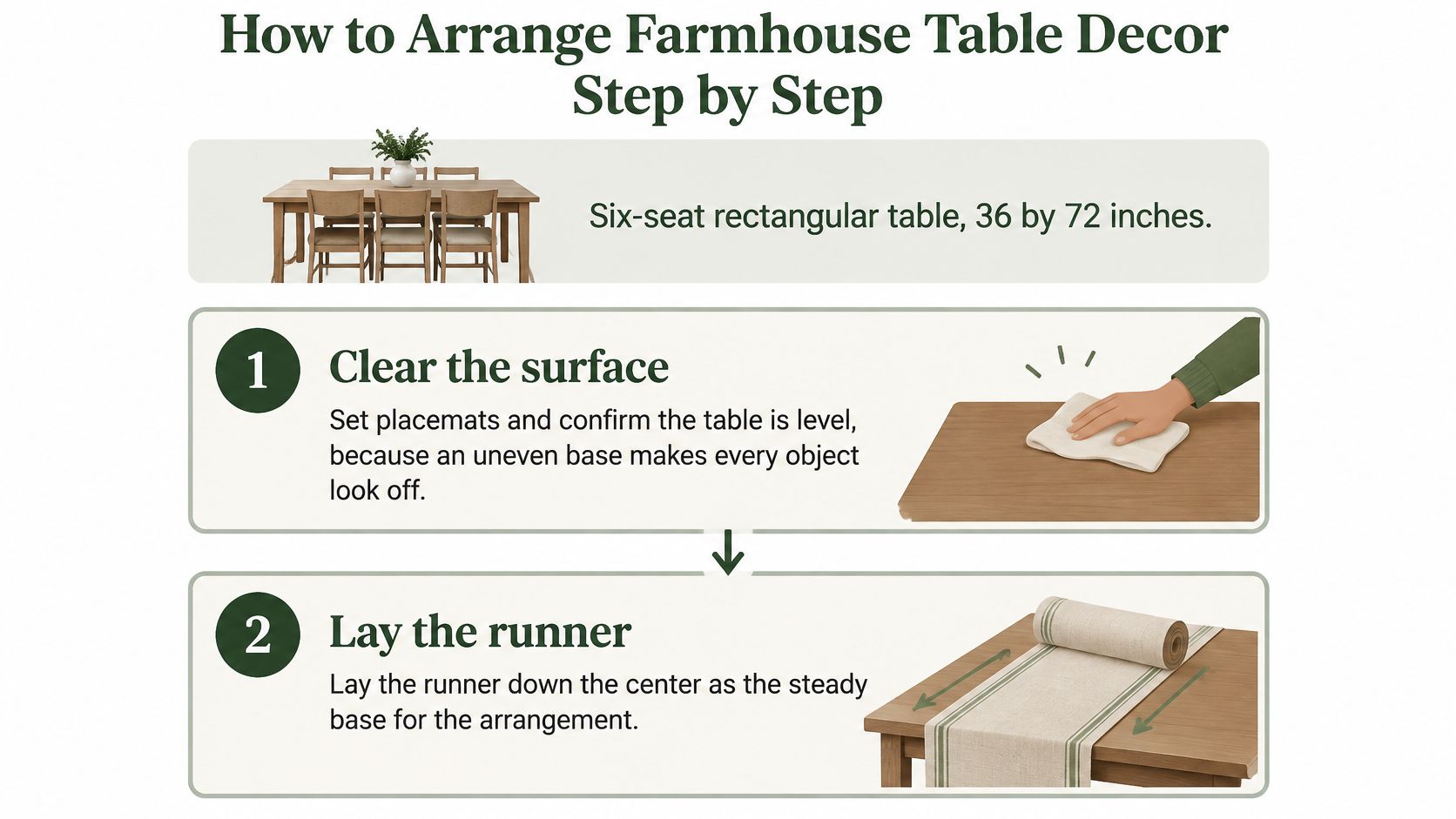
- Clear the surface, set the placemats, and check that the table is level. If one leg wobbles, objects may appear crooked even when the arrangement is carefully placed.
- Center a runner along the table's length. For this table, choose one 12 to 16 inches wide, with each end stopping 6 to 8 inches before the table edge. Those short ends keep fabric from catching on laps or chairs as people sit down.
- Set the anchor in the middle third of the table: for example, a wooden tray with two candle holders, each under 12 inches tall. This placement leaves the ends available for plates and avoids putting decor directly in a diner's place setting.
- Add two or three low groups, such as small jars with short stems or a pair of pillar candles. Leave about a plate-width of open runner between groups. That gap gives serving dishes a route through the center rather than forcing diners to lift decor whenever food is passed.
- Place perimeter pieces, such as a small framed sign, at the table ends or on a sideboard. Keep each plate's space clear so the setting remains easy to use.
- Check the arrangement from every seat. Pull out each chair, sit down, and confirm there is enough elbow room and a clear view across the table. If an object makes anyone lean to see or reach, reduce its height or footprint.
- Decide how the decor will move before serving. The centerpiece should lift away in a manageable trip, so food can take its place without a scramble. A tray helps keep related items together and makes the table easier to reset.
What usually goes wrong
A serving dish has no passing lane. A casserole needs a clear stretch of runner to travel between diners. Leave that route open; if the anchor must be shifted before the meal begins, it is occupying useful serving space.
Candle smoke reaches the napkins. A flame set directly on fabric can send smoke and wax toward nearby cloth. Place candles on the tray, or choose flameless ones when the napkins sit close by.
A useful arrangement looks balanced from every seat and clears quickly when dinner is ready. If only the person at the head of the table can see the centerpiece, adjust its placement or height.
Textiles That Hold Up to Daily Dining
At a crowded dinner table, cloth has to work around plates, hands, and chairs. Choose it after setting the seating plan: a runner should leave room for place settings and serving dishes, and its edges should not catch when diners reach or pull out a chair. A rumpled look may suit farmhouse decor, but texture alone cannot show whether a cloth will fray, shrink, or stain the wood.
ASTM D4111 covers performance considerations for woven napery and tablecloth fabrics, including tear strength, dimensional change after repeated laundering, colorfastness to light and washing, crocking, and appearance after washing. These qualities help distinguish cloth that can handle regular meals from fabric better suited to occasional use.
What fails first
- Weak tear strength: Runner ends may fray where diners handle them.
- Too much dimensional change: Washing can shrink the cloth or leave its drape wavy.
- Poor crocking resistance: Dye can rub onto pale wood, painted chairs, or clothing.
- Weak laundering colorfastness: Saturated reds, blues, or greens may fade unevenly.
Tightly woven cotton and linen blends are practical for everyday dining because their weave supports a stable hem. Ticking stripes can work just as well when the dye holds. Jute and burlap bring rustic texture, but they can shed, stain, and absorb spills, so reserve them for low-use or seasonal settings. Fringe and loose slubs also suit a table reset for guests better than one used for homework and Tuesday soup.
The Roosters Table Runner offers a rooster detail for a farmhouse setting. Before choosing any decorative runner for daily meals, consider how its weave and finish will handle washing and spills. For everyday use, explore natural table runners and look for a tight weave and reinforced hem. Match the runner's width to the clear space between place settings, so its decoration does not take over the dining area.
A four-step cloth test
- Wash a sample using the cycle, detergent, and any bleach alternative you expect to use.
- Measure its length and width before and after. Visible shrinkage can change how it fits the table.
- Check the edges for curling. A curled hem can catch plates and look unfinished.
- Once dry, rub darker fabric against a white cloth, then repeat while damp. Color transfer may mark pale wood or clothing.
Choose coordinated napkins only after the sample passes. A pretty swatch that fails the rub test is less useful than a plain cotton runner that survives the washer. Before buying, picture the cloth beside a full place setting: if it crowds a plate or narrows the serving space, choose a smaller footprint.
Seasonal Accents That Swap Without Clutter
Keep the runner and the table base constant. Change only the anchor and one accent group each season. That is the whole swap. Add one object and remove one object, so the clearance budget never grows just because the calendar did.
Spring on a farmhouse table can be this simple, and it already looks complete.
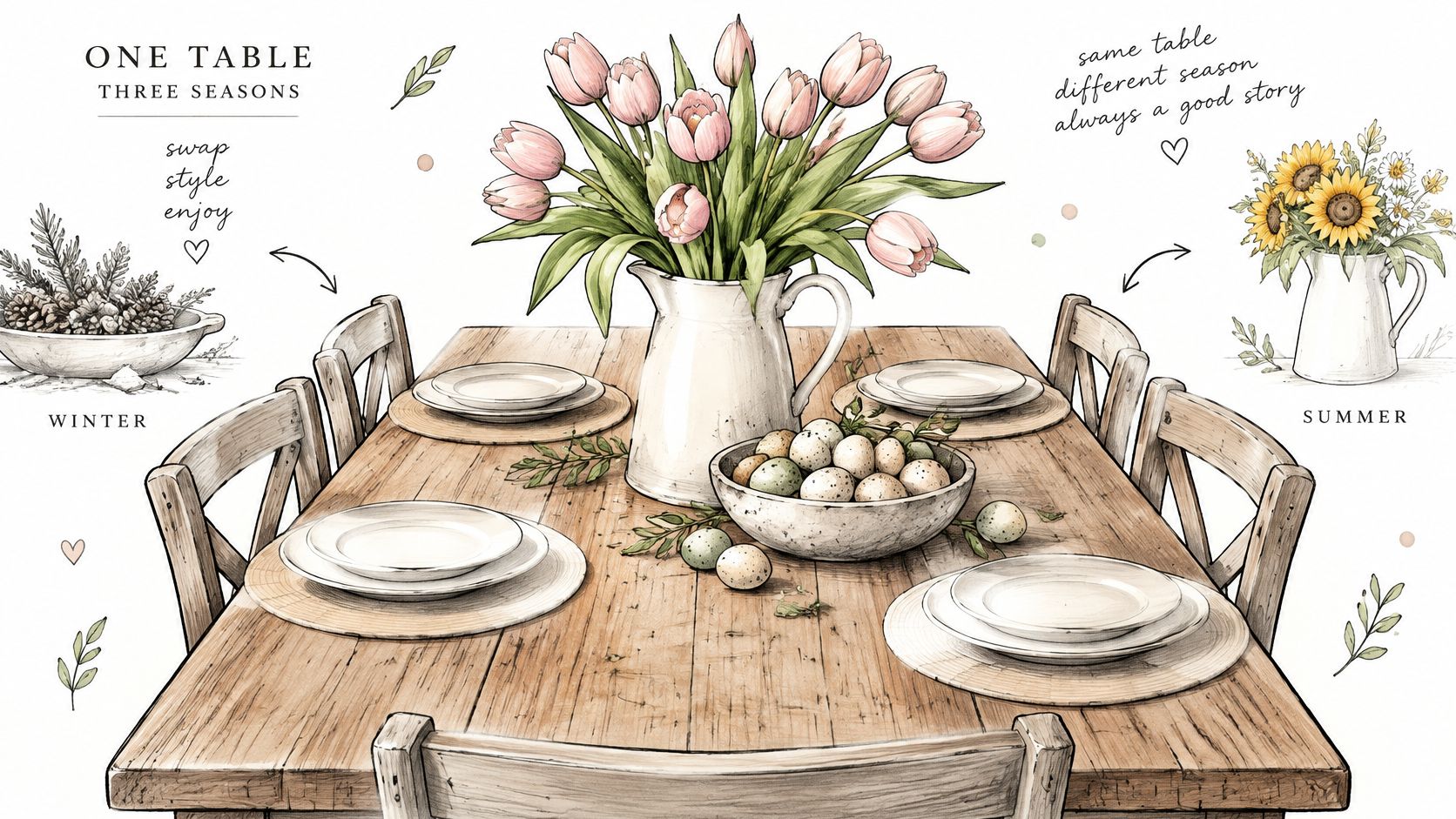
Spring swaps in a small pitcher of tulips or a few bud vases of ranunculus, plus a low bowl of eggs. Stems stay short. The bowl comes off before anyone serves.
Summer trades flowers for lemons or limes in a wooden bowl and, if you want a cloth change, a lighter-weave linen runner that is the same width as the one you use all year. Citrus is the accent. You don't also need shells, starfish, and a second bowl.
Autumn uses a few gourds, a short bundle of wheat, or one woven basket of pinecones. Pick one of those, not the whole farmers' market. Gourds roll. Sit them in the bowl so they can't reach a plate.
Winter lays a short evergreen garland along the runner and adds a pair of small brass or wooden bells at one end. The garland should lie flat. If it rises into a mound, it has become a centerpiece you didn't measure.
The holiday layer
Holidays tempt people to stack. A wreath, tall branches, and a second runner on top of the first will blow the budget you set for seats.
Leave heavy wreaths, branches taller than about six inches, and anything that drops needles, petals, or seeds off the eating surface. Those pieces mark plates and take two hands to move when the roast arrives. One new object in, one old object out.
Label a box for each season and keep the anchor for that season inside it. The swap is then one trip from the closet to the table, not a hunt through three drawers while the soup cools.
If you want a walk-through of a full seasonal reset, this short clip shows the same idea in motion: hold the base, change the middle.
Small, Rented and Accessible Tables
Before choosing a centerpiece, check that people can sit, reach their plates, and see one another. On a small table, decor should fit the seating plan like a place setting fits its spot. A rustic finish can still feel welcoming when the table remains easy to use.
The accessible dining areas guide recommends table heights around 28 to 34 inches, at least 30 by 48 inches of clear floor space, about 19 inches of knee clearance, and even, glare-controlled lighting. It also gives practical dining guidance of around 30 to 36 inches between a pendant and the tabletop, with about 200 to 300 lux for dining. Higher light suits homework or other tasks.
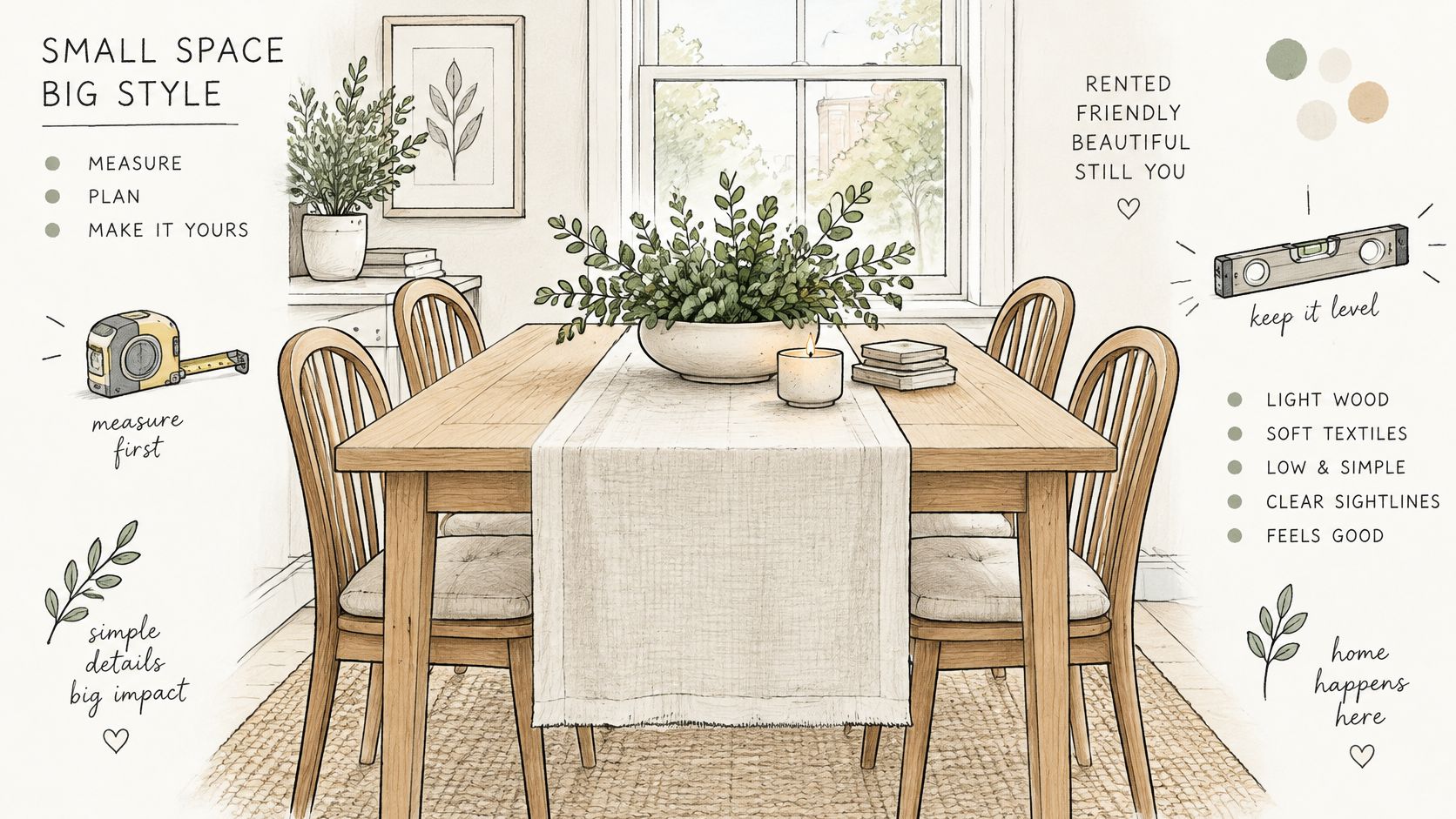
A wheelchair needs room to roll up to the table, and the knee space must remain clear. A tall candle in the center can also interrupt conversation for a child or anyone seated lower. Keep the main view across the table open, then choose a centerpiece that stays below seated eye level.
For renters, favor pieces that lift away without tools. A runner or low tray can define the table without screws, while a plug-in lamp with a shade can provide light without taking up much space. Place a small family-name sign on a nearby wall rather than among the plates. The name remains part of the room, and the eating surface stays available.
On a four-seat apartment table that also serves as a desk, assign space before adding decor. The near edge can hold a laptop; the center can stay clear for dinner. A runner or tray that moves in one trip makes the changeover easier. If an object needs several steps to clear, it is a poor fit for a table with two jobs.
Matte cloth, a low tray, and a dimmable lamp can make a small dining area feel welcoming while leaving room for people and plates.
Farmhouse Table Decor FAQs
Can a bench-seat farmhouse table take a runner?
Yes. Choose a runner short enough that its ends stay clear of the bench when people slide in. If the bench sits close to a wall, check that diners can still pull it out without catching the fabric. A runner that snags turns an easy seat into a daily nuisance.
What if my table is narrower than 36 inches?
Use one slim runner or a single tray toward one end, rather than clustering objects in the center. Keep the arrangement low so diners can see across the table, and move extra pieces to a sideboard. On a narrow top, leave room for plates and serving dishes before adding accents.
Are candles safe on a wood table with children around?
Flameless candles avoid an open flame. If you choose a real candle, place it on a stable tray away from napkins and the table's edge, where sleeves or small hands could reach it. Leave enough space around the flame for serving dishes to pass.
Where does a personalized sign go?
A nearby wall or sideboard keeps a personalized sign visible without taking space from plates or blocking diners' views. For a wall-mounted sign, position it above the sideboard rather than leaning it where it could slip onto the table. The table can stay clear while the sign adds a farmhouse detail to the dining area.
How do I stop decor from marking the wood?
Put a felt pad or cork coaster under objects resting on bare wood, and lift them instead of sliding them. A damp base can leave a ring, while dragging a crock may scratch the finish. Check the underside when you move pieces for cleaning.
What should I check before every dinner?
Does a serving dish fit between the centerpiece and the place settings? Can diners reach shared food without moving a candle or tray? These checks focus on the space people need during the meal, rather than repeating the setup routine.
Farmhouse World sells farmhouse-style runners, rustic candle holders, and personalized signs. Its free shipping applies to orders over $49, and it ships throughout the Continental USA. A low tray, durable cloth, or name sign for the wall can add farmhouse character while leaving the eating surface usable. Find these options at Farmhouse World.


